
Profile Transfer & Cooling Solutions
Ensure Smooth Profile Conveying with Reliable Surface Protection
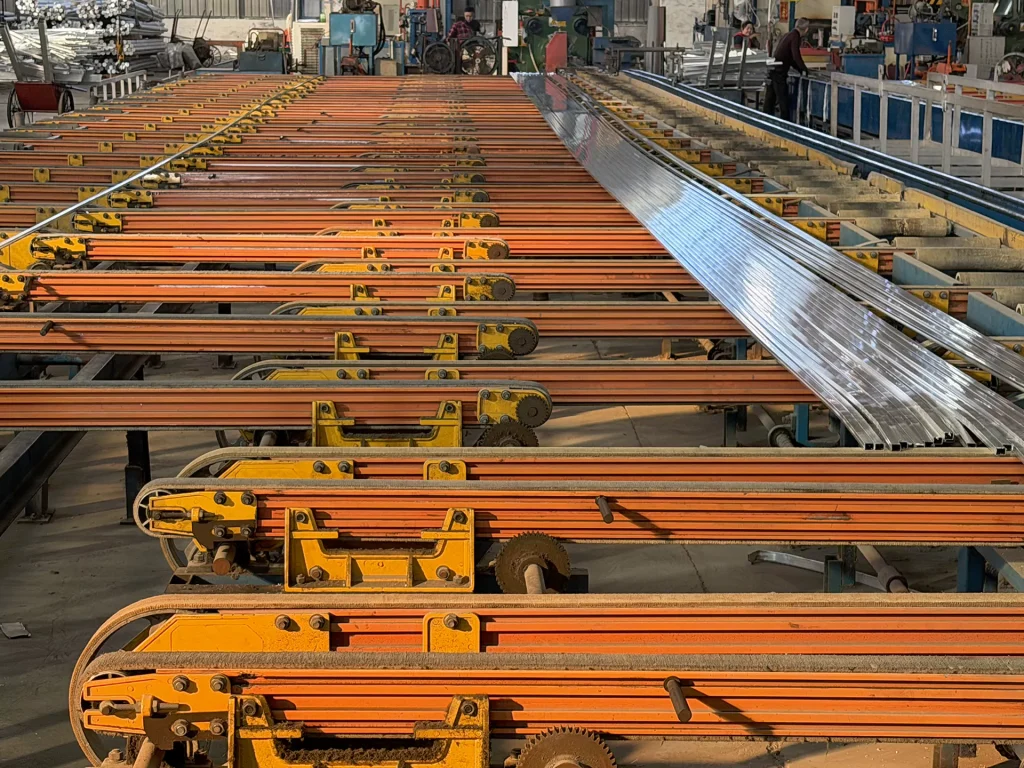
After the initial extrusion stage, aluminum profiles enter continuous transfer and cooling processes where stable conveying and surface protection become critical.
CALM provides felt belt and conveying solutions designed for different temperature zones, helping aluminum extrusion manufacturers reduce friction, prevent surface damage, and maintain reliable production performance.
Understanding Profile Transfer & Cooling
During aluminum extrusion production, profiles need to be continuously transferred while gradually cooling down to achieve stable handling conditions.
Unlike the initial high-temperature contact stage, this stage focuses on long-distance conveying, repeated movement, and consistent profile support.
The right protection materials help maintain:
- Smooth profile transfer
- Stable conveying performance
- Reduced friction and wear
- Consistent surface quality
Without suitable protection solutions, aluminum profiles may experience:
- Surface scratches
- Uneven movement
- Excessive belt wear
- Production interruptions caused by component replacement

Recommended Protection Solutions
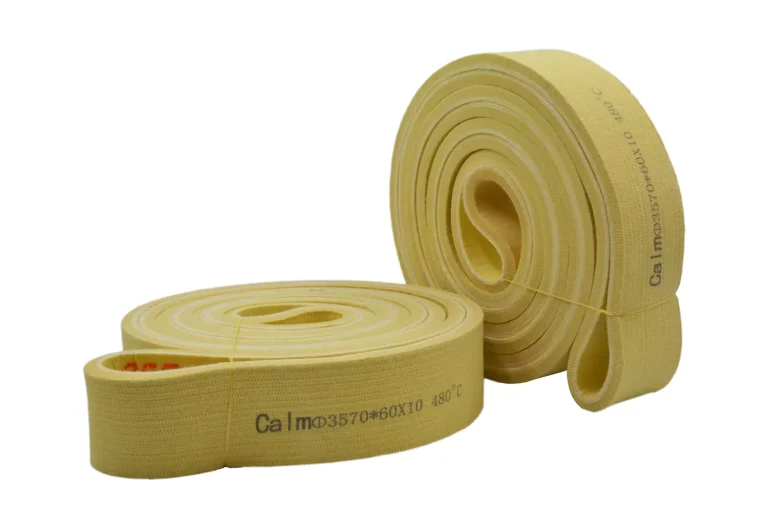
Endless Felt Belt
Durable Conveying Protection for High-Temperature Transfer Areas.
Endless Felt Belts provide excellent wear resistance and stable performance in demanding conveying environments, helping protect aluminum profiles during continuous movement.
- Excellent wear resistance
- Stable conveying performance
- Reduced surface friction
- Suitable for continuous operation
Felt Conveyor Belt
Heavy-Duty Conveying for Large Aluminum Profiles.
Designed for high-load extrusion lines, felt conveyor belts provide reliable support and strong traction while protecting profile surfaces during transfer.
- Suitable for heavy profiles
- Strong conveying capability
- Durable construction
- Reduced profile damage
Timing Belt with Felt Cover
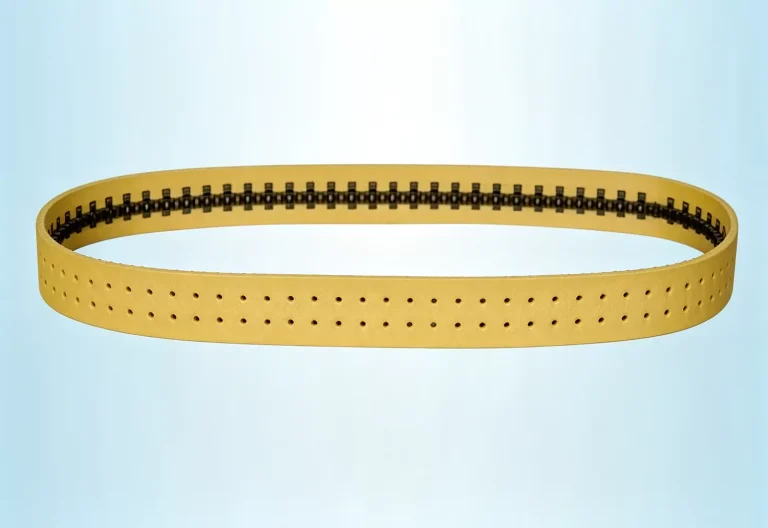
Precise Transfer for Automated Production Lines.
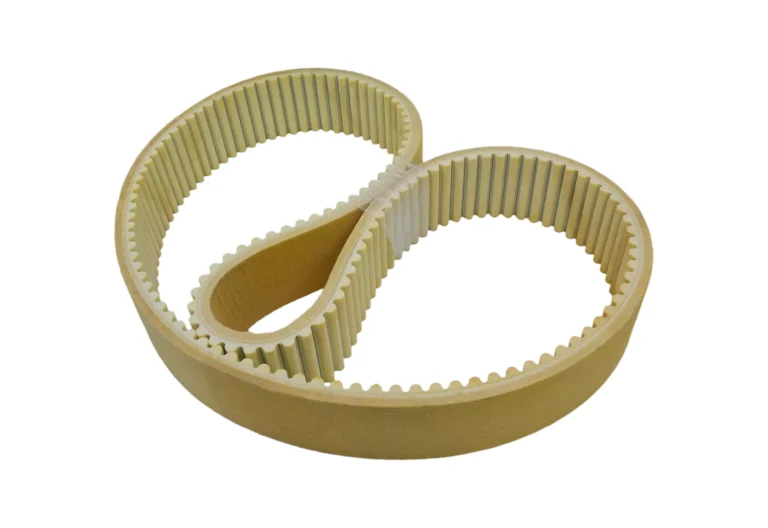
Felt-covered timing belts provide accurate profile movement while maintaining soft contact to reduce scratches during automated handling.
- Precise positioning
- Stable operation
- Surface-friendly contact
- Suitable for automated systems
Choosing the Right Belt Solution
Product | Best For |
Felt Belt | Standard aluminum extrusion conveying applications. |
Felt Conveyor Belt | Heavy-duty production lines, large profiles, and high-load conveying systems. |
Material Selection for Different Temperature Zones
Different sections of the extrusion line require different levels of heat resistance, wear resistance, and service life.
Material | Maximum Temperature | Recommended Application |
Kevlar | Up to 500°C | High-temperature transfer areas |
Nomex | Up to 280°C | Cooling and medium-temperature conveying |
Polyester | Up to 180°C | Lower-temperature handling sections |
Selecting the right material helps achieve the best balance between performance, durability, and operating cost.
Customized Conveying Solutions
Designed for Your Extrusion Equipment and Production Conditions
Every aluminum extrusion line has different profile sizes, conveying speeds, equipment structures, and operating requirements.CALM provides customized felt solutions based on:
CALM provides customized felt solutions based on:
·Belt dimensions
·Material requirements
·Operating temperature
·Production conditions
Whether you require standard felt belts or customized conveying components, CALM can help develop a suitable solution for your extrusion line.
FAQs
Which felt material is best for profile conveying applications?
Kevlar is commonly used for high-temperature conveying areas due to its excellent balance of heat resistance and wear performance. Nomex and Polyester are suitable for lower-temperature sections.
What is the difference between Felt Belt and Felt Conveyor Belt?
Felt Belt is commonly used for standard profile conveying applications, while Felt Conveyor Belt is designed for heavier loads and more demanding production environments.
Can CALM customize felt belts for different extrusion lines?
Yes. CALM can customize belt width, length, thickness, material structure, and other specifications according to equipment requirements.
How can felt belts help protect aluminum profiles?
The soft felt surface reduces direct friction between conveying components and aluminum profiles, helping minimize scratches and maintain surface quality.