Kevlar® is a synthetic para-aramid fiber known for its high strength-to-weight ratio, thermal stability, abrasion resistance, and mechanical durability. Unlike natural fibers, Kevlar® is produced from synthetic aromatic polyamide polymers. Its combination of low weight and high mechanical performance makes it useful in protective equipment, industrial textiles, ropes and cables, composites, automotive components, aerospace applications, and many other demanding environments.
Quick Overview
- 1. What Is Kevlar®?
- 2. Is Kevlar® Natural or Synthetic?
- 3. What Is Kevlar® Made Of?
- 4. Why Is Kevlar® So Strong?
- 5. Kevlar® Properties
- 6. How Heat Resistant Is Kevlar®?
- 7. How Is Kevlar® Made?
- 8. Types of Kevlar®
- 9. What Forms Does Kevlar® Come In?
- 10. What Is Kevlar® Used For?
- 11. Kevlar® vs Other Materials
- 12. Is Kevlar® a Plastic?
- 13. Is Kevlar® a Metal?
- 14. What Does Kevlar® Look Like?
- 15. What Are the Advantages of Kevlar®?
- 16. What Are the Limitations of Kevlar®?
- 17. Is Kevlar® Safe?
- 18. Is Kevlar® Sustainable and Recyclable?
- 19. How Do You Choose the Right Kevlar® Type?
- FAQs
- Conclusion
1. What Is Kevlar®?
Kevlar® is a high-performance para-aramid fiber developed for applications that require exceptional mechanical performance without adding excessive weight.
The name Kevlar® refers to a specific fiber brand, while aramid describes a broader family of aromatic polyamide fibers. Kevlar® therefore should not be treated as a synonym for all aramid fibers.
Its most important characteristics include:
- High tensile strength
- High tensile modulus
- Low weight
- Excellent strength-to-weight ratio
- Good abrasion resistance
- Good cut resistance
- Thermal stability
- Inherent resistance to flame
- Resistance to many chemicals
Kevlar® is available in different grades and forms, so its exact properties depend on the fiber type, yarn construction, processing method, and final product.
2. Is Kevlar® Natural or Synthetic?
Kevlar® is a synthetic fiber, not a natural fiber.
Natural fibers such as cotton, wool, and silk originate from biological sources. Kevlar® is manufactured through chemical processes that create an aromatic polyamide polymer and convert that polymer into high-performance fibers.
Kevlar® belongs to the broader category of synthetic high-performance fibers and more specifically to the para-aramid class.
The basic classification can therefore be expressed as:
Synthetic fiber → Aramid fiber → Para-aramid fiber → Kevlar®
This distinction is important because “aramid” is a material category, whereas Kevlar® is a specific commercial fiber.
3. What Is Kevlar® Made Of?
Kevlar® is made from an aromatic polyamide polymer. Its chemical structure contains aromatic rings and amide groups arranged along the polymer chain.
The molecular structure gives Kevlar® its combination of rigidity, strength, and thermal stability.
Kevlar® Chemical Composition
Kevlar® belongs to the family of poly(p-phenylene terephthalamide), commonly abbreviated as PPTA.
The polymer contains repeating aromatic and amide structures. These structures contribute to the strong intermolecular interactions and rigid molecular chains that characterize para-aramid fibers.
What Monomers Are Used to Make Kevlar®?
The polymer used to produce Kevlar® is formed from aromatic monomers commonly identified as:
- p-phenylenediamine (PPD)
- terephthaloyl chloride (TCl)
These react through polymerization to form the PPTA polymer.
The resulting polymer is then processed into highly oriented fibers.
Kevlar® Molecular Structure
Kevlar®’s molecular structure plays a major role in its mechanical performance.
Its polymer chains are relatively rigid and can become highly oriented during fiber processing. Strong interactions between neighboring chains further contribute to the fiber’s high tensile strength and modulus.
This molecular organization is one of the main reasons Kevlar® performs very differently from conventional textile fibers.
4. Why Is Kevlar® So Strong?
Kevlar®’s strength comes from more than simply being an aramid fiber.
Several structural characteristics work together.
Highly Oriented Polymer Chains
During fiber formation, the rigid polymer chains become highly oriented along the direction of the fiber.
This alignment allows loads to transfer efficiently along the polymer chains.
Strong Intermolecular Interactions
Amide groups on neighboring polymer chains can form strong intermolecular interactions, including hydrogen bonding.
These interactions help hold the chains together and contribute to the fiber’s high strength and stiffness.
Rigid Molecular Structure
The aromatic rings within the polymer backbone make the chains relatively rigid.
This rigidity contributes to Kevlar®’s high modulus and resistance to deformation under tensile loading.
High Strength-to-Weight Ratio
Kevlar® combines high mechanical strength with relatively low density.
As a result, engineers can achieve substantial mechanical performance without using as much material as they might with heavier structural materials.
This strength-to-weight advantage explains why Kevlar® is valuable in applications where reducing weight matters.
5. Kevlar® Properties
Kevlar® provides a combination of mechanical and thermal properties that makes it different from conventional textile fibers.
| Property | General Characteristics of Kevlar® |
|---|---|
| Fiber type | Para-aramid |
| Tensile strength | Very high |
| Tensile modulus | High |
| Density | Relatively low |
| Strength-to-weight ratio | Excellent |
| Abrasion resistance | High |
| Cut resistance | High |
| Thermal stability | Excellent |
| Flame resistance | Inherent |
| Chemical resistance | Good against many chemicals |
| UV resistance | Limited without suitable protection |
| Flexibility | Depends on fiber and textile construction |
These should be regarded as general characteristics rather than universal specifications. Different Kevlar® grades, deniers, yarn constructions, and finished products can have significantly different performance.
Kevlar® Tensile Strength
Kevlar® is particularly well known for its high tensile strength.
However, Kevlar® does not have one universal tensile-strength value.
The actual value depends on factors such as:
- Kevlar® grade
- Denier
- Filament construction
- Yarn structure
- Testing conditions
- Processing
For this reason, technical comparisons should always identify the specific Kevlar® grade and test conditions rather than treating “Kevlar® tensile strength” as a single fixed number.
Kevlar® Abrasion Resistance
Kevlar® provides good resistance to abrasion and repeated mechanical wear.
This property makes it useful in products that experience continuous friction or mechanical contact.
Its abrasion performance also contributes to its use in protective equipment, industrial textiles, ropes, cables, and reinforcement materials.
Kevlar® Cut Resistance
Kevlar® can provide significant cut resistance when manufacturers engineer it into suitable yarns, fabrics, or composite structures.
However, fiber type alone does not determine the cut resistance of a finished product.
Fabric construction, yarn density, thickness, coating, and product design all affect the final performance.
Is Kevlar® Flexible?
Kevlar® can be flexible, but its flexibility depends strongly on how the fiber is processed and constructed.
A thin Kevlar® yarn can behave very differently from:
- A tightly woven Kevlar® fabric
- A thick felt
- A laminated composite
- A multilayer protective product
Its relatively high modulus means Kevlar® is not inherently as soft or flexible as many conventional textile fibers.
6. How Heat Resistant Is Kevlar®?
Kevlar® provides excellent thermal stability compared with many conventional synthetic fibers.
However, describing Kevlar® with a single “maximum temperature” can be misleading.
The thermal behavior of Kevlar® depends on:
- Fiber grade
- Exposure duration
- Atmosphere
- Heat-transfer mechanism
- Mechanical loading
- Fiber construction
- Fabric thickness
- Product design
A fiber’s thermal degradation temperature should also not be confused with the safe operating temperature of a finished product.
Does Kevlar® Melt?
Kevlar® does not behave like ordinary thermoplastic fibers that simply soften and flow at a clearly defined melting point.
Instead, Kevlar® undergoes thermal degradation and decomposition at sufficiently high temperatures.
This is why searches such as “Kevlar® melting point” need careful interpretation.
Rather than thinking only in terms of a conventional melting point, it is more useful to consider how Kevlar® retains its properties as temperature increases and how prolonged exposure eventually causes thermal degradation.
Is Kevlar® Heat Resistant?
Yes. Kevlar® has high thermal stability and retains useful properties at elevated temperatures compared with many conventional fibers.
However, heat resistance does not mean unlimited resistance to high temperatures.
Prolonged exposure, direct contact with a heat source, flame, radiant heat, and mechanical loading can affect performance differently.
Is Kevlar® Fire Resistant?
Kevlar® has inherent resistance to flame and does not behave like many conventional combustible fibers.
When exposed to sufficiently intense heat, however, Kevlar® can eventually degrade.
Therefore, “fire resistant” should not be interpreted as “fireproof under every condition.”
The performance of a Kevlar® protective product depends on the fiber, fabric construction, thickness, exposure conditions, and applicable performance standard.
7. How Is Kevlar® Made?
Kevlar® manufacturing involves converting aromatic chemical building blocks into a high-performance polymer and then processing that polymer into highly oriented fibers.
The overall process can be simplified into several stages:
Raw materials → Polymerization → Polymer processing → Spinning → Fiber formation → Orientation → Yarn or textile production
Step 1: Polymerization
The starting monomers undergo a chemical reaction to form the aromatic polyamide polymer.
For Kevlar®, this produces poly(p-phenylene terephthalamide) or PPTA.
Step 2: Polymer Processing
The resulting polymer is prepared under carefully controlled conditions so it can be converted into a suitable spinning solution.
Step 3: Fiber Spinning
The polymer solution is passed through specialized spinning equipment to form continuous filaments.
Step 4: Molecular Orientation
The processing conditions orient the polymer chains along the fiber axis.
This orientation is essential to achieving Kevlar®’s high tensile properties.
Step 5: Yarn and Textile Production
Individual filaments can be combined into yarns and subsequently processed into forms such as:
- Fabric
- Tape
- Rope
- Braided structures
- Composite reinforcement
- Other engineered textiles
It is important to distinguish Kevlar® fiber manufacturing from Kevlar® fabric manufacturing. Producing the high-performance fiber is only the first stage. Textile manufacturers then convert that fiber into structures designed for specific applications.
8. Types of Kevlar®
Kevlar® is available in different grades designed to provide different balances of strength, modulus, elongation, and application performance.
The exact product portfolio can vary by application and manufacturer specifications, but several well-known grades include:
Kevlar® 29
Kevlar® 29 is associated with applications that require high strength and toughness.
Typical applications can include:
- Ropes
- Cables
- Protective products
- Reinforcement
- Industrial applications
Kevlar® 49
Kevlar® 49 is known for its high modulus and is widely associated with reinforcement applications.
It is particularly useful in composite structures where stiffness and dimensional stability are important.
Applications include:
- Aerospace composites
- Automotive composites
- Marine structures
- Sporting goods
- Structural reinforcement
Kevlar® 129
Kevlar® 129 is designed for applications requiring high strength and impact-related performance.
It is associated with specialized protective and ballistic applications.
Kevlar® 149
Kevlar® 149 provides a very high modulus and is used in advanced reinforcement applications where stiffness and lightweight construction are important.
The key point is that there is no single “best” Kevlar® grade.
Different grades exist because different applications require different combinations of strength, modulus, toughness, and weight.
9. What Forms Does Kevlar® Come In?
Kevlar® is not limited to one type of fabric.
Manufacturers can process the fiber into different forms depending on the intended application.
Kevlar® Fiber
The basic form consists of high-performance filaments that can be further processed into yarns and textile structures.
Kevlar® Yarn
Kevlar® yarn combines multiple filaments into a usable textile structure.
Manufacturers can produce different yarn constructions and deniers for different applications.
Kevlar® Fabric
Kevlar® fabric can be woven, knitted, or engineered into specialized textile structures.
Fabric construction affects:
- Strength
- Flexibility
- Thickness
- Abrasion resistance
- Cut resistance
- Thermal performance
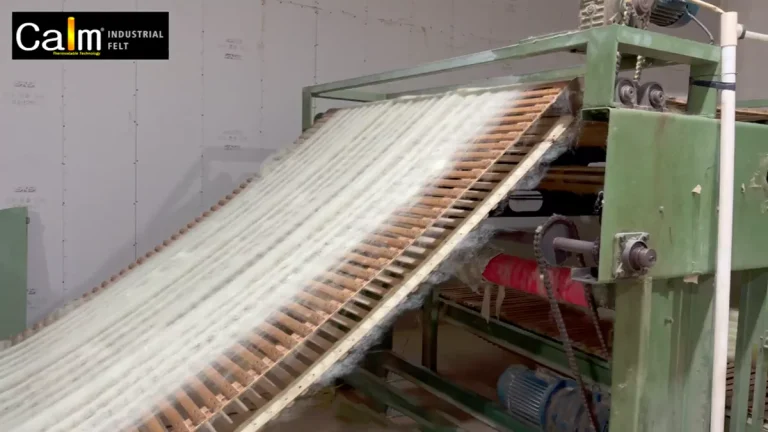
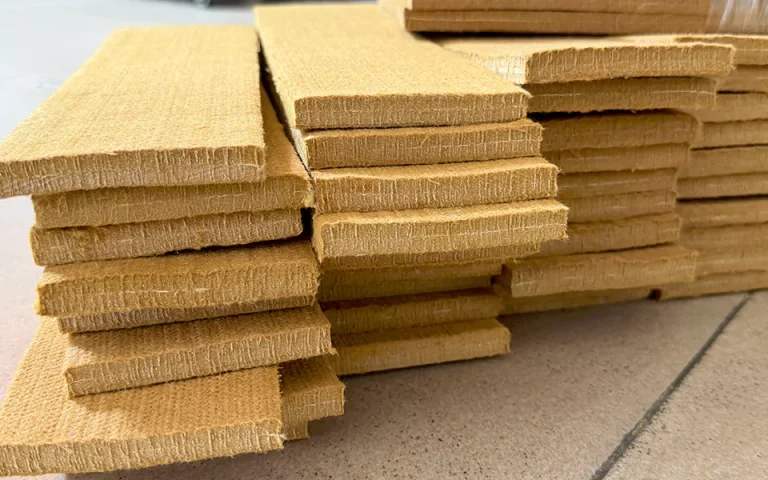
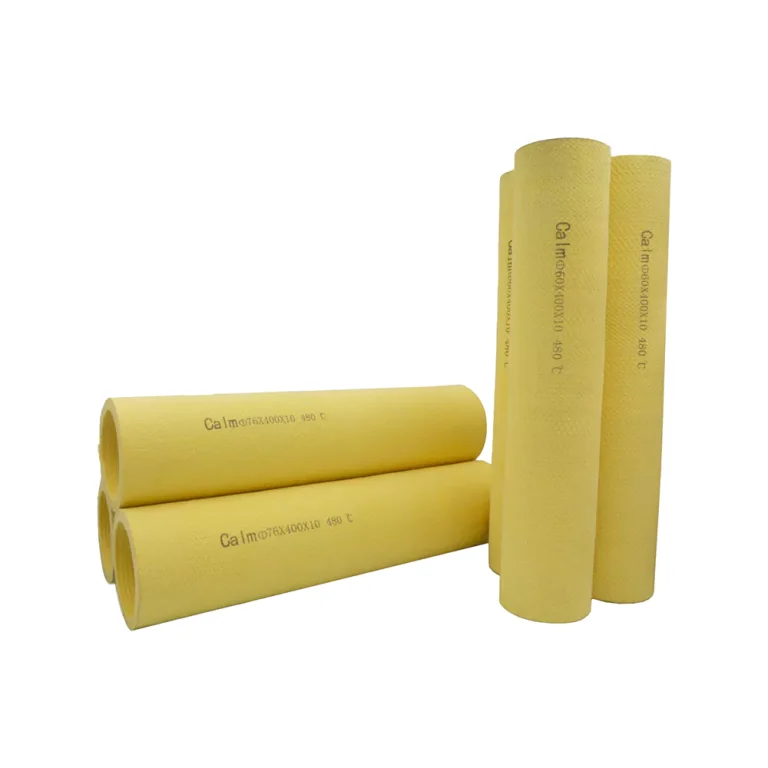
Kevlar® Felt
Kevlar® can also be processed into nonwoven felt structures for specialized industrial and thermal applications.
Kevlar® Tape
Kevlar® tape can provide lightweight reinforcement or mechanical protection in applications requiring high tensile performance.
Kevlar® Rope and Cord
Kevlar®’s high strength-to-weight ratio makes it useful for ropes, cords, and cable reinforcement.
Kevlar® Composites
Kevlar® fabrics can be combined with resin systems to create fiber-reinforced composites.
In these structures, Kevlar® provides reinforcement while the surrounding matrix holds the fibers in place and transfers loads.
10. What Is Kevlar® Used For?
Kevlar® is used in applications where high strength, low weight, durability, and thermal stability provide an engineering advantage.
Protective Equipment
Kevlar® is used in various protective products, including:
- Protective gloves
- Cut-resistant clothing
- Protective sleeves
- Helmets
- Ballistic protection
The exact level of protection depends on the complete product design rather than the presence of Kevlar® alone.
Ballistic Protection
Kevlar® has played an important role in ballistic protection because high-strength aramid fibers can absorb and distribute energy across a network of fibers.
Ballistic performance depends on factors such as:
- Fiber type
- Fabric construction
- Number of layers
- Areal density
- Projectile characteristics
- Armor design
For this reason, it is more accurate to describe Kevlar® products as bullet-resistant or ballistic protection systems rather than simply calling Kevlar® “bulletproof.”
Automotive Applications
Kevlar® can be used in automotive components where low weight, reinforcement, abrasion resistance, or thermal performance is important.
Potential applications include:
- Tire reinforcement
- Hoses
- Belts
- Friction materials
- Composite components
Aerospace Applications
The combination of low weight and high mechanical performance makes Kevlar® useful in selected aerospace composite structures and reinforcement applications.
Marine Applications
Kevlar® can be used in:
- Ropes
- Cables
- Reinforcement fabrics
- Composite structures
Its strength-to-weight ratio can be particularly valuable where reducing structural weight is important.
Industrial Applications
Industrial applications can include:
- Conveyor components
- Reinforcement fabrics
- Ropes
- Cables
- Hoses
- Protective textiles
- Mechanical components
Sports Equipment
Kevlar® is also used in selected sporting products where lightweight reinforcement and impact resistance are beneficial.
Applications can include:
- Bicycles
- Racing equipment
- Protective equipment
- Composite sporting goods
11. Kevlar® vs Other Materials
Kevlar® vs Nomex®
Kevlar® and Nomex® are both aramid fibers, but they belong to different aramid classes.
Kevlar® is a para-aramid fiber, while Nomex® is a meta-aramid fiber.
Kevlar® generally provides higher mechanical strength and modulus, while Nomex® is particularly valued for inherent flame resistance and thermal protection.
The better choice depends on the primary hazards and performance requirements.
Kevlar® vs Carbon Fiber
Kevlar® and carbon fiber both provide high-performance reinforcement, but their strengths are different.
Kevlar® offers:
- High toughness
- High tensile strength
- Low weight
- Good impact resistance
Carbon fiber generally offers:
- Higher stiffness
- High tensile performance
- Excellent dimensional stability
Carbon fiber can therefore be preferable when stiffness is the priority, while Kevlar® can offer advantages when toughness and impact resistance are more important.
Kevlar® vs Fiberglass
Fiberglass generally offers good strength, thermal resistance, and cost efficiency.
Kevlar® provides a lower-density reinforcement with excellent strength-to-weight performance and good toughness.
The appropriate choice depends on the required combination of:
- Weight
- Strength
- Stiffness
- Impact resistance
- Cost
- Processing requirements
Kevlar® vs UHMWPE
UHMWPE fibers such as Dyneema® and other high-performance polyethylene fibers can provide extremely high strength-to-weight ratios.
Kevlar®, however, offers a different balance of thermal stability, strength, and mechanical performance.
UHMWPE generally has a lower temperature capability, while Kevlar® is better suited to applications involving elevated temperatures.
Kevlar® vs Steel
Kevlar® should not simply be described as “stronger than steel.”
Steel has much greater density and provides excellent compressive and structural performance, while Kevlar® offers an exceptional strength-to-weight ratio.
For applications where minimizing weight is important, Kevlar® can provide substantial mechanical performance without the mass associated with steel.
12. Is Kevlar® a Plastic?
Kevlar® is a synthetic polymer fiber, so it belongs to the broader family of polymer-based materials.
However, it does not behave like ordinary thermoplastic plastics.
Its highly rigid aromatic polyamide structure gives it properties that are very different from common plastics such as polyethylene or polypropylene.
Kevlar® should therefore be understood as a high-performance polymer fiber, specifically a para-aramid, rather than as a conventional plastic material.
13. Is Kevlar® a Metal?
No. Kevlar® is not a metal.
It is an organic synthetic polymer fiber.
Kevlar® can achieve very high tensile strength despite having a much lower density than metals such as steel. This combination of low weight and high strength is one of the reasons engineers use it in lightweight reinforcement and protective applications.
14. What Does Kevlar® Look Like?
The appearance of Kevlar® depends on its form.
Raw Kevlar® fibers are typically fine synthetic filaments. When processed into yarn, the filaments form a continuous textile structure. Woven Kevlar® fabric has the recognizable appearance of a high-performance woven textile, while Kevlar® felt has a different nonwoven structure.
Kevlar® may therefore appear as:
- Fine fiber
- Yarn
- Woven fabric
- Nonwoven felt
- Tape
- Rope
- Composite reinforcement
The final appearance depends more on processing and textile construction than on the fiber alone.
15. What Are the Advantages of Kevlar®?
Kevlar® combines several properties that are difficult to obtain simultaneously in conventional fibers.
High Strength
Kevlar® provides very high tensile strength relative to its weight.
Lightweight
Its relatively low density makes it attractive for weight-sensitive applications.
High Modulus
Kevlar® can resist deformation under tensile loading.
Abrasion Resistance
It provides useful durability under repeated mechanical contact.
Thermal Stability
Kevlar® maintains useful performance under elevated temperatures compared with many conventional synthetic fibers.
Inherent Flame Resistance
Kevlar® does not rely solely on a surface flame-retardant treatment to provide its inherent resistance to flame.
Versatility
The fiber can be converted into yarns, fabrics, ropes, felts, tapes, and composite reinforcement.
16. What Are the Limitations of Kevlar®?
Kevlar® is a high-performance fiber, but it is not suitable for every application.
Compression Performance
Kevlar® performs particularly well under tension, but its compressive performance is less exceptional than its tensile performance.
This is an important consideration when designing composite structures.
UV Exposure
Prolonged exposure to ultraviolet radiation can degrade aramid fibers.
Applications exposed to sunlight may therefore require appropriate protective measures.
Moisture
Kevlar® can absorb some moisture, and environmental conditions can influence its mechanical performance.
Cost
Kevlar® generally costs more than conventional fibers such as polyester, nylon, or many fiberglass products.
The additional cost is justified only when the application’s performance requirements require a high-performance fiber.
Processing Challenges
Kevlar®’s high strength can make cutting, machining, and processing more challenging than working with conventional textile fibers.
Manufacturers must select suitable tools and processing methods for the intended form.
17. Is Kevlar® Safe?
The safety of a Kevlar® product depends on how the material is manufactured, processed, and used.
Finished Kevlar® textiles are widely used in protective equipment and industrial products. However, manufacturing and processing environments can involve additional considerations, particularly when cutting, machining, or handling fibrous materials.
Safety requirements should therefore be evaluated based on the specific product, manufacturing process, and applicable workplace requirements rather than treating all Kevlar® applications as identical.
18. Is Kevlar® Sustainable and Recyclable?
Kevlar® is highly durable, which can contribute to long service life in suitable applications. However, durability does not automatically mean that a material is recyclable or biodegradable.
Recycling becomes more complicated when Kevlar® is incorporated into:
- Resin composites
- Laminates
- Blended textiles
- Multilayer protective products
- Products containing adhesives or coatings
The recycling options therefore depend heavily on the physical form of the material and how it is combined with other materials.
For this reason, questions about whether Kevlar® is “sustainable” should consider the entire product lifecycle rather than the fiber alone.
19. How Do You Choose the Right Kevlar® Type?
The right Kevlar® grade depends on the application’s actual requirements.
Start with the primary performance requirement:
For High Tensile Strength
Consider grades designed around high-strength performance.
For High Modulus
Choose a grade designed to provide greater stiffness and dimensional stability.
For Composite Reinforcement
Consider the required combination of modulus, strength, toughness, weight, and resin compatibility.
For Protective Applications
Consider not only fiber strength but also:
- Impact conditions
- Abrasion
- Cut exposure
- Heat
- Flame
- Product construction
- Applicable testing standards
The correct selection should therefore focus on the complete performance profile, not a single headline specification.
FAQs
Kevlar® is a synthetic para-aramid fiber. It is manufactured from aromatic polyamide polymers rather than obtained from a natural biological source.
Kevlar® is made from an aromatic polyamide polymer known as poly(p-phenylene terephthalamide), or PPTA. The polymer is produced from aromatic chemical building blocks and then processed into highly oriented fibers.
Kevlar® is manufactured from synthetic chemical raw materials that form the PPTA polymer. The polymer is then converted into high-performance para-aramid fibers.
Kevlar® derives its strength from its rigid aromatic polymer chains, high molecular orientation, strong intermolecular interactions, and highly organized fiber structure.
Kevlar® does not behave like a conventional thermoplastic with a simple, well-defined melting point. At sufficiently high temperatures, it undergoes thermal degradation and decomposition rather than simply melting and flowing.
Yes. Kevlar® has high thermal stability and can retain useful mechanical properties at elevated temperatures. Actual performance depends on the grade, construction, exposure conditions, and duration.
Kevlar® has inherent resistance to flame and heat, but “fireproof” is too absolute a description. Under sufficiently severe thermal exposure, Kevlar® can eventually degrade.
Kevlar® is a synthetic polymer fiber, but it is not a conventional thermoplastic. It belongs specifically to the para-aramid class of high-performance fibers.
No. Kevlar® is an organic synthetic polymer fiber.
No. Aramid is the broader fiber category, while Kevlar® is a specific para-aramid fiber brand. Other aramid fibers include meta-aramid products such as Nomex®.
Kevlar® has some flexibility as a fiber, but its high modulus makes it stiffer than many conventional textile fibers. The flexibility of the finished material depends strongly on yarn and fabric construction.
Kevlar® is used in protective equipment, ballistic protection, ropes, cables, industrial textiles, automotive components, aerospace composites, marine products, sporting goods, and other applications requiring high strength and low weight.
Kevlar® can appear as fine fibers, yarn, woven fabric, nonwoven felt, tape, rope, or composite reinforcement depending on how the fiber is processed.
Conclusion
Kevlar® is a synthetic para-aramid fiber whose exceptional strength-to-weight ratio, thermal stability, and mechanical durability have made it an important high-performance material across protective, industrial, automotive, aerospace, marine, and composite applications.
Its performance comes from its molecular structure, fiber orientation, and carefully controlled manufacturing process. Understanding those fundamentals is more useful than viewing Kevlar® simply as a “strong fabric” or “bulletproof material.”
The right Kevlar® grade and form ultimately depend on the application’s requirements, including strength, modulus, thermal exposure, abrasion, impact, weight, and product construction.
Need help choosing the right Kevlar® material for your application? Contact us at [email protected] for expert guidance and customized solutions.