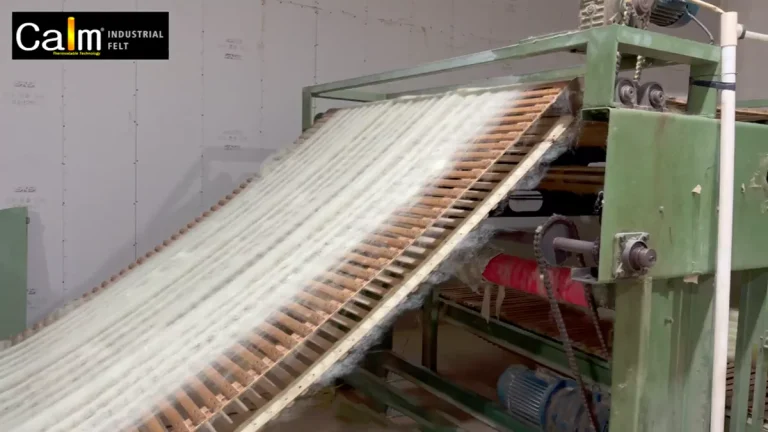
Polyester fiber is a synthetic fiber made primarily from polyester polymers, with polyethylene terephthalate (PET) being the most widely used polymer for fiber production. Manufacturers value polyester fiber for its strength, abrasion resistance, dimensional stability, low moisture absorption, and processing versatility. These properties make it useful not only for clothing and home textiles but also for industrial fabrics, reinforcement materials, ropes, conveyor components, and other technical applications.
What Is Polyester Fiber?
Polyester fiber is a manufactured fiber formed from long-chain synthetic polymers that contain repeating ester groups. Although the term polyester describes a broad family of polymers, PET is the dominant polyester used to produce textile and technical fibers.
Unlike natural fibers such as cotton, wool, and silk, conventional polyester fiber comes from synthetic polymer chemistry. Manufacturers can modify the polymer and fiber-forming process to control properties such as strength, elongation, fiber diameter, cross-sectional shape, shrinkage, and surface characteristics.
This processing flexibility explains why polyester can appear in very different forms, from soft microfiber fabrics to high-strength industrial yarns.
Is Polyester a Plastic?
Yes. Conventional polyester fiber is produced from thermoplastic polyester polymers, most commonly PET. However, polyester fiber is not simply “plastic” in its final form. Manufacturers process the polymer into extremely fine continuous filaments or staple fibers that can then become yarns, fabrics, nonwovens, and technical textile products.
What Is Polyester Fiber Made Of?
Most polyester fiber is made from polyethylene terephthalate (PET). Commercial PET production primarily uses two chemical building blocks:
- Terephthalic acid (PTA) or dimethyl terephthalate (DMT)
- Ethylene glycol (MEG)
These compounds undergo chemical reactions to form long PET polymer chains.
The simplified production pathway is:
Raw materials → Polymerization → PET polymer → Fiber formation
The resulting polymer contains repeating ester groups along its molecular backbone. The molecular structure, polymer molecular weight, orientation, crystallinity, and subsequent processing all influence the final fiber’s properties.
Polyester vs. PET
It is useful to distinguish the two terms.
Polyester refers to a broad class of polymers containing ester linkages.
PET is a specific polyester polymer and the most important one for conventional polyester fiber production.
Therefore, saying that all polyester is PET would be too broad, while describing PET as the primary polymer used for polyester fiber is accurate.
How Is Polyester Fiber Made?
Manufacturers typically produce polyester fiber through a sequence of polymerization and fiber-forming operations.
The basic process is:
Polymerization → PET chips or polymer → Melting → Melt spinning → Drawing → Heat treatment → Crimping or cutting → Finished fiber
Each stage influences the structure and performance of the final material.
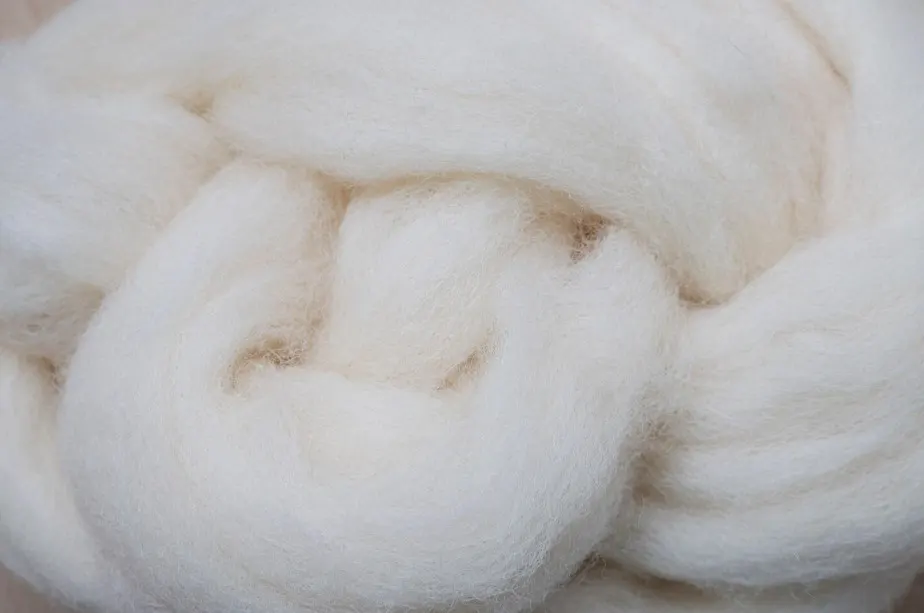
1. Polymerization
Manufacturers first react the polyester raw materials to form PET polymer.
Depending on the production route, the process involves esterification or transesterification followed by polycondensation. The polymer chains grow as the reaction proceeds.
The resulting PET must have appropriate molecular characteristics for the intended fiber application.
2. Polymer Melting
Solid PET is heated until it reaches a temperature suitable for melt processing.
Unlike fibers produced through solution spinning, conventional PET polyester fiber can generally be produced using melt spinning. The polymer becomes sufficiently fluid to pass through a spinneret while remaining controlled enough to form continuous filaments.
3. Melt Spinning
The molten polymer is pushed through a spinneret, a plate containing many small openings.
As the polymer exits these openings, it forms continuous filaments that are subsequently cooled and solidified.
Spinneret design can influence the fiber’s cross-sectional shape. Depending on the application, manufacturers can produce round, trilobal, hollow, or other engineered cross-sections.
This gives polyester manufacturers considerable control over properties such as:
- Surface characteristics
- Luster
- Bulk
- Moisture management
- Hand feel
- Optical behavior
4. Drawing
The newly formed filaments are stretched in a controlled process known as drawing.
Drawing aligns polymer chains along the fiber axis and can significantly improve:
- Tensile strength
- Dimensional stability
- Molecular orientation
- Controlled elongation
The drawing ratio and processing conditions therefore have a major influence on the final fiber properties.
5. Heat Treatment
Manufacturers can apply controlled heat treatment to stabilize the fiber structure and modify properties such as:
- Shrinkage
- Dimensional stability
- Crystallinity
- Thermal behavior
The exact conditions depend on the polyester grade and intended application.
6. Crimping and Cutting
Manufacturers can process polyester into either filament fibers or staple fibers.
For staple fiber production, continuous filaments are usually crimped and then cut into shorter lengths.
These staple fibers can subsequently be spun into yarn or processed into nonwoven materials.
For filament products, the continuous fibers can instead proceed directly into yarn-forming and texturing processes.
Types of Polyester Fiber
Polyester fiber is available in many forms because manufacturers can modify the polymer, fiber geometry, length, orientation, and processing conditions.
Polyester Filament Fiber
Filament polyester consists of continuous fibers.
Manufacturers can produce:
- Fully drawn yarns
- Partially oriented yarns
- Textured filaments
- Specialty industrial filaments
Filament construction is widely used in apparel, home textiles, and technical textile applications.
Polyester Staple Fiber
Polyester staple fiber consists of shorter fibers rather than continuous filaments.
Manufacturers can control staple length, crimp, fineness, and other characteristics according to the intended application.
Staple polyester is commonly used for:
- Spun yarn
- Nonwoven materials
- Filling materials
- Blended textiles
- Industrial fabrics
High-Tenacity Polyester Fiber
High-tenacity polyester is engineered to provide higher tensile performance than conventional textile grades.
Its combination of strength, dimensional stability, and relatively good chemical resistance makes it suitable for applications such as:
- Industrial fabrics
- Ropes
- Cords
- Reinforcement materials
- Conveyor-related textiles
Recycled Polyester Fiber
Recycled polyester is generally produced from recovered PET materials, including post-consumer bottles and polyester waste.
The recovered material is processed into a form that can be used to manufacture new polyester fibers.
Recycled polyester can reduce dependence on virgin polyester feedstocks, although its overall environmental impact still depends on collection, processing, energy consumption, product life, and end-of-life management.
Polyester Microfiber
Microfiber polyester uses extremely fine fibers with a very small linear density.
The smaller fiber diameter provides a high surface area and can produce different combinations of softness, surface coverage, and liquid or particle interaction.
Microfiber polyester is used in products such as:
- Cleaning textiles
- Apparel
- Upholstery
- Technical fabrics
- Specialty nonwovens
Polyester Fiber Properties
Polyester’s properties vary according to polymer grade, molecular structure, fiber diameter, orientation, crystallinity, cross-section, and processing conditions.
However, conventional polyester fiber generally provides the following characteristics:
| Property | Typical Characteristic |
|---|---|
| Tensile strength | Good |
| Abrasion resistance | Good to high |
| Moisture absorption | Low |
| Dimensional stability | Good |
| Wrinkle resistance | Good |
| Chemical resistance | Good against many chemicals |
| UV/weather resistance | Generally good, depending on grade and additives |
| Thermal behavior | Thermoplastic |
| Processing flexibility | High |
| Elastic recovery | Depends on fiber structure and processing |
Tensile Strength
Polyester provides useful tensile strength, particularly when manufacturers orient the polymer chains through controlled drawing.
High-tenacity grades can provide substantially higher mechanical performance than standard textile polyester.
Abrasion Resistance
Polyester generally withstands repeated rubbing and mechanical wear well, which contributes to its use in both textiles and industrial materials.
Low Moisture Absorption
Polyester is relatively hydrophobic and absorbs considerably less moisture than fibers such as cotton.
This allows polyester textiles to dry quickly, but the same characteristic can reduce moisture-related comfort in certain clothing applications.
Dimensional Stability
Polyester generally maintains its dimensions well when manufacturers properly control fiber orientation and heat treatment.
This contributes to its resistance to wrinkles and deformation.
Chemical Resistance
Polyester provides useful resistance to many common chemicals, although its performance varies according to the specific chemical, concentration, temperature, exposure time, and polymer grade.
It should therefore not be described as universally chemically resistant.
Is Polyester Fiber Heat Resistant?
Polyester fiber can withstand moderately elevated temperatures, but conventional polyester should not be considered an extreme-temperature fiber.
PET polyester is a thermoplastic material. When exposed to sufficiently high temperatures, it can soften, shrink, deform, and eventually melt.
The exact thermal behavior depends on the polyester composition, fiber structure, additives, and processing history. Typical PET melting behavior occurs around the mid-250°C range, but manufacturers should use the specific grade’s technical data rather than rely on one universal melting point.
This distinction matters when comparing polyester with fibers specifically designed for high-temperature applications.
For example, aramid fibers such as Kevlar and Nomex provide a substantially different thermal performance profile from conventional PET polyester. Polyester is generally selected for its combination of mechanical performance, processing flexibility, cost, and general durability rather than for extreme-temperature protection.
Polyester Fiber vs. Polyester Yarn vs. Polyester Fabric
These terms describe different stages or forms of the same material system.
Polyester polymer → Polyester fiber → Polyester yarn → Polyester fabric
Polyester Fiber
The basic fibrous form produced from polyester polymer.
Polyester Yarn
A collection of continuous filaments or staple fibers assembled into a yarn structure.
Polyester Fabric
A textile structure made by processing polyester yarns or fibers through methods such as weaving, knitting, or nonwoven formation.
This distinction is important because the properties of a final polyester fabric do not depend solely on the polymer.
Fabric construction, yarn structure, fiber fineness, weave or knit pattern, finishing, and density can all change the final performance.
Advantages of Polyester Fiber
High Durability
Polyester provides good resistance to mechanical wear and repeated use, making it suitable for products that require long service life.
Good Dimensional Stability
Its relatively low moisture absorption and controllable molecular orientation help polyester maintain its dimensions during normal use and processing.
Wrinkle Resistance
Polyester generally recovers well from deformation, which contributes to its wrinkle-resistant characteristics.
Fast Drying
Because polyester absorbs relatively little moisture, fabrics made from it can dry quickly.
Versatile Processing
Manufacturers can alter:
- Fiber diameter
- Cross-sectional shape
- Polymer characteristics
- Drawing ratio
- Crimp
- Surface treatment
This allows polyester to serve very different applications.
Cost-Effective Production
PET polyester can be manufactured at large scale using established polymerization and melt-spinning technologies, contributing to its widespread use.
Disadvantages of Polyester Fiber
Low Moisture Absorption
The same hydrophobicity that enables rapid drying can reduce moisture absorption and comfort in some clothing applications.
Static Electricity
Low moisture absorption can also contribute to static buildup under certain conditions.
Limited High-Temperature Performance
Polyester is thermoplastic and can soften, deform, or melt at elevated temperatures. It therefore cannot replace high-temperature fibers simply because it has good general durability.
Oil and Grease Affinity
Polyester’s relatively hydrophobic surface can make some oil-based stains more difficult to remove than water-based contaminants.
Environmental Considerations
Virgin polyester is generally produced from fossil-derived chemical feedstocks. Conventional polyester is also not readily biodegradable, so recycling and end-of-life management remain important considerations.
What Is Polyester Fiber Used For?
Polyester’s combination of durability, processability, low moisture absorption, and relatively stable dimensions allows manufacturers to use it across both consumer and technical applications.
Textile Applications
Polyester fiber is widely used in:
- Apparel
- Sportswear
- Home textiles
- Bedding
- Curtains
- Upholstery
- Carpets
- Blended fabrics
It can be used alone or blended with fibers such as cotton, wool, or other synthetic fibers to modify the final textile’s properties.
Industrial and Technical Applications
Polyester also plays an important role in technical textiles.
Applications include:
- Conveyor belt fabrics
- Industrial fabrics
- Ropes
- Cords
- Tire reinforcement
- Sewing threads
- Hoses
- Nets
- Reinforcement fabrics
- Nonwoven materials
Industrial grades can use different polymer characteristics and fiber structures to achieve higher strength, dimensional stability, or other application-specific properties.
Polyester Fiber vs. Other Fibers
No fiber is universally better than another. The appropriate material depends on the required combination of strength, moisture behavior, temperature resistance, durability, cost, and processing requirements.
Polyester vs. Cotton
| Property | Polyester | Cotton |
|---|---|---|
| Origin | Synthetic | Natural |
| Moisture absorption | Low | Higher |
| Drying speed | Fast | Slower |
| Wrinkle resistance | Generally higher | Generally lower |
| Abrasion resistance | Generally good | Good |
| Thermal behavior | Thermoplastic | Does not melt like polyester |
Polyester is often selected when durability, dimensional stability, and quick drying are important, while cotton can offer advantages in moisture absorption and natural hand feel.
Polyester vs. Nylon
Both are synthetic fibers, but they differ in their molecular structures and performance.
Nylon generally provides excellent strength and abrasion resistance, while polyester offers good dimensional stability, lower moisture absorption, and strong resistance to many environmental conditions.
The better choice depends on the application.
Polyester vs. Polypropylene
Polypropylene has an even lower density and very low moisture absorption, while polyester generally offers better dimensional stability and broader textile and industrial processing options.
Polyester vs. Aramid
Polyester and aramid fibers serve significantly different performance requirements.
Polyester is widely used for general-purpose textiles and technical applications where durability, processability, and cost are important.
Aramid fibers are engineered for demanding applications requiring high strength and significantly greater resistance to heat and flame.
The two should therefore not be considered interchangeable simply because both are synthetic fibers.
Is Polyester Fiber Recyclable and Sustainable?
Can Polyester Fiber Be Recycled?
Yes. PET polyester can be mechanically or chemically recycled, depending on the waste stream and recycling technology.
Recycled PET can then become feedstock for new polyester products, including fibers.
One common route involves recovering PET containers, processing the material into suitable recycled feedstock, and converting it into polyester fiber.
Is Polyester Biodegradable?
Conventional synthetic polyester is not readily biodegradable under normal environmental conditions.
This means polyester products can persist for long periods after disposal.
However, durability also means a polyester product may remain functional for a long time, so environmental assessment should consider the complete product lifecycle rather than biodegradability alone.
Is Recycled Polyester More Sustainable?
Recycled polyester can reduce the demand for virgin polyester feedstocks and make use of existing PET waste.
However, “recycled” does not automatically mean that a product has no environmental impact. Collection systems, sorting, cleaning, recycling technology, energy consumption, transportation, product durability, and end-of-life treatment all influence the overall environmental footprint.
Industrial Applications of Polyester Fiber
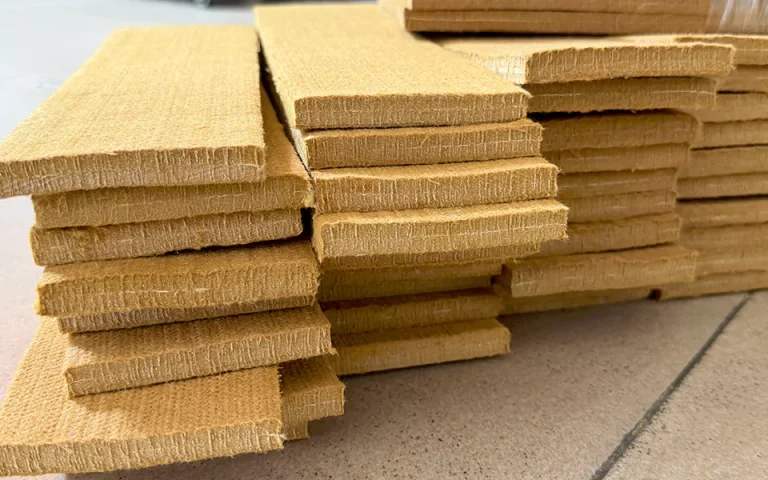
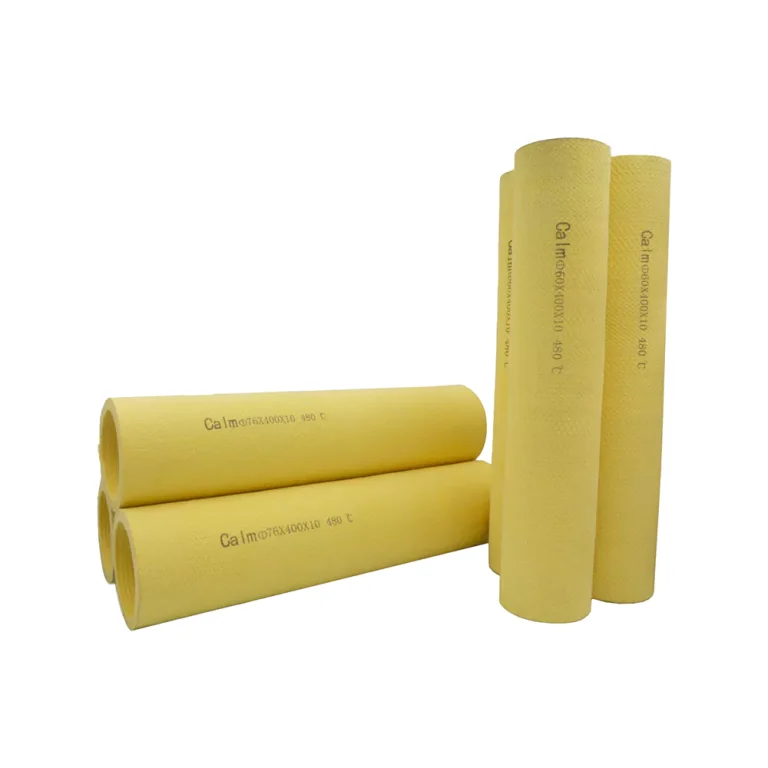
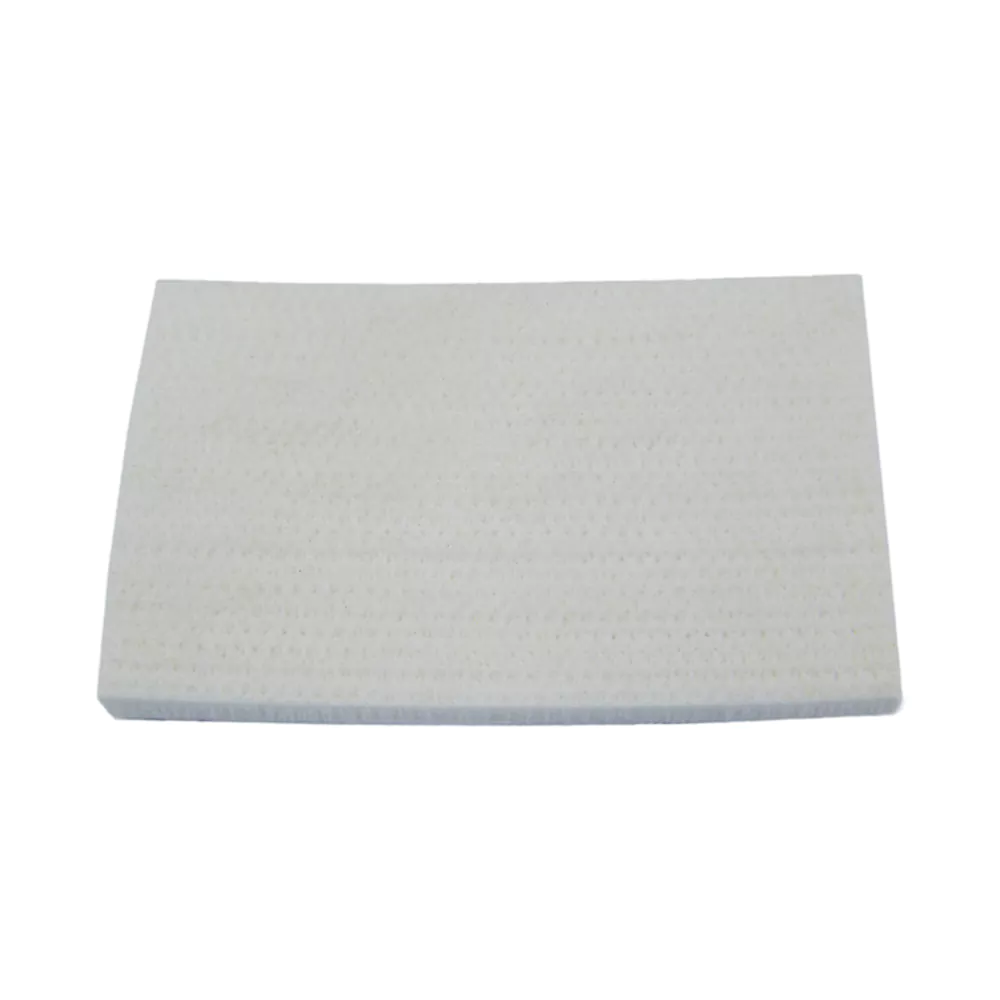
Beyond apparel and home textiles, polyester fiber also plays an important role in industrial applications. Its combination of abrasion resistance, dimensional stability, low moisture absorption, and processing flexibility makes it suitable for industrial felts, conveyor materials, filtration media, insulation components, and protective textile products. In applications that require controlled contact, cushioning, or wear resistance, polyester felt can provide a practical solution.
CALM supplies polyester felt products for industrial applications, with customizable materials, dimensions, and structures to meet different equipment and operating requirements.
FAQs
Polyester fiber is a synthetic fiber made from polyester polymers, with PET being the most widely used polymer for conventional polyester fiber production.
Conventional polyester fiber is synthetic. Manufacturers produce it through chemical polymerization and fiber-forming processes rather than harvesting it directly from a natural source.
Most polyester fiber is made from PET, which manufacturers produce primarily from terephthalic acid or a related precursor and ethylene glycol.
Yes. Polyester fiber is produced from thermoplastic polyester polymers. PET, the most common polyester used for fiber production, is also widely used in plastic products.
Manufacturers generally produce polyester fiber through polymerization, polymer melting, melt spinning, drawing, heat treatment, and, for staple fiber, crimping and cutting.
Polyester generally provides good tensile strength, abrasion resistance, dimensional stability, wrinkle resistance, low moisture absorption, and processing versatility.
Polyester can withstand certain elevated temperatures, but conventional PET polyester is thermoplastic and can soften, deform, and melt at sufficiently high temperatures. It is not an extreme-temperature fiber.
Polyester fiber is the basic fibrous material. Manufacturers combine fibers into yarns and then convert yarns or fibers into fabrics through weaving, knitting, or nonwoven processes.
Yes. PET polyester can be recycled, and recycled PET can be used to manufacture new polyester fibers and other products.
Conclusion
Polyester fiber is a versatile synthetic fiber based primarily on PET polymer. Its combination of strength, abrasion resistance, dimensional stability, low moisture absorption, and processing flexibility supports applications ranging from clothing and home textiles to industrial and technical fabrics. However, its thermoplastic behavior, moisture characteristics, and environmental considerations also need to be evaluated when selecting polyester for a specific application.
Looking for polyester felt solutions for industrial applications? Contact us at [email protected] to discuss your material and performance requirements.