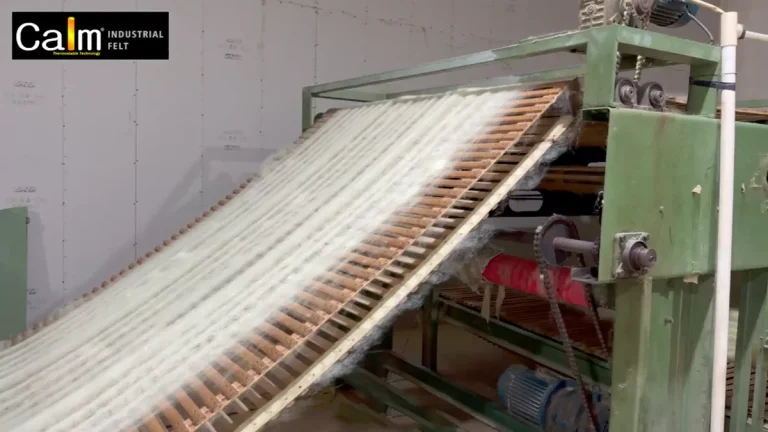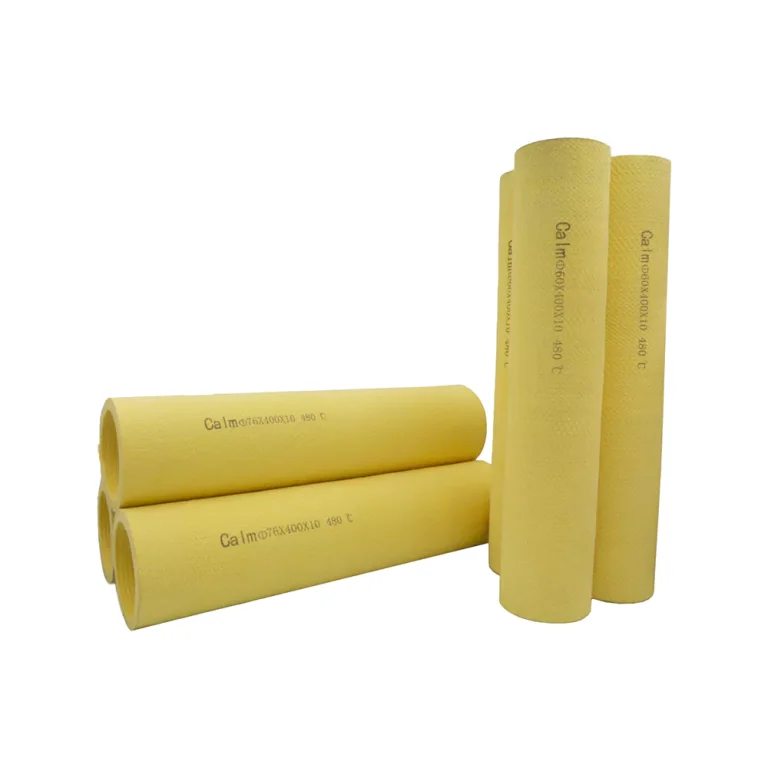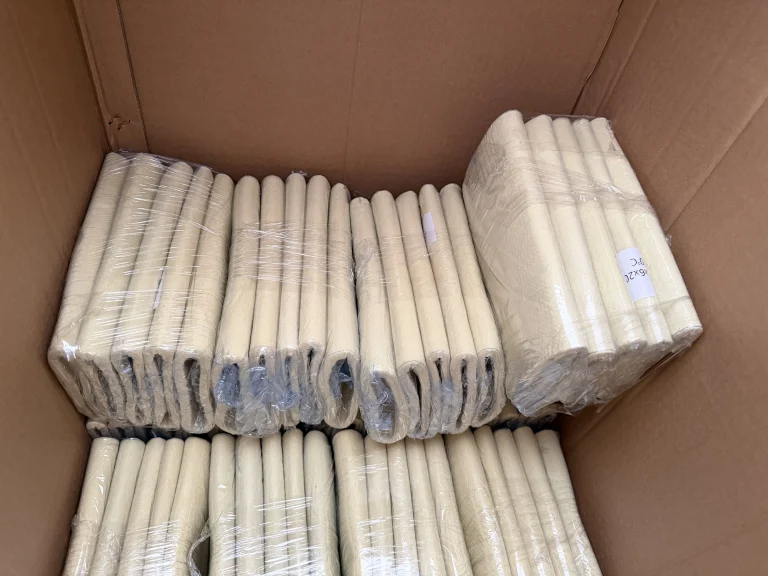
The main types of industrial felt used in manufacturing include wool felt, polyester felt, Nomex® felt, Kevlar® felt, PBO felt, and blended felt. Industrial felt can also be classified by how it is manufactured, such as needle-punched, pressed, and woven felt. The right type depends on the required temperature resistance, abrasion resistance, mechanical load, surface contact, and application.
Understanding these two classification methods is important because a material type and a manufacturing method describe different aspects of a felt product. For example, Kevlar® describes the fiber material, while needle-punched describes how the felt structure is produced.
How Is Industrial Felt Classified?
Industrial felt is not a single material. Manufacturers can produce felt from different fibers and use different processes to create the required density, thickness, strength, and surface characteristics.
There are two useful ways to classify industrial felt:
By Fiber Material
This classification focuses on what the felt is made from. Common industrial materials include:
- Wool
- Polyester
- Nomex®
- Kevlar®
- PBO
- Blended fibers
Each material provides a different combination of mechanical, thermal, chemical, and wear-related properties.
By Manufacturing Method
This classification describes how the fibers are formed into a felt structure. Common methods include:
- Needle punching
- Pressing
- Weaving
These methods can produce very different structures even when similar fibers are used.
For industrial applications, both factors matter. The fiber determines many of the material’s inherent properties, while the manufacturing process influences the structure and behavior of the finished felt.
Main Types of Industrial Felt by Material
1. Wool Felt
Wool felt is one of the traditional forms of industrial felt. Wool fibers naturally interlock and can be processed into dense felt structures with good resilience and compression recovery.
Wool felt is valued for properties such as:
- Resilience
- Cushioning
- Vibration absorption
- Surface conformity
- Oil retention
- Sealing performance
Typical manufacturing applications include:
- Gaskets
- Seals
- Wipers
- Lubrication components
- Polishing
- Vibration-damping components
Wool felt is particularly useful where a soft, resilient material is required for mechanical contact or sealing. However, applications involving extreme temperatures generally require engineered synthetic or high-performance fibers instead.
2. Polyester Felt
Polyester felt is a widely used synthetic industrial felt. Manufacturers can produce polyester felt with different thicknesses, densities, and structures to meet requirements for filtration, protection, cushioning, and material handling.
Common characteristics include:
- Good abrasion resistance
- Moisture resistance
- Chemical resistance
- Dimensional stability
- Processing versatility
Polyester felt is used in applications such as:
- Filtration
- Protective pads
- Surface protection
- Industrial equipment components
- Material handling
- Lower-temperature conveying
In aluminum extrusion, polyester felt can be used in lower-temperature areas after the extruded profile has cooled significantly. Its suitability depends on the actual operating temperature and contact conditions rather than the fiber name alone.
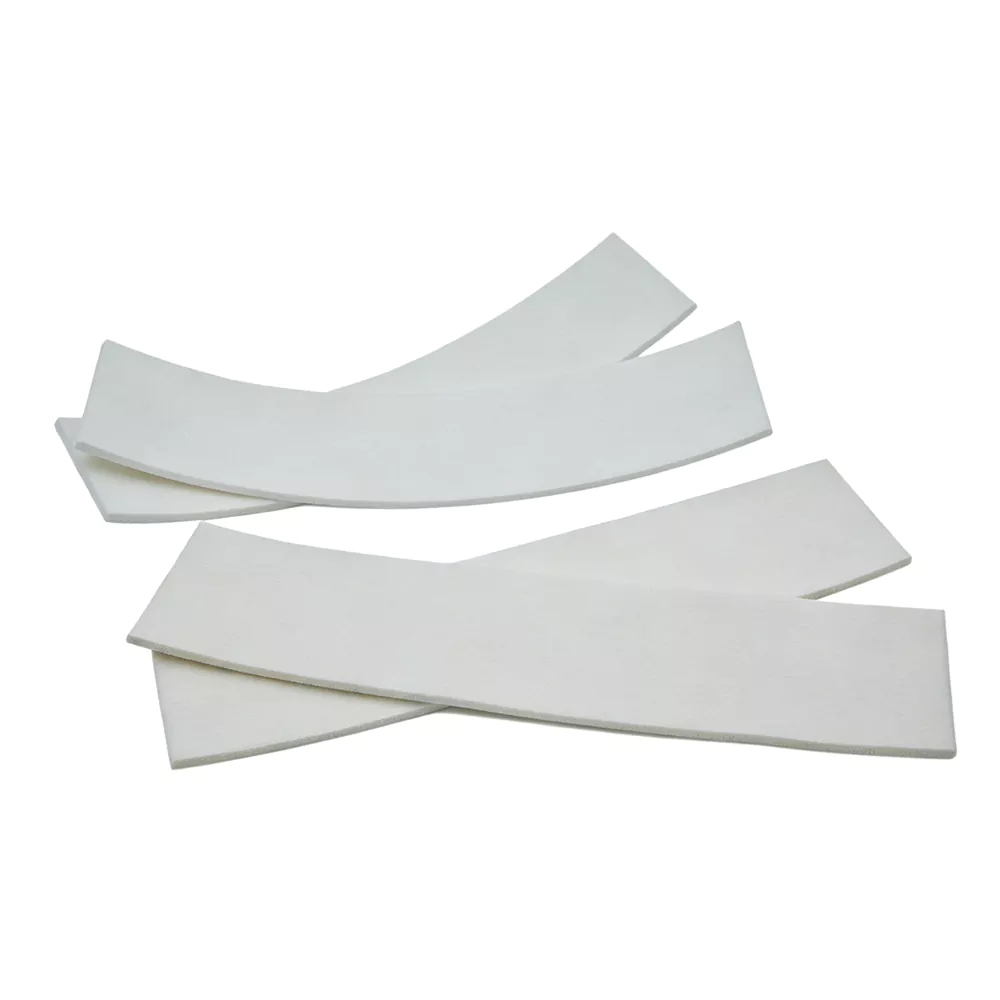
3. Nomex® Felt
Nomex® is a meta-aramid fiber known primarily for its thermal stability and flame resistance.
Compared with conventional synthetic felts such as polyester, Nomex® is intended for more demanding thermal environments. It can be processed into industrial felt products for applications where the material must maintain its performance under elevated temperatures.
Typical characteristics include:
- Heat resistance
- Flame resistance
- Thermal stability
- Dimensional stability
Applications can include:
- Thermal protection
- High-temperature industrial components
- Heat-resistant pads
- Insulation-related applications
- Medium-temperature material handling
Nomex® is particularly relevant when thermal performance is more important than maximizing mechanical strength.
4. Kevlar® Felt
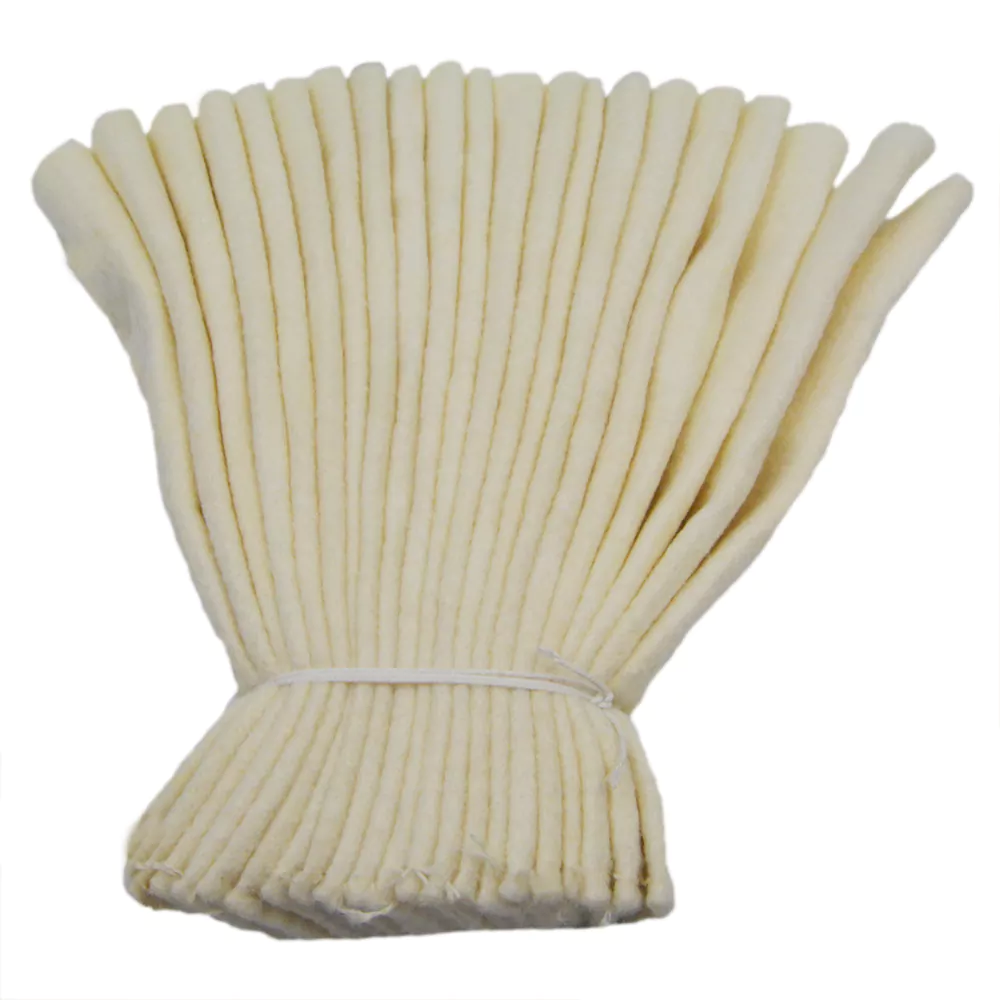
Kevlar® is a para-aramid fiber. Unlike meta-aramids such as Nomex®, para-aramids are particularly known for their high tensile strength, modulus, abrasion resistance, and strength-to-weight ratio.
These characteristics make Kevlar® felt suitable for industrial applications involving both heat and mechanical stress.
Typical advantages include:
- High tensile strength
- High strength-to-weight ratio
- Abrasion resistance
- Mechanical durability
- Heat resistance
Industrial applications may include:
- High-temperature conveying
- Protective pads
- Heat-resistant belts
- Rollers
- Mechanical protection
- Aluminum extrusion handling
Kevlar® and Nomex® should not be treated as interchangeable materials. The appropriate choice depends on whether the application places greater emphasis on mechanical durability, thermal protection, or a combination of both.
5. PBO Felt
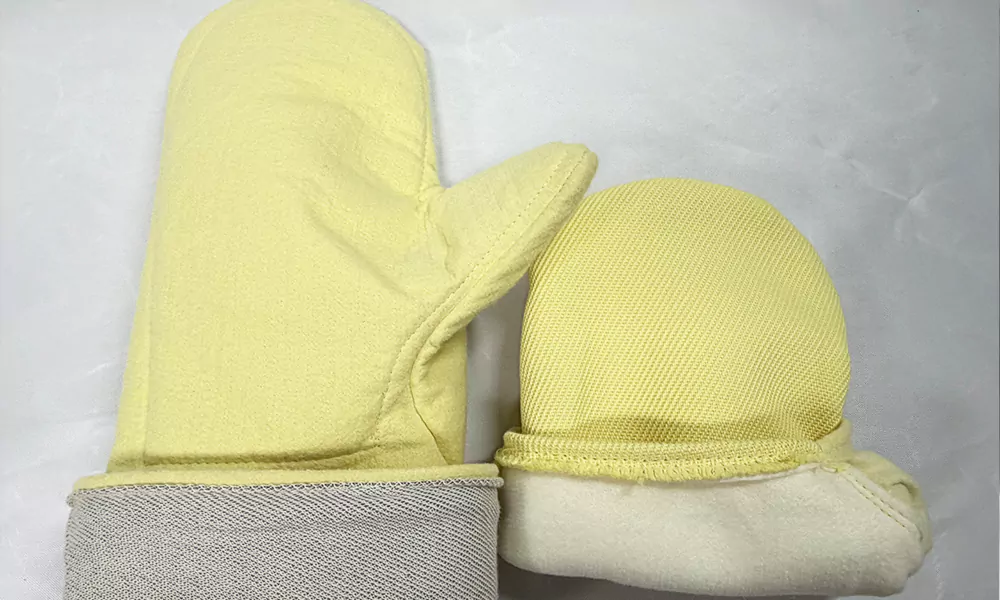
PBO is a high-performance fiber used in industrial felt for particularly demanding temperature conditions.
PBO felt is known for its combination of:
- Very high temperature resistance
- High strength
- High modulus
- Wear resistance
This makes it especially relevant to extreme-temperature manufacturing applications.
One important example is aluminum extrusion. PBO felt can be used near the extrusion press exit and other areas where newly extruded aluminum profiles are exposed to extremely high temperatures.
Typical products include:
- High-temperature felt belts
- Felt rollers
- Felt pads
- Transfer components
- Protective components
PBO is generally selected when the thermal requirements exceed what conventional synthetic felt can comfortably handle.
6. Blended Industrial Felt
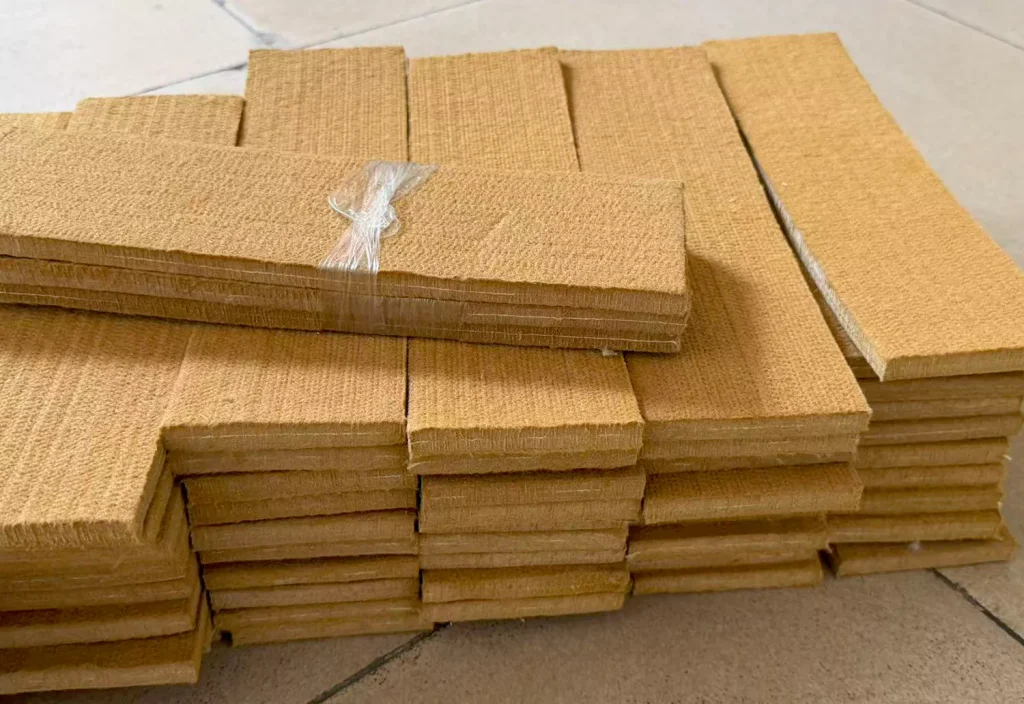
Manufacturers can also combine different fibers to balance multiple performance requirements.
For example, a blend may combine the high-temperature or mechanical properties of one fiber with the processing or flexibility characteristics of another.
Blended felt can be useful when an application requires a balance between:
- Temperature resistance
- Abrasion resistance
- Strength
- Flexibility
- Service life
- Cost
A blended construction can therefore provide a more application-specific solution than relying on a single fiber.
Main Types of Industrial Felt by Manufacturing Method
Fiber material is only one part of an industrial felt product. The manufacturing method also affects its structure and performance.
Needle-Punched Felt
Needle-punched felt is one of the most widely used structures for industrial applications.
During production, barbed needles repeatedly penetrate a fiber web. The needles entangle the fibers mechanically, creating a stable nonwoven felt structure.
Manufacturers can adjust factors such as:
- Fiber composition
- Thickness
- Density
- Needle-punching density
- Surface structure
This flexibility makes needle-punched felt suitable for many industrial products, including:
- Felt belts
- Felt pads
- Felt rollers
- Filtration media
- Protective components
- Thermal handling products
Needle-punched construction is particularly useful when manufacturers need to produce thick, dense, durable felt components from high-performance fibers.
Pressed Felt
Pressed felt is produced by compacting and consolidating fibers through combinations of moisture, heat, pressure, and mechanical action.
Traditional wool felt is commonly associated with this type of manufacturing process.
Pressed felt can provide a dense structure with useful compression and sealing characteristics, making it suitable for:
- Gaskets
- Seals
- Wipers
- Oil-retaining components
- Industrial pads
The important point is that pressed felt describes the manufacturing method rather than a specific fiber. The material and the manufacturing process should therefore be considered separately.
Woven Felt
Woven felt differs from needle-punched felt because it starts with a woven yarn structure.
Yarns are interlaced in a defined pattern, creating a structure with identifiable warp and weft directions. Additional finishing or felting processes may then modify the fabric structure.
Woven structures can be useful when an application requires particular directional or dimensional characteristics.
However, woven felt is less interchangeable with needle-punched felt than the names might suggest. The two structures can behave differently under tension, compression, bending, and wear.
Where Are Different Types of Industrial Felt Used in Manufacturing?
Industrial felt is used across a wide range of manufacturing processes because it can provide different functions depending on the material and construction.
Aluminum Extrusion
Aluminum extrusion is one of the clearest examples of why manufacturers need different felt materials for different operating conditions.
Extruded aluminum profiles leave the press at high temperatures and gradually cool as they move through the production line. The felt components used along the line therefore need to match the temperature and mechanical conditions of each zone.
A typical material strategy may include:
- PBO felt for extreme-temperature areas close to the extrusion press
- Kevlar® felt for high-temperature conveying and handling
- Nomex® felt for intermediate-temperature areas
- Polyester felt for lower-temperature handling
The exact material selection depends on the extrusion process, profile temperature, line speed, contact pressure, and construction of the felt component.
This is why an aluminum extrusion line may use several types of felt rather than one material throughout the entire system.
Textile Processing
Industrial felt is also used in textile manufacturing and finishing processes.
Depending on the equipment and operating conditions, felt components can provide:
- Heat transfer
- Pressure distribution
- Surface contact
- Cushioning
- Material support
High-temperature aramid felts can be useful in processes where conventional polyester or wool felt cannot provide sufficient thermal stability.
Steel and Metal Processing
Manufacturing processes involving metal products often require materials that can withstand mechanical contact and protect finished surfaces.
Industrial felt can be used for:
- Surface protection
- Material handling
- Cushioning
- Separation
- Contact components
The appropriate material depends on the temperature and mechanical load involved.
Filtration
Synthetic needle-punched felts are widely used as filtration media because their fiber structure can be engineered for specific permeability and particle-capture requirements.
Polyester and other synthetic fibers can be selected according to:
- Temperature
- Chemical environment
- Particle characteristics
- Airflow
- Required filtration efficiency
Filtration felt is therefore a different application category from high-temperature handling felt, even though both may use a needle-punched manufacturing process.
Machinery and Equipment
Industrial felt can also function as a mechanical component rather than simply as a textile material.
Common uses include:
- Sealing
- Wiping
- Lubrication
- Vibration damping
- Cushioning
- Surface protection
For these applications, properties such as resilience, compression recovery, density, and surface finish may be more important than extreme temperature resistance.
Which Type of Industrial Felt Is Used in Aluminum Extrusion?
There is no single felt material for every position on an aluminum extrusion line. The material needs to match the temperature and mechanical conditions of the specific production zone.
| Felt Material | Main Characteristic | Typical Role in Aluminum Extrusion |
|---|---|---|
| PBO | Extreme-temperature performance | Extrusion press exit and high-temperature zones |
| Kevlar® | Mechanical strength and abrasion resistance | High-temperature conveying and handling |
| Nomex® | Thermal and flame resistance | Intermediate-temperature zones |
| Polyester | General-purpose synthetic performance | Lower-temperature handling |
| PBO + Kevlar® | Combined thermal and mechanical performance | Demanding high-temperature areas |
These temperature categories should be treated as application guidance rather than universal temperature limits. Actual performance depends on fiber grade, felt density, thickness, construction, contact time, line speed, and mechanical loading.
How Do You Choose Between Different Types of Industrial Felt?
The material name is only the starting point. A better selection process begins with the actual manufacturing conditions.
1. Operating Temperature
Determine the temperature the felt will actually experience.
Continuous operating temperature, intermittent exposure, and short-duration contact can produce very different material requirements.
2. Abrasion and Wear
If the felt continuously contacts moving metal, rollers, or other abrasive surfaces, wear resistance becomes an important selection factor.
3. Mechanical Load
Consider:
- Contact pressure
- Tensile load
- Compression
- Bending
- Line speed
A felt component that supports or transports a product may require very different properties from a stationary insulating pad.
4. Surface Contact Requirements
If the felt directly contacts a finished product, surface characteristics become critical.
The material should provide the required protection without creating unacceptable marks, scratches, dents, or other surface defects.
5. Felt Construction
Thickness, density, fiber arrangement, needle-punching density, and overall construction can significantly affect performance.
Two felt products made from the same fiber can behave differently if their structures are different.
6. Service Life and Maintenance
A suitable material should provide the required performance over the expected service interval rather than simply meeting the initial temperature or strength requirement.
FAQs
What are the most common types of industrial felt?
Common industrial felt materials include wool, polyester, Nomex®, Kevlar®, PBO, and blended fibers. Needle-punched and pressed felt are also common classifications based on manufacturing method.
What is the difference between polyester and aramid felt?
Polyester felt is generally used for versatile industrial applications where moderate temperature resistance, abrasion resistance, moisture resistance, or cost efficiency are important. Aramid felts such as Nomex® and Kevlar® are used for more demanding thermal or mechanical environments.
What is the difference between Kevlar® and Nomex® felt?
Kevlar® is a para-aramid primarily valued for mechanical strength, abrasion resistance, and high strength-to-weight performance. Nomex® is a meta-aramid primarily associated with thermal and flame resistance. The appropriate choice depends on the main operating conditions.
Is needle-punched felt a material?
No. Needle-punched describes the manufacturing method and resulting structure, not a specific fiber. Wool, polyester, Kevlar®, Nomex®, and other fibers can potentially be processed into different felt structures depending on the manufacturing process.
What type of felt is used for high-temperature manufacturing?
High-temperature applications can use materials such as Nomex®, Kevlar®, or PBO depending on the temperature, mechanical load, contact time, and other operating conditions. PBO is generally reserved for particularly demanding high-temperature applications.
What type of felt is used in aluminum extrusion?
Aluminum extrusion lines can use PBO, Kevlar®, Nomex®, polyester, or combinations of these materials in different production zones. The appropriate choice depends on the temperature and mechanical conditions at each position on the line.
Conclusion
Industrial felt can be classified by both fiber material and manufacturing method. Wool and polyester serve many general industrial applications, while Nomex®, Kevlar®, and PBO provide specialized performance for more demanding thermal or mechanical environments.
For manufacturing applications, the right felt is determined not simply by its material name but by how its properties and construction match the actual operating conditions. In applications such as aluminum extrusion, using different felt materials at different temperature zones can help achieve the required combination of heat resistance, wear resistance, surface protection, and service life.
Looking for the right industrial felt for your manufacturing application? Contact CALM at [email protected] to discuss the material, construction, and specifications you need.