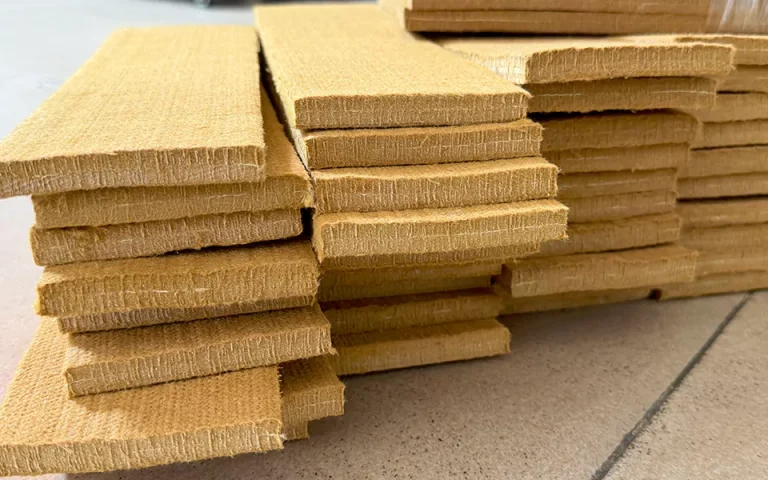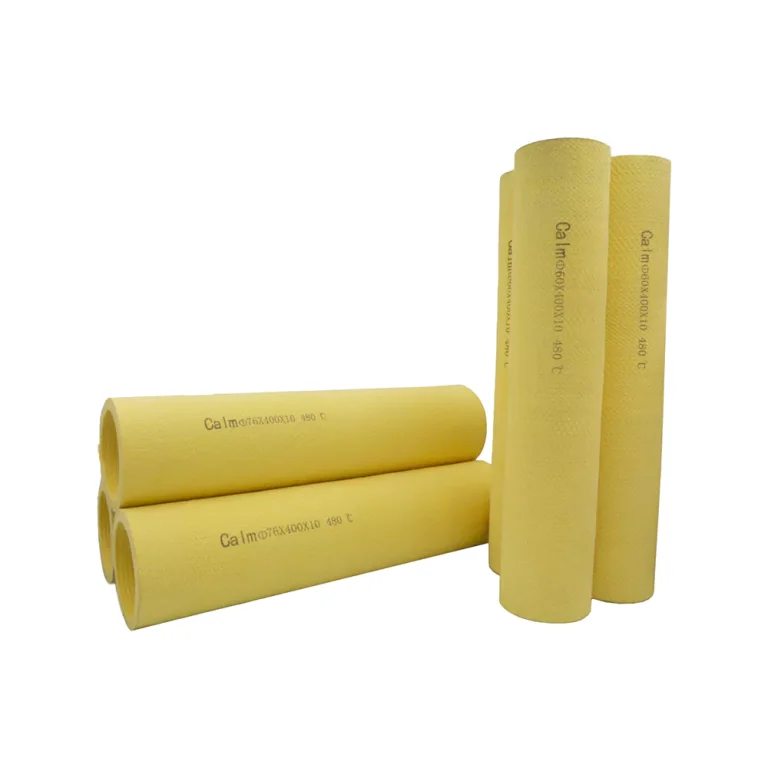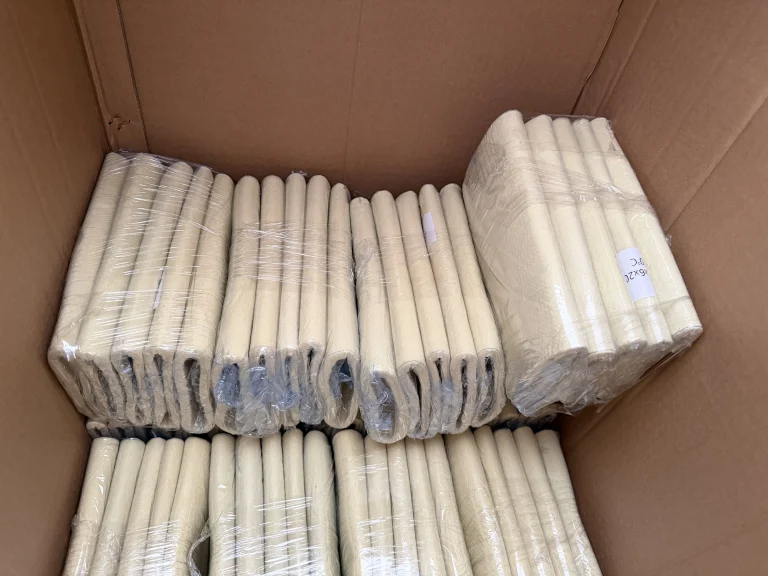
Yes. Industrial felt can be customized for specific applications in terms of material, thickness, density, dimensions, shape, construction, and processing. The appropriate configuration depends on factors such as operating temperature, mechanical load, abrasion, contact surface, installation space, and the function the felt needs to perform.
For industrial equipment, a standard felt product may not always provide the required fit or performance. Custom industrial felt allows the material and construction to be matched more closely to the actual working conditions.
What Can Be Customized in Industrial Felt?
Industrial felt is not a single standardized material. Different fibers, structures, and processing methods can produce significantly different performance characteristics. Depending on the manufacturer and application, several specifications can be customized.
Material and Fiber Composition
The fiber is one of the most important customization decisions because it determines the basic performance range of the felt.
Common industrial felt materials include polyester, Nomex®, Kevlar®, PBO, wool, and blended fiber constructions. Each material has different characteristics related to temperature resistance, abrasion, mechanical strength, flexibility, and durability.
For example:
- Polyester felt can be used for general industrial applications and lower-temperature material handling.
- Nomex® felt is suitable for applications where thermal stability and heat resistance are important.
- Kevlar® felt provides high mechanical strength and abrasion resistance together with heat resistance.
- PBO felt is used where extremely high-temperature performance is required.
- Blended felt, such as PBO and Kevlar combinations, can balance thermal and mechanical requirements.
Material selection should therefore be based on the actual operating conditions rather than simply choosing the strongest or most heat-resistant fiber available.
Thickness
Felt thickness can be customized to meet the physical and functional requirements of the equipment.
Thickness affects several aspects of performance, including:
- Compression and cushioning
- Surface protection
- Clearance between components
- Thermal insulation
- Contact pressure
- Overall component dimensions
A thicker felt is not automatically better. Excessive thickness can interfere with equipment clearance or change the way a component contacts the material being handled. The required thickness should be determined by the application’s mechanical and dimensional requirements.
Density and Hardness
Density and hardness are also important when a felt component needs to withstand compression, support a load, maintain its shape, or provide controlled contact.
For example, a protective felt pad may need a different density from a sealing component. A felt used for material handling may also require a different structure from one designed primarily for cushioning.
When specifying custom felt, manufacturers may consider:
- Felt density
- Hardness
- Compression characteristics
- Recovery after compression
- Structural stability
These specifications should be considered together with thickness and fiber type rather than independently.
Size and Shape
Custom dimensions are one of the most common requirements for industrial felt.
Felt can be produced or converted into application-specific:
- Lengths and widths
- Pads
- Strips
- Rings
- Washers
- Gaskets
- Sleeves
- Rollers
- Belts
- Other component shapes
Custom cutting allows a felt component to fit existing machinery instead of requiring the equipment to be modified around a standard product.
For components installed inside machinery, dimensional accuracy can also be important because the felt may need to maintain a specific clearance, contact area, or mounting position.
Felt Construction
The manufacturing structure can also be selected according to the application.
Needle-punched felt is made by mechanically entangling fibers and can be produced in different thicknesses, densities, and fiber combinations. It is widely used for industrial pads, belts, rollers, protective components, and other applications.
Pressed felt uses compression and consolidation to form a dense felt structure. It is commonly associated with applications such as seals, gaskets, wipers, and oil-retaining components.
Other constructions may be appropriate where directional strength, dimensional stability, or a particular surface structure is required.
The construction should be considered alongside the fiber because two felts made from similar fibers can behave differently when their structures are different.
Surface Treatment and Further Processing
Some applications require additional processing after the basic felt is produced.
Depending on the product and application, this may include:
- Resin hardening
- Cutting
- Slitting
- Drilling or punching
- Bonding
- Sewing
- Forming
- Other application-specific converting processes
For example, resin hardening can be used for certain industrial felt components when greater structural stability or wear resistance is required.
Why Does Industrial Felt Need to Be Customized?
The main reason for customization is that industrial equipment operates under different physical conditions.
A felt component used in a high-temperature aluminum extrusion line does not face the same requirements as a felt gasket, filtration material, or protective pad.
Operating Temperature
Temperature is often the first specification to consider for high-temperature felt.
The appropriate fiber depends on the actual temperature exposure, contact time, mechanical load, and surrounding conditions. A component exposed briefly to high temperatures may have different requirements from one subjected to continuous thermal exposure.
For high-temperature applications, manufacturers may select materials such as Nomex®, Kevlar®, PBO, or blended constructions according to the operating conditions.
Mechanical Load and Pressure
Felt components may be compressed, pulled, bent, or subjected to repeated mechanical contact.
Applications with higher mechanical loads may require a material and construction with greater mechanical durability. Thickness, density, hardness, and reinforcement can also influence how the component performs under load.
Abrasion and Repeated Contact
Continuous contact with metal, machinery, or moving components can gradually wear down a felt surface.
Where abrasion is a major concern, the fiber selection and felt construction need to provide sufficient durability for the expected operating conditions.
This is particularly relevant to industrial conveying and material-handling applications, where felt components may remain in repeated contact with hot or moving materials.
Contact Surface and Product Protection
In some applications, the felt itself is not the main functional component. Its purpose is to protect another surface.
For example, felt can be used between industrial equipment and a metal product to reduce direct contact and help protect the surface from scratches or other mechanical damage.
In these applications, the material, surface structure, thickness, and hardness all need to be considered together.
Space and Equipment Dimensions
Industrial machinery often has limited installation space.
A standard felt pad or strip may have the right material but the wrong dimensions. Custom manufacturing allows the felt to match the available space, mounting location, and contact area.
This is particularly useful when replacing an existing component or integrating felt into equipment that has already been designed.
How Is Industrial Felt Customized for Different Manufacturing Applications?
The customization process should start with the application’s operating conditions rather than with a standard felt specification.
Aluminum Extrusion
Aluminum extrusion is a good example of why industrial felt needs application-specific customization.
Felt components may be used on extrusion lines for high-temperature material handling, surface protection, conveying, and contact between equipment and newly extruded profiles.
Different sections of an extrusion line can experience significantly different temperatures and mechanical conditions. As a result, the felt material may change according to the position of the component.
For example:
| Extrusion Line Requirement | Possible Felt Configuration |
|---|---|
| Extreme-temperature areas | PBO or PBO-based construction |
| High temperature and repeated wear | Kevlar® or PBO + Kevlar® |
| Intermediate-temperature handling | Nomex® |
| Lower-temperature handling | Polyester |
| Application requiring both thermal and mechanical performance | Blended fiber construction |
These are application examples rather than universal temperature limits. Actual material selection should also consider contact time, felt construction, thickness, line speed, mechanical loading, and the specific equipment.
Custom dimensions are equally important. Felt pads, belts, rollers, sleeves, strips, and other components may need to match the dimensions and configuration of the extrusion line.
Sealing and Gasketing
A felt gasket or seal needs to maintain contact while accommodating the available installation space.
For these applications, customization may focus on:
- Thickness
- Density
- Hardness
- Shape
- Compression characteristics
- Material compatibility
The required configuration depends on the sealing environment and the level of compression involved.
Surface Protection
When felt is used to protect finished products or sensitive surfaces, the contact characteristics become especially important.
The manufacturer may adjust:
- Fiber type
- Felt density
- Thickness
- Surface structure
- Component dimensions
The objective is to create sufficient protection without interfering with material handling or equipment operation.
Filtration
Industrial filtration uses felt structures with specific fiber arrangements and porosity requirements.
Depending on the filtration process, customization may involve:
- Fiber composition
- Thickness
- Density
- Surface structure
- Filtration characteristics
- Overall dimensions
The appropriate specifications depend on the particles, airflow or fluid flow, temperature, and equipment design.
Machinery and Material Handling
Felt components can also be integrated into machinery for cushioning, separation, wiping, conveying, protection, or controlled contact.
In these applications, customization can help the felt fit directly into an existing component rather than functioning as a general-purpose sheet or roll.
What Information Should You Provide for Custom Industrial Felt?
You do not always need to know the exact felt material before contacting a manufacturer. Providing accurate application information can be more useful because the manufacturer can use those conditions to determine a suitable material and construction.
Useful information includes:
- Application — Explain what the felt does and where it is installed.
- Operating temperature — Provide the normal working temperature and, where relevant, peak temperature.
- Contact material — Identify the material that the felt will touch, such as aluminum, steel, fabric, or another component.
- Mechanical load — Indicate whether the felt is compressed, pulled, bent, or subjected to repeated impact.
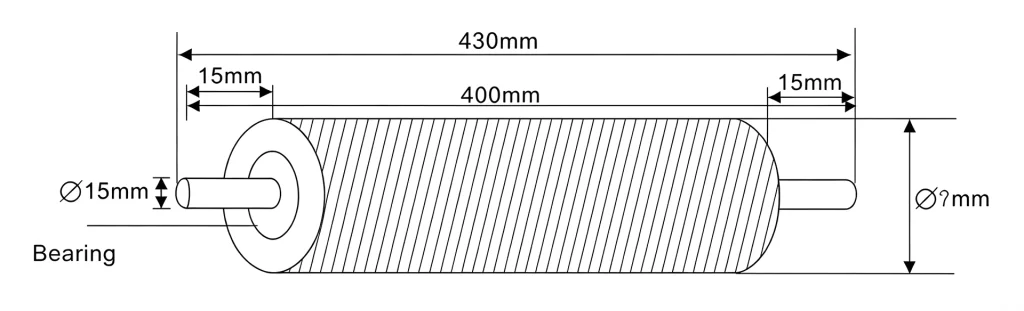
- Dimensions — Provide the required length, width, thickness, diameter, or other dimensions.
- Operating speed — This is particularly important for belts, rollers, and other moving components.
- Wear conditions — Describe whether the felt is exposed to continuous friction or abrasive contact.
- Installation method — Explain how the felt is mounted, joined, or integrated into the equipment.
- Existing sample or drawing — A technical drawing, dimensions, photographs, or an existing component can help the manufacturer understand the required configuration.
The more accurately the operating conditions are described, the easier it is to select a suitable felt specification.
Custom Industrial Felt vs. Standard Felt
Standard felt is useful when an off-the-shelf material already meets the application’s requirements. Custom felt becomes more relevant when standard specifications do not provide the required dimensions, material characteristics, or component configuration.
| Standard Industrial Felt | Custom Industrial Felt |
|---|---|
| Fixed specifications | Application-specific specifications |
| Standard dimensions | Custom dimensions |
| Predefined material options | Material selected according to operating conditions |
| General-purpose shapes | Application-specific shapes |
| Limited processing | Cutting and other application-specific processing |
The purpose of customization is not simply to make a product different. It is to make the felt fit the actual requirements of the equipment and manufacturing process.
How Does the Custom Industrial Felt Process Work?
A typical custom felt project can follow several stages:
Application → Operating Requirements → Material Selection → Specification → Sample or Prototype → Testing → Production
The first stage is understanding the application. The manufacturer can then evaluate temperature, load, wear, dimensions, contact conditions, and other requirements.
After selecting a suitable material and construction, a sample may be produced for evaluation. If the component performs as required, the final specifications can be confirmed for production.
This process is particularly useful for equipment-specific components where fit and long-term performance are more important than simply purchasing a standard felt sheet.
FAQs
Can industrial felt be made to a specific thickness?
Yes. Industrial felt can be produced or converted to different thicknesses depending on the fiber, manufacturing process, and equipment available. The appropriate thickness should be selected based on the required compression, clearance, protection, thermal performance, and mechanical conditions.
Can industrial felt be cut into custom shapes?
Yes. Industrial felt can be converted into pads, strips, rings, gaskets, sleeves, and other shapes depending on the material and processing method. Technical drawings or dimensions can help define the required shape and tolerances.
Can industrial felt be customized for high-temperature applications?
Yes. High-temperature felt can be customized by selecting an appropriate fiber, thickness, density, construction, and component design. Materials such as Nomex®, Kevlar®, PBO, and blended constructions may be considered depending on the actual operating conditions.
Can a manufacturer make industrial felt according to a drawing?
Many industrial felt manufacturers can produce custom components according to technical drawings, dimensions, or existing samples. The available tolerances and processing options depend on the material and manufacturing equipment.
What information is needed to order custom industrial felt?
At minimum, provide the application, operating temperature, required dimensions, contact material, mechanical conditions, and installation method. Photos, drawings, samples, and information about operating speed or wear can provide additional useful information.
Conclusion
Industrial felt can be customized far beyond simple changes in size. Material, thickness, density, hardness, construction, shape, and processing can all be selected according to the requirements of a specific manufacturing application.
The most effective approach is to start with the operating conditions and required function, then determine the appropriate felt material and construction. This helps ensure that the finished component fits the equipment and performs under its actual working environment.
Need custom industrial felt for your specific application? Contact CALM at [email protected] to discuss the right material, dimensions, and construction for your requirements.