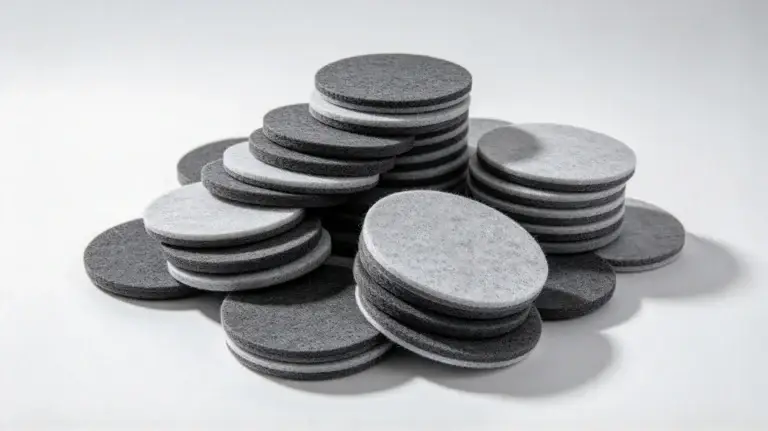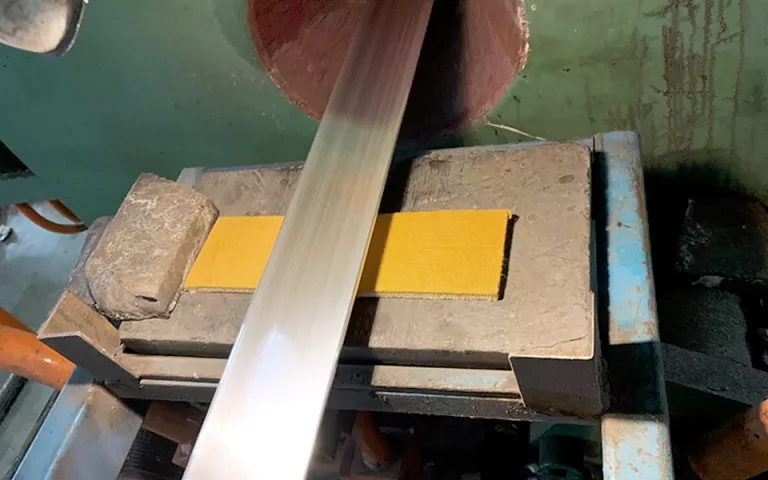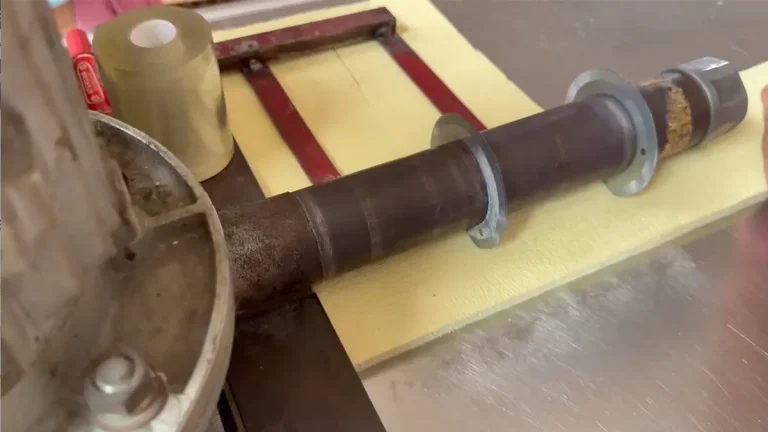
An endless needled felt roller is a seamless, cylindrical felt sleeve made through a needle-punching process. It is fitted over conveyor rollers to provide a soft, wear-resistant contact surface for transporting hot aluminum profiles. By reducing direct contact between metal rollers and aluminum surfaces, it helps minimize scratches, pressure marks, and other surface damage during extrusion handling.
Endless needled felt rollers are commonly used on aluminum extrusion run-out tables, cooling conveyors, and downstream handling equipment. Their performance depends on several factors, including fiber material, felt density, wall thickness, operating temperature, and roller dimensions.
What Is an Endless Needled Felt Roller?
An endless needled felt roller is a continuous cylindrical felt structure designed to fit over a roller core. Unlike felt sheets or strips that need to be cut and wrapped around a roller, an endless felt sleeve is manufactured as a seamless tube.
The term endless refers to its continuous, joint-free construction rather than an unlimited product length. This structure eliminates the longitudinal seam that can occur when flat felt material is wrapped around a roller.
The term needled describes the manufacturing process. During needle punching, specially designed needles repeatedly pass through a fiber web, mechanically entangling the fibers to form a cohesive felt structure. This creates a dense, flexible material without relying solely on adhesive bonding.
The finished sleeve can be manufactured in different inner diameters, wall thicknesses, lengths, and fiber compositions to suit specific roller systems.
Endless Felt Roller vs. Conventional Felt-Wrapped Rollers
Both products provide a protective felt contact surface, but their construction differs.
A conventional felt-wrapped roller uses flat felt material wrapped around a roller core. Depending on the installation method, the material may have a joint or overlap along its length. An endless felt roller sleeve is manufactured in a continuous tubular form and fitted over the roller.
The seamless design offers a more uniform contact surface and eliminates the potential surface irregularity associated with a wrapped joint. This is particularly useful when handling aluminum profiles with decorative finishes or strict surface-quality requirements.
How Are Endless Needled Felt Rollers Used in Aluminum Extrusion?
Aluminum extrusion involves forcing heated aluminum billets through a die to produce profiles with specific cross-sectional shapes. After leaving the extrusion press, the profiles must be supported, transferred, cooled, and processed through several downstream operations.
During these stages, the profiles may come into contact with multiple rollers and conveyor surfaces. Since freshly extruded aluminum is hot and can be susceptible to surface damage, the contact materials used along the production line are important.
Endless needled felt rollers provide a protective interface between the aluminum profiles and the roller cores.
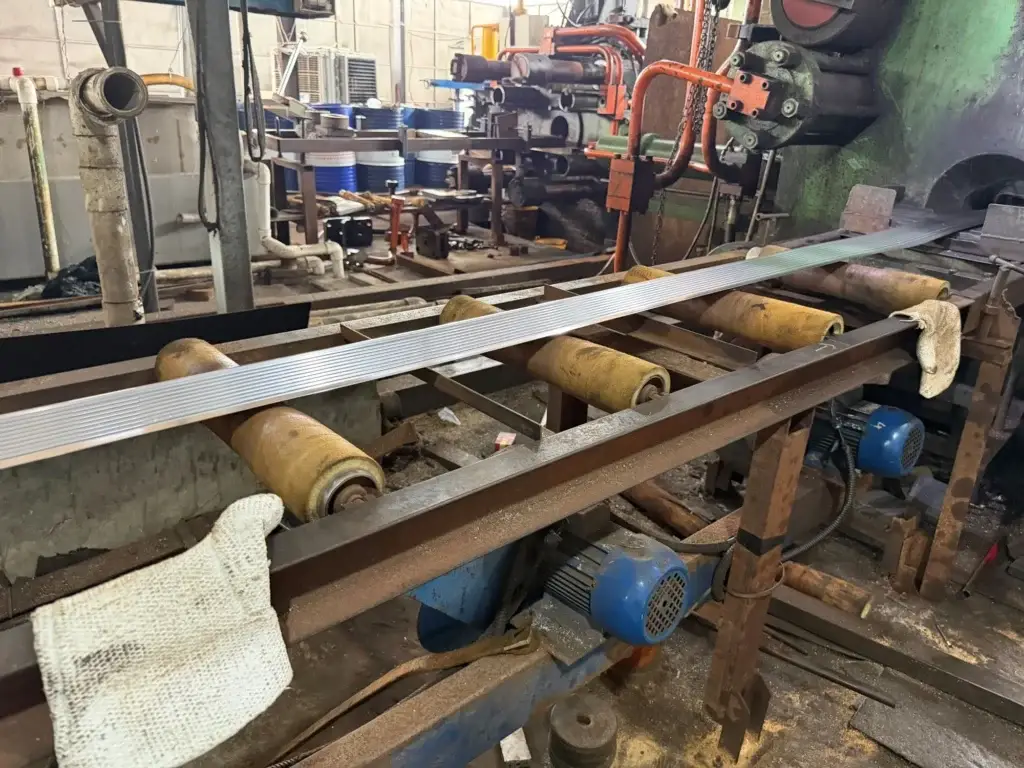
1. Extrusion Run-Out Tables
After leaving the extrusion press, aluminum profiles are transferred onto the run-out table. Felt-covered rollers help support and move the profiles while reducing direct metal-to-metal contact.
The material must withstand the temperature and mechanical conditions at this stage, including repeated contact with hot profiles and continuous movement.
2. Cooling Conveyors
As aluminum profiles move through the cooling section, they gradually lose heat before entering subsequent processing stages.
Felt roller sleeves provide a protective contact surface during transportation. The selected felt material must be compatible with the actual profile temperature at the point of contact, as well as the conveyor speed and operating load.
3. Stretching and Downstream Handling Areas
After cooling, profiles may pass through stretching, straightening, cutting, and other handling operations.
Felt-covered rollers can help protect the profile surface during these movements, particularly when the finished appearance is important. Material selection in these areas depends on the remaining profile temperature and the level of mechanical wear.
4. Sawing and Finished Profile Conveying
After cutting, aluminum profiles continue along conveyor systems for collection, inspection, or further processing.
Although temperatures are generally lower than at the extrusion outlet, scratches and pressure marks can still affect the final product. Felt roller sleeves provide a softer contact surface than bare metal rollers.
Why Choose an Endless Needled Felt Roller?
The main advantage of an endless needled felt roller is its combination of seamless construction, a protective contact surface, and material flexibility. These characteristics make it suitable for continuous aluminum profile handling.
Seamless Construction
The continuous tubular design eliminates the longitudinal joint found in some wrapped felt rollers. This helps avoid localized surface irregularities that may affect contact with aluminum profiles.
For applications involving polished, anodized, or otherwise surface-sensitive profiles, a consistent contact surface is particularly important.
Uniform Contact Surface
A properly manufactured felt sleeve provides consistent coverage around the roller. Uniform wall thickness and density help maintain stable contact during operation.
However, actual performance also depends on manufacturing tolerances, installation fit, and the condition of the roller core.
Surface Protection
Needled felt consists of interconnected fibers that form a relatively soft contact layer. When correctly selected and maintained, this layer helps reduce direct contact between aluminum profiles and hard roller surfaces.
It can therefore help minimize scratches, scuffing, and pressure marks during transportation.
Abrasion Resistance
Felt rollers are exposed to repeated friction as profiles move along the production line. The fibers must maintain their structure under continuous contact and mechanical loading.
The abrasion resistance of a felt roller depends on its fiber type, density, construction, and operating conditions. Selecting an appropriate material helps reduce premature wear and replacement frequency.
Customizable Dimensions and Materials
Aluminum extrusion lines use different roller diameters, lengths, and operating configurations. Endless felt roller sleeves can be manufactured to match specific equipment dimensions.
Material selection can also be adjusted according to the temperature and mechanical requirements of different production areas.
What Materials Are Used in Endless Felt Rollers?
Fiber selection is one of the most important factors affecting the performance of an endless needled felt roller. Different fibers offer different levels of thermal resistance, abrasion resistance, strength, and durability.
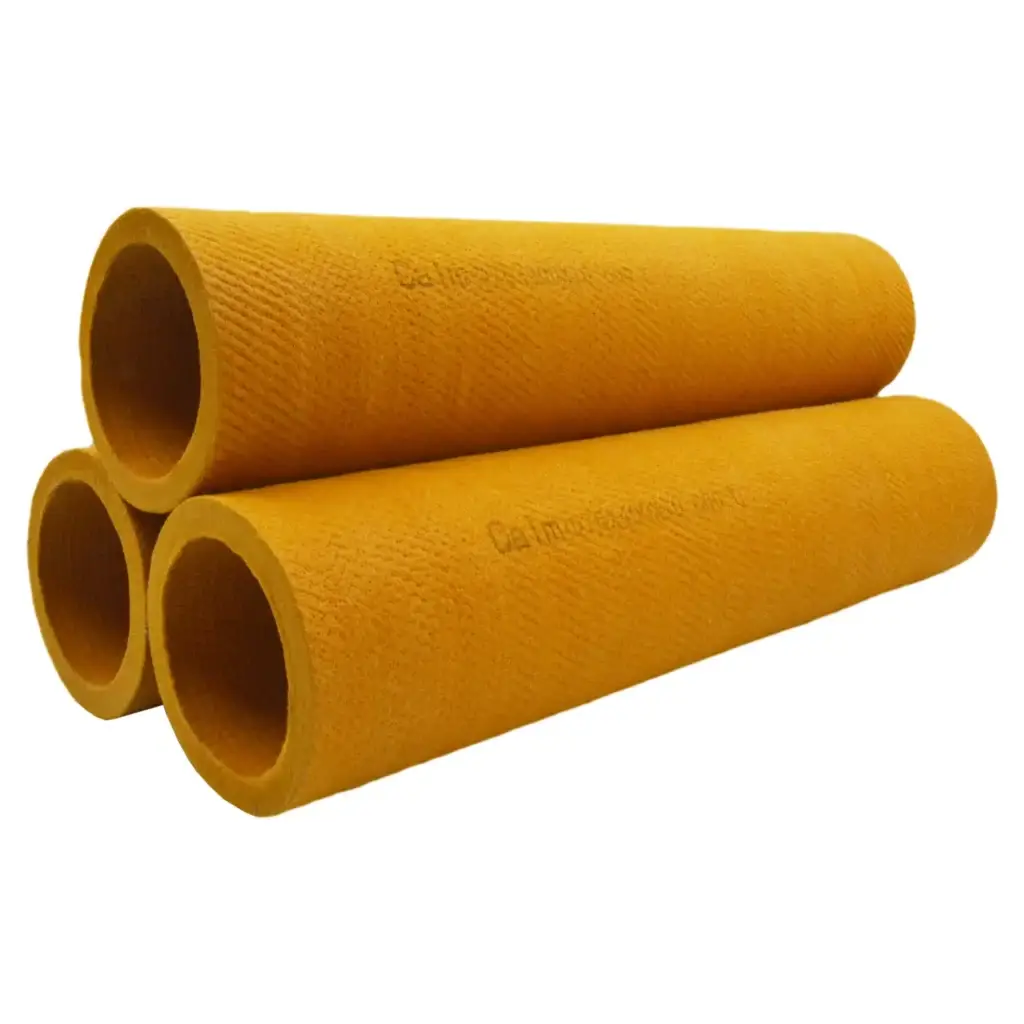
Common materials used in industrial felt roller applications include PBO, Kevlar, Nomex, and Polyester.
PBO Felt Rollers
PBO is a high-performance fiber known for its exceptional thermal resistance and mechanical properties. It is commonly selected for demanding high-temperature applications, including the initial handling stages of aluminum extrusion.
PBO felt rollers can be suitable for areas where profiles retain substantial heat after leaving the extrusion press.
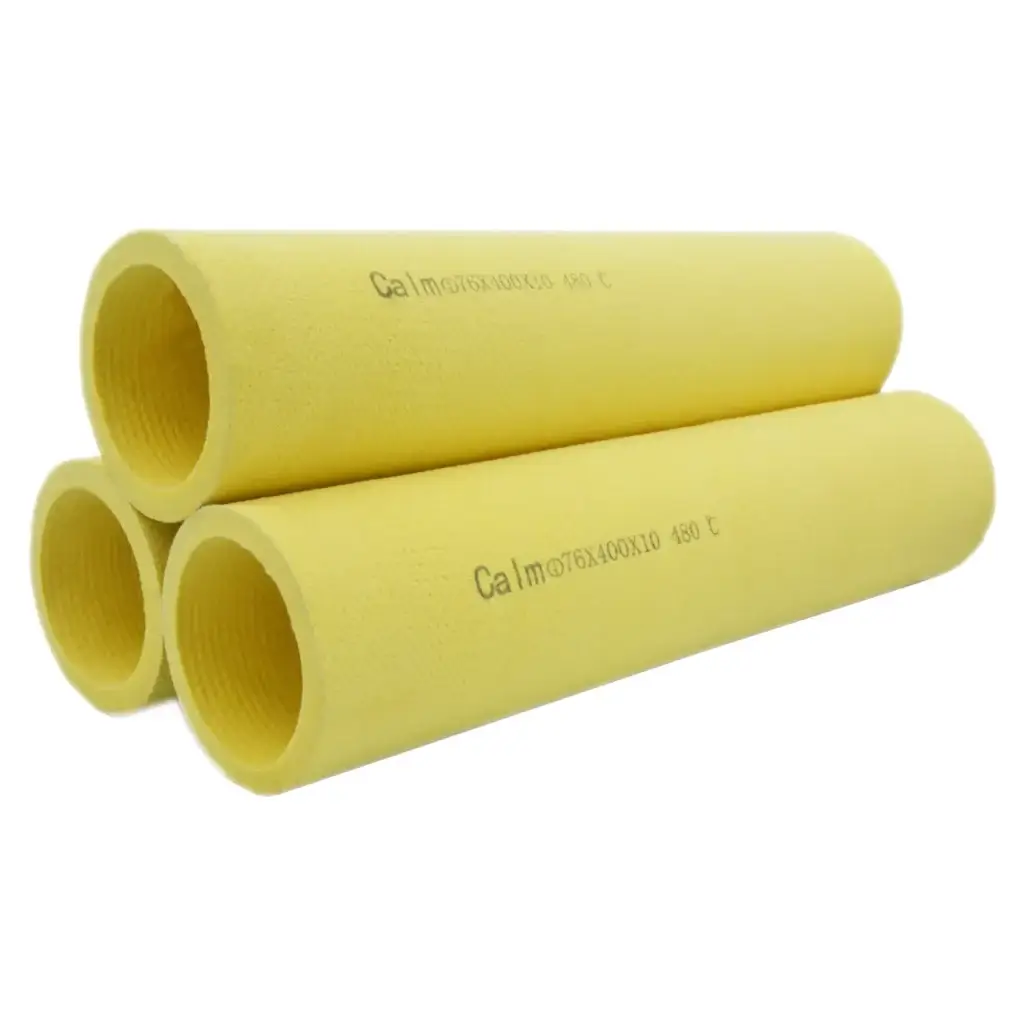
Kevlar Felt Rollers
Kevlar is a para-aramid fiber known for its high tensile strength, abrasion resistance, and resistance to mechanical wear.
In aluminum extrusion applications, Kevlar felt rollers can be used in high-temperature conveying areas where both thermal performance and durability are important.
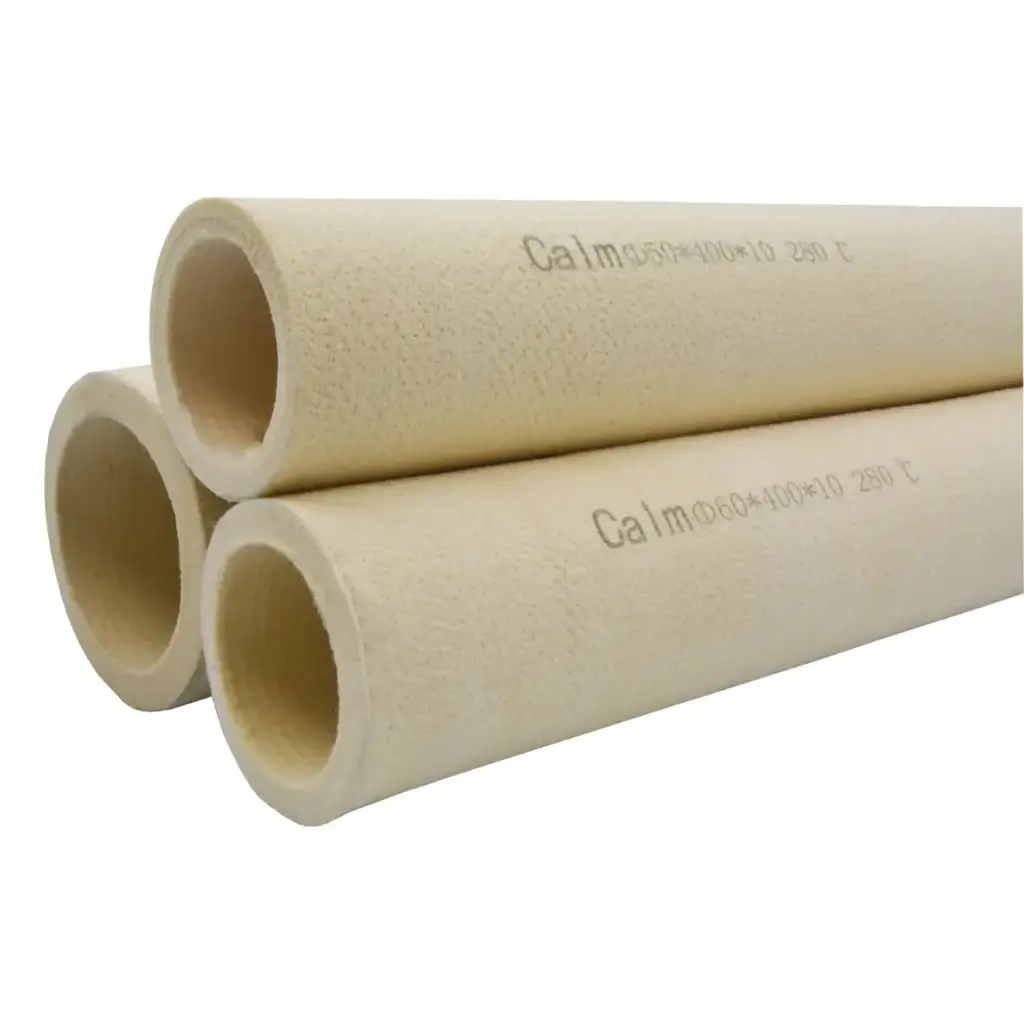
Nomex Felt Rollers
Nomex is a meta-aramid fiber with inherent flame-resistant and heat-resistant properties. It is commonly used in industrial applications requiring reliable thermal performance.
Nomex felt rollers are suitable for selected intermediate-temperature conveying and handling sections. Their actual operating limits depend on the felt construction and exposure conditions.
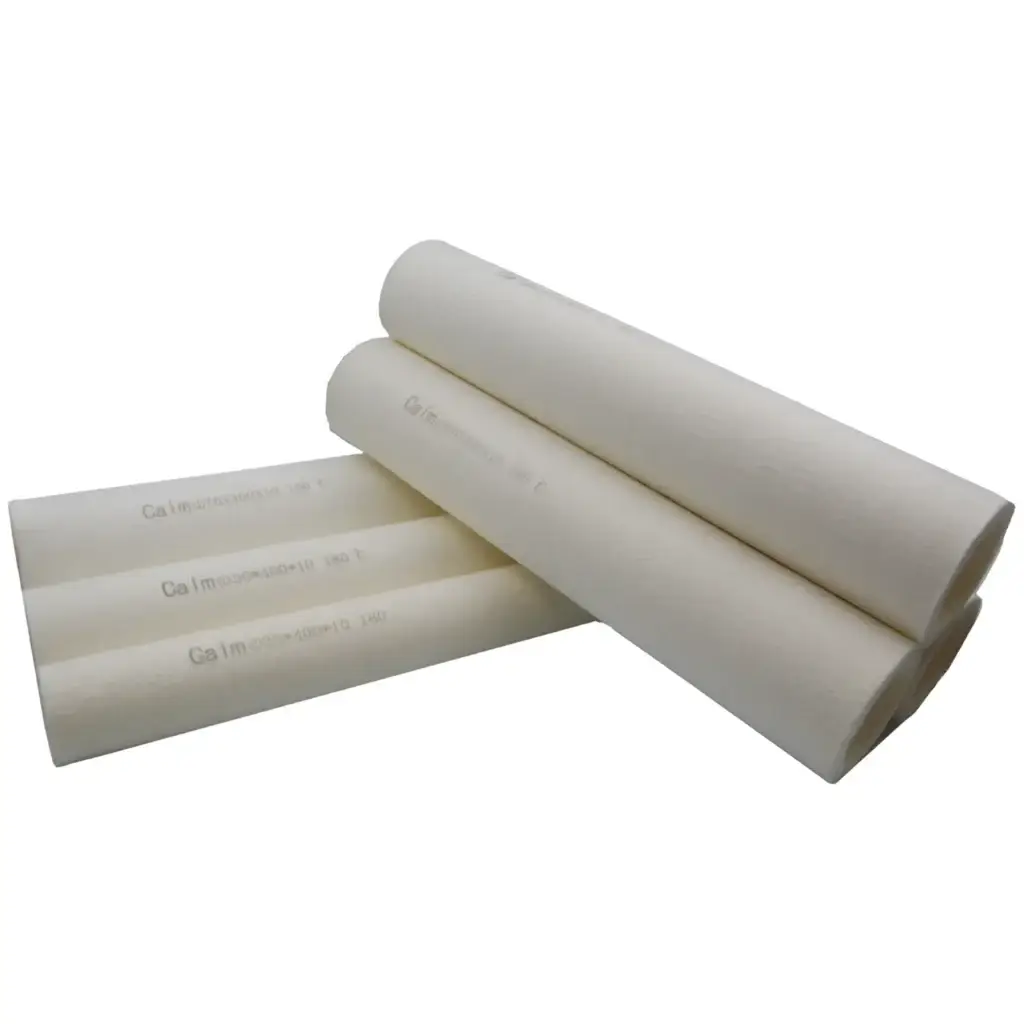
Polyester Felt Rollers
Polyester is commonly used in industrial felt products where operating temperatures are comparatively lower.
It can provide a practical option for downstream conveying areas where the profiles have cooled sufficiently and extreme thermal resistance is not required.
Material Comparison
| Material | Main Characteristics | Typical Application Direction |
|---|---|---|
| PBO | Excellent thermal resistance and high-performance fiber properties | High-temperature extrusion areas |
| Kevlar | High tensile strength and abrasion resistance | High-temperature conveying and wear-prone areas |
| Nomex | Inherent flame resistance and thermal stability | Intermediate-temperature handling areas |
| Polyester | General industrial performance and suitability for lower-temperature conditions | Lower-temperature downstream conveyors |
The temperature figures specified by individual manufacturers should be treated as product-specific reference values, not universal ratings for every felt product made from the same fiber.
For example, CALM’s product specifications list maximum working temperatures of approximately 600°C for PBO, 480°C for Kevlar, 280°C for Nomex, and 180°C for Polyester products. These figures should not be interpreted as guarantees of continuous operation under every condition.
Actual service performance depends on fiber grade, felt density, construction, contact duration, profile temperature, mechanical load, and other operating factors. The maximum temperature rating of a fiber should also not be assumed to apply when the material is continuously exposed to that temperature under mechanical stress.
How to Choose the Right Endless Needled Felt Roller
Selecting an appropriate felt roller requires more than matching the material to a temperature rating. Its dimensions, physical properties, and operating environment must all be considered.
1. Determine the Operating Temperature
Start by identifying the actual temperature of the aluminum profiles when they contact the felt rollers.
The temperature at the extrusion press outlet may differ significantly from the temperature at a cooling conveyor or downstream handling station. Selecting a material based only on the initial extrusion temperature may therefore result in an unsuitable product.
Also consider how long the felt remains in contact with hot profiles and how frequently the rollers operate.
2. Select the Appropriate Fiber Material
Choose the fiber according to the combined thermal and mechanical requirements.
PBO and Kevlar are options for demanding high-temperature applications, while Nomex and Polyester may be suitable for selected lower-temperature sections.
The material should be evaluated against the actual operating conditions rather than selected solely by its nominal temperature rating.
3. Check the Inner Diameter
The inner diameter (ID) determines how the felt sleeve fits over the roller core.
An undersized sleeve may be difficult to install and can experience excessive tension. An oversized sleeve may fit loosely and move during operation.
Accurate measurement of the roller core is therefore essential before ordering a replacement or custom sleeve.
4. Choose the Correct Wall Thickness
Wall thickness affects the finished outer diameter and the amount of felt material surrounding the roller core.
A thicker sleeve may provide more material for wear allowance, but it also changes the roller’s overall dimensions. The required thickness should be determined according to the equipment design, installation clearance, and desired contact characteristics.
5. Consider Density and Felt Construction
Felt density affects the material’s compactness, firmness, and mechanical behavior.
A denser structure may provide different wear and compression characteristics from a softer, less compact structure. The appropriate choice depends on profile weight, contact pressure, conveying speed, and the required surface protection.
6. Confirm Length and Dimensional Tolerances
The sleeve length should match the usable length of the roller. Dimensional tolerances are also important because even a suitable material may perform poorly if its finished dimensions do not match the equipment.
Before production, provide the manufacturer with the required inner diameter, outer diameter or wall thickness, length, and any relevant dimensional tolerances.
How Long Does an Endless Felt Roller Last?
There is no universal service-life figure for endless needled felt rollers. Their replacement intervals depend on the operating environment and how effectively the selected material matches the production conditions.
Several factors can affect service life:
- Operating temperature: Prolonged exposure to temperatures beyond the material’s suitable operating range can accelerate fiber degradation.
- Mechanical load: Heavy aluminum profiles and excessive contact pressure can increase compression and wear.
- Conveying speed: Higher speeds may increase friction and surface wear, depending on the contact conditions.
- Profile surface condition: Rough edges, burrs, or abrasive contamination can damage the felt surface.
- Material selection: An unsuitable fiber or felt construction may deteriorate prematurely.
- Installation quality: Incorrect dimensions or poor fitting can cause movement, uneven wear, or damage.
Regular inspection helps identify changes in sleeve thickness, surface condition, and fit. Replace the felt sleeve when excessive wear, structural damage, or reduced surface-protection performance begins to affect production.
FAQs
What is the difference between an endless felt roller and a regular felt roller?
An endless felt roller typically refers to a seamless cylindrical felt sleeve manufactured as a continuous tube. A conventional felt roller may use flat felt material wrapped around a roller core, potentially creating a longitudinal joint or overlap. The seamless design provides a more consistent contact surface.
Why are endless needled felt rollers used in aluminum extrusion?
They provide a soft, protective contact surface for transporting hot aluminum profiles. By reducing direct contact with hard metal roller surfaces, they help minimize scratches, scuffing, and pressure marks during production.
Which material is best for high-temperature aluminum extrusion?
PBO and Kevlar are commonly considered for demanding high-temperature applications, while Nomex and Polyester may be appropriate for selected lower-temperature sections. The best material depends on actual contact temperature, exposure duration, mechanical load, and the construction of the finished felt sleeve.
Can endless needled felt rollers be customized?
Yes. They can be manufactured in different inner diameters, wall thicknesses, lengths, densities, and fiber compositions. Custom dimensions help ensure compatibility with existing roller cores and production equipment.
How do you measure an endless felt roller sleeve?
The main dimensions to confirm are the inner diameter, wall thickness or outer diameter, and overall length. It is also useful to provide the roller core dimensions, installation requirements, and operating conditions so the manufacturer can recommend a suitable fit.
When should an endless felt roller sleeve be replaced?
Replacement is generally necessary when the sleeve becomes excessively worn, loses its structural integrity, develops an uneven surface, or no longer protects the aluminum profiles effectively. Regular inspection helps identify these conditions before they affect product quality.
Conclusion
Endless needled felt rollers provide a seamless, protective contact surface for aluminum profile conveying systems. Their performance depends on choosing the right fiber, felt construction, and dimensions for the operating conditions.
By evaluating temperature exposure, mechanical load, roller size, and surface-protection requirements, aluminum extrusion manufacturers can select felt roller sleeves that better match their production equipment and handling needs.
Looking for endless needled felt rollers for your aluminum extrusion line? Contact CALM at [email protected] to discuss your material requirements, roller dimensions, and custom specifications.