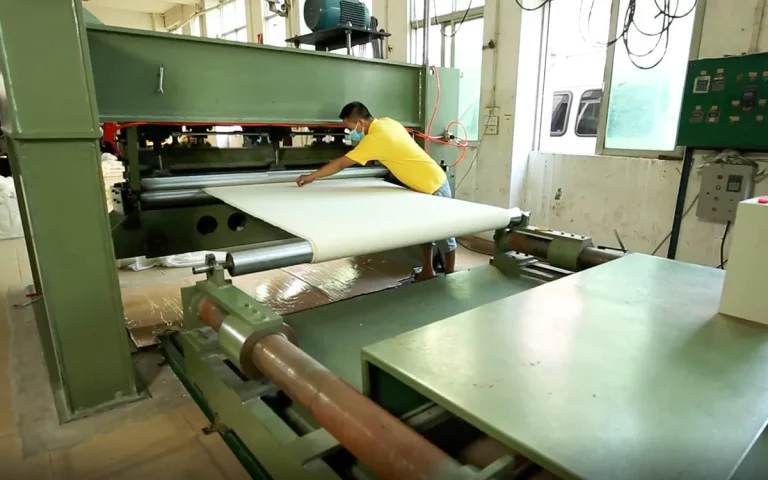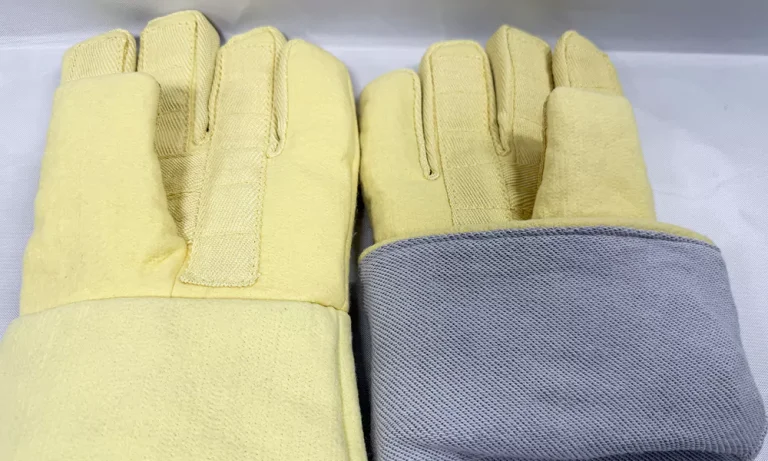
The main benefits of Kevlar gloves include cut resistance, heat resistance, abrasion resistance, durability, and relatively lightweight protection. These properties make Kevlar-based gloves useful for work involving sharp materials, rough surfaces, elevated temperatures, and repeated handling. However, the actual protection a worker receives depends on the complete glove construction, not simply on whether the glove contains Kevlar.
What Are the Main Benefits of Kevlar Gloves?
1. Cut Resistance
Cut resistance is one of the primary reasons manufacturers use Kevlar in work gloves.
Kevlar is a high-strength para-aramid fiber that can help protect the hands when workers handle sharp or unfinished materials. This makes Kevlar-based gloves useful in applications involving:
- Sheet metal
- Glass
- Metal components
- Sharp edges
- Fabricated parts
- Industrial tools and equipment
For workers who repeatedly handle sharp materials, this protection can reduce the risk of cuts and lacerations while allowing them to perform routine handling tasks.
However, the cut resistance of a finished glove depends on its yarn construction, knitting pattern, thickness, and other materials. Buyers should therefore check the glove’s tested cut-resistance rating rather than relying on the word “Kevlar” alone.
2. Heat and Flame Resistance
Kevlar also offers inherent resistance to heat and flame, giving it an advantage in applications where workers face both mechanical and thermal hazards.
This can make Kevlar-based gloves suitable for selected tasks involving:
- Hot surfaces
- Heated metal components
- Sparks
- Brief contact with elevated-temperature materials
- Certain welding and fabrication operations
The important distinction is that heat-resistant fiber does not mean that every Kevlar glove provides the same level of thermal protection.
The finished glove’s construction determines its performance against contact heat, convective heat, radiant heat, or flame. For high-temperature work, buyers should check the relevant thermal test results, such as those under EN 407.
3. Abrasion Resistance and Durability
Industrial gloves often experience repeated friction against tools, metal parts, machinery, and other rough surfaces. Kevlar’s strong fiber structure can contribute to good abrasion resistance and help gloves withstand demanding handling conditions.
This durability is particularly valuable in workplaces where workers:
- Handle materials repeatedly
- Work with rough metal surfaces
- Move fabricated components
- Perform manufacturing or assembly tasks
- Wear gloves for extended periods
A durable glove can also help reduce premature wear and maintain its protective function over repeated use.
However, durability still depends on the complete glove design. Coatings, stitching, reinforcement, and other materials can significantly affect how long a glove lasts in a particular application.
4. Lightweight Protection
Another advantage of Kevlar is that it can provide substantial protection without necessarily requiring an extremely bulky glove.
This matters because industrial workers often need to balance protection with dexterity.
A glove that provides strong protection but significantly restricts hand movement can make it more difficult to:
- Pick up small components
- Operate tools
- Handle parts precisely
- Perform assembly work
- Maintain a secure grip
Kevlar-based glove constructions can help manufacturers achieve a useful balance between protection and weight, particularly when they use appropriate yarn and knitting structures.
5. Flexibility and Dexterity
Protection is only useful if workers can continue performing their jobs effectively.
For applications requiring frequent hand movement, manufacturers can engineer Kevlar gloves to provide protection while maintaining useful flexibility and dexterity.
This can be important for:
- Assembly operations
- Material handling
- Metal fabrication
- Equipment operation
- Component inspection
However, Kevlar does not automatically make a glove flexible. Glove thickness, knitting gauge, coatings, reinforcement, and overall construction all influence dexterity.
A thin Kevlar liner and a heavily reinforced high-temperature glove, for example, can provide very different levels of flexibility.
6. Protection Against Multiple Workplace Hazards
One of the most practical benefits of Kevlar is its ability to contribute to protection against more than one type of hazard.
A properly designed Kevlar-based glove may combine protection against:
| Workplace Hazard | Kevlar’s Potential Benefit |
|---|---|
| Cuts | Strong potential for cut protection |
| Abrasion | Good potential for abrasion resistance |
| Heat | Inherent heat resistance |
| Flame | Inherent flame-resistant properties |
| Sharp edges | Useful mechanical protection |
| Puncture | Depends on glove construction |
| Chemicals | Not provided by Kevlar alone |
| Electrical hazards | Requires specifically rated protection |
This combination can be particularly useful in industrial environments where workers encounter several hazards during the same task.
For example, a metalworker may need protection from sharp edges, abrasion, and elevated temperatures at the same time. A properly engineered Kevlar glove can address several of these requirements within one glove system.
Why Do These Benefits Matter in the Workplace?
The value of Kevlar gloves becomes clearer when these material properties are connected to actual work.
Metalworking and Fabrication
Workers handling sheet metal, fabricated components, and sharp-edged parts can benefit from cut and abrasion protection.
Glass Handling
Glass presents a combination of sharp edges and mechanical hazards. Kevlar-based gloves can provide cut-resistant protection for suitable handling operations.
Automotive Manufacturing
Automotive production involves repeated handling of metal components, stamped parts, and assemblies. Kevlar gloves can help protect workers from cuts and abrasion while maintaining the dexterity required for assembly.
Construction
Construction workers may encounter sheet metal, glass, rebar, ductwork, and other materials with sharp or rough surfaces. Kevlar-based gloves can be suitable when cut and abrasion protection represents the primary requirement.
High-Temperature Material Handling
Some industrial processes require workers to handle heated components or work near elevated temperatures. In these situations, Kevlar’s thermal properties can complement its mechanical protection.
Does Every Kevlar Glove Provide the Same Benefits?
No.
This is an important consideration when selecting Kevlar work gloves.
The performance of a finished glove depends on more than its fiber. Manufacturers can change the final characteristics by adjusting:
- Kevlar yarn construction
- Knitting structure
- Glove thickness
- Coatings
- Reinforcement
- Lining materials
- Stitching and assembly
For example, one Kevlar glove may prioritize cut resistance and dexterity, while another may use additional layers and reinforcement to prioritize thermal protection and durability.
Therefore, buyers should evaluate the finished glove and its test results, rather than assuming that all Kevlar gloves provide identical protection.
When Are Kevlar Gloves a Good Choice?
Kevlar gloves are particularly worth considering when a job requires a combination of:
Cut protection + abrasion resistance + thermal resistance + durability
They can be useful for workers who regularly handle sharp or rough materials or operate in environments where mechanical and thermal hazards occur together.
However, Kevlar should not be treated as a universal solution. If the primary hazard involves chemicals, electricity, severe impact, or a specialized puncture risk, workers need gloves specifically designed and tested for those hazards.
The best glove is therefore not necessarily the one with the strongest material. It is the one whose tested protection matches the actual risks of the job.
FAQs
Are Kevlar gloves good for work?
Yes. Kevlar gloves can provide useful cut, abrasion, heat, and flame protection for many industrial and material-handling applications. The appropriate glove depends on the specific workplace hazards.
What are Kevlar gloves best for?
Kevlar gloves are particularly useful for applications involving sharp materials, cutting hazards, abrasion, and certain thermal conditions. Common applications include metalworking, glass handling, automotive manufacturing, construction, and industrial material handling.
Are Kevlar gloves heat resistant?
Yes, Kevlar fiber has inherent heat and flame resistance. However, the thermal protection of a finished glove depends on its construction and tested performance.
Are Kevlar gloves cut resistant?
Kevlar can provide strong cut-resistant properties and is widely used in cut-resistant glove construction. The actual cut level depends on the finished glove and its test rating.
Are Kevlar gloves durable?
Kevlar’s high-strength fiber structure can contribute to durable work gloves, particularly in applications involving repeated handling and abrasion. Actual glove life depends on the construction and working conditions.
Conclusion
The main benefits of Kevlar gloves are cut resistance, heat and flame resistance, abrasion resistance, durability, and the potential to combine protection with useful dexterity. These properties make them valuable for many demanding work environments. However, always evaluate the complete glove and its tested protection level to ensure it matches the hazards of the application.
Need Kevlar gloves for a specific work application? Contact us at [email protected] to discuss your protection requirements and custom glove solutions.