Yes, Nomex pads can be suitable for selected fire-resistant and high-temperature industrial applications because Nomex® fiber has inherent flame-resistant properties. However, not every Nomex pad is designed to withstand direct flames, and its suitability depends on the pad’s construction, operating conditions, and required level of protection.
Understanding these limitations helps determine when Nomex padding is an appropriate material choice and when a specialized fire-protection solution is necessary.
What Makes Nomex Pads Flame Resistant?
Nomex® is a meta-aramid fiber known for its inherent flame resistance and thermal stability. Unlike many conventional thermoplastic fibers, it does not readily melt and drip when exposed to intense heat. Instead, it chars under sufficiently severe thermal exposure, helping limit the material’s contribution to flame spread.
These properties make Nomex useful in applications where materials must withstand heat while maintaining their intended function.
For industrial pads, however, fiber properties are only part of the equation. The finished product’s performance also depends on its density, thickness, fiber composition, manufacturing process, and any additional treatments.
Flame Resistance vs. Heat Resistance vs. Fire Protection
These terms describe different properties and should not be used interchangeably.
- Flame resistance describes a material’s ability to resist ignition or limit continued burning under specified conditions.
- Heat resistance refers to its ability to withstand thermal exposure while retaining the required performance.
- Fire protection refers to the protection provided by a material or finished product against a defined fire hazard.
A Nomex pad may offer flame resistance and thermal stability without providing sufficient protection against direct flames, molten metal, or prolonged exposure to extreme heat. A material’s flame-resistant properties also do not automatically establish compliance with a particular fire-safety standard.
For this reason, application requirements and relevant test results should guide material selection rather than the fiber name alone.
What Applications Are Nomex Pads Suitable For?
Nomex pads are used in selected industrial processes where heat resistance, surface protection, cushioning, or stable contact performance is required. Their suitability depends on the specific equipment and operating conditions.
1. Aluminum Extrusion and Profile Handling
During aluminum extrusion, heated profiles move through handling, cooling, and conveying equipment. Contact surfaces must accommodate elevated temperatures while helping prevent scratches, dents, and other surface damage.
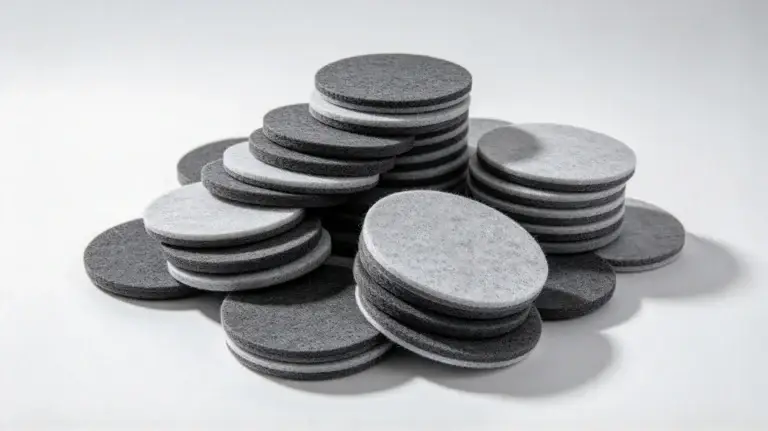
Nomex felt pads and related felt components may be suitable for selected handling positions where their thermal and mechanical properties meet the operating requirements.
The appropriate material depends on the profile temperature at the contact point, exposure duration, pressure, friction, and required surface finish. Nomex should not automatically be selected for the hottest positions. Applications involving more severe thermal conditions may require a different high-temperature felt material or a specialized construction.
2. Commercial Laundry and Industrial Flatwork Ironers
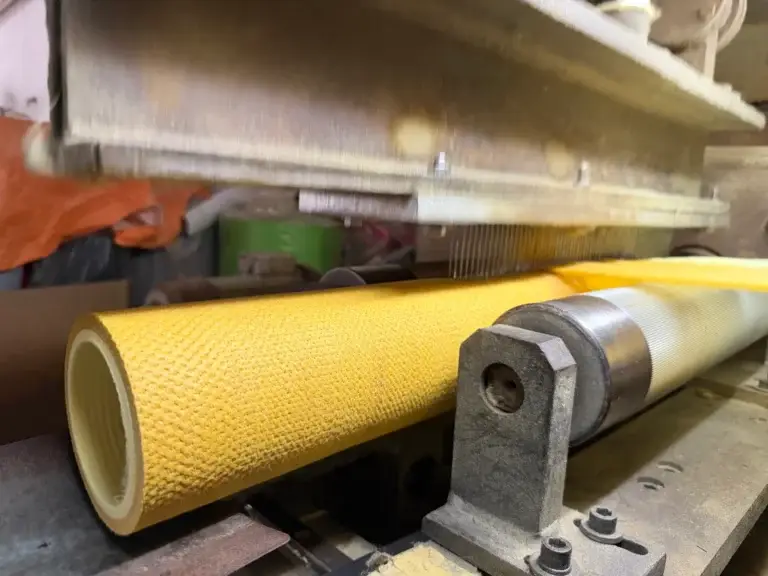
Nomex padding is used in some commercial laundry and industrial flatwork ironing systems. In these applications, padding surrounds heated rollers and provides a compliant contact layer between the roller and the fabric.
Depending on the equipment design, the padding helps maintain uniform contact pressure, supports consistent heat transfer, and contributes to the quality of the finished textile surface.
Material selection should account for operating temperature, roller speed, compression, moisture exposure, and long-term dimensional stability. A suitable product must meet the requirements of the specific ironing machine rather than simply carry a Nomex material designation.
3. Heat Transfer and Textile Processing
Some heat-transfer and textile-processing systems require a resilient material layer that can tolerate repeated thermal exposure while maintaining consistent contact.
Nomex-based felt components may be appropriate for selected heat-pressing, textile-finishing, and related industrial processes. Depending on the equipment, the padding can help distribute pressure, support heat transfer, and protect contacting surfaces.
Not every heat-transfer machine requires Nomex padding. The material must be compatible with the process temperature, pressure, operating speed, and required transfer quality. The finished felt’s thickness and density can also affect performance.
4. Selected Thermal and Electrical Applications
Nomex is also used in other industries, particularly in thermal protection and electrical insulation. However, these applications often involve different product forms, such as engineered fabrics, specialized insulation paper, or purpose-designed protective components.
A Nomex felt pad should not be assumed to provide the same protection as a certified protective garment or an electrical insulation product. Each application requires a material form and finished-product specification designed for its intended use.
When Are Nomex Pads Not the Right Choice?
Although Nomex has inherent flame-resistant properties, ordinary industrial padding is not a universal solution for fire hazards.
Additional evaluation is necessary when an application involves:
- Direct flame exposure: Flame-resistant fiber alone does not establish that a pad can withstand continuous contact with an open flame.
- Molten metal or hot material splash: These hazards may require specialized materials and tested protective systems designed for molten-material contact.
- Extreme temperatures: The suitability of Nomex depends on the actual temperature, exposure time, mechanical load, and construction of the finished component.
- Personal fire protection: Industrial felt pads are not substitutes for protective clothing or equipment designed and tested for personnel safety.
- Certified fire-safety requirements: The complete product must meet the applicable testing and certification requirements. A fiber’s inherent properties are not sufficient proof of compliance.
If the application involves a defined fire hazard, assess the relevant safety requirements before choosing a padding material. Depending on the risk, a different material, multilayer construction, or certified protection system may be necessary.
Nomex vs. Other High-Temperature Felt Materials
Nomex is one of several fibers used to manufacture industrial felt products. The best choice depends on the balance between thermal performance, mechanical demands, and application requirements.
| Material | Key characteristics | Typical selection considerations |
|---|---|---|
| Nomex | Inherent flame resistance and thermal stability | Heat exposure, dimensional stability, and required flame resistance |
| Kevlar® | High strength and abrasion resistance, with useful thermal performance | Friction, mechanical loads, and wear |
| PBO | Used in specialized high-temperature industrial felt applications | Severe thermal conditions and product-specific temperature limits |
| Polyester | Used in many general industrial felt applications | Lower-temperature operating conditions and mechanical requirements |
These are general material characteristics, not universal product ratings. Performance varies with fiber grade, felt construction, density, and manufacturing method.
For example, Nomex may be appropriate for an industrial process that requires flame resistance and stable contact performance, while another fiber may be better suited to more severe thermal exposure or demanding abrasion conditions. Material selection should be based on the complete operating environment rather than a single property.
How to Choose the Right Nomex Pad
Before selecting a Nomex pad for a fire-resistant or high-temperature application, evaluate the following factors.
Operating Temperature and Exposure Duration
Determine the normal operating temperature, peak temperature, and length of each exposure. Brief contact with a hot surface differs significantly from continuous exposure or direct flame contact.
Use the finished product’s specified operating limits and test information rather than relying on a general temperature figure for Nomex fiber.
Thickness and Density
Pad thickness and density affect cushioning, compression, heat transfer, and contact behavior. The correct combination depends on the equipment, the required contact pressure, and the function of the pad.
A thicker pad is not automatically more heat resistant or more suitable for fire protection.
Mechanical Load and Wear
Industrial padding may experience repeated compression, friction, vibration, and contact with moving components. These conditions can affect service life and functional performance even when the material’s thermal properties are adequate.
Consider the load, operating speed, abrasion level, and expected replacement interval.
Material Composition and Construction
Confirm whether the component is made from Nomex alone or incorporates other fibers, binders, coatings, or supporting layers. These elements can influence the finished product’s thermal behavior and flame response.
If flame resistance is a critical requirement, request relevant test reports for the actual product rather than relying solely on raw-material information.
Applicable Safety Standards
Identify any required fire, flame, or thermal-protection standards before specifying the product. The appropriate test depends on the intended application and hazard.
A product’s compliance should be supported by relevant documentation and should not be inferred from the use of Nomex fiber.
FAQs
Are Nomex pads fireproof?
No. Nomex has inherent flame-resistant properties, but this does not make every Nomex pad fireproof. The finished product’s performance depends on its construction, test results, and exposure conditions.
Can Nomex pads be used near open flames?
Possibly, but only if the specific product has been evaluated for the intended exposure. Flame resistance alone does not establish suitability for direct or prolonged flame contact.
What temperature can Nomex pads withstand?
There is no single temperature rating that applies to every Nomex pad. The allowable operating temperature depends on the fiber grade, product construction, exposure duration, mechanical conditions, and manufacturer’s specifications.
Are Nomex pads suitable for industrial heat protection?
They can be suitable for selected industrial applications involving elevated temperatures, cushioning, or surface protection. Applications involving severe heat or specific fire hazards require a more detailed assessment of the finished product and the protection required.
Conclusion
Nomex pads can be a practical choice for selected industrial applications requiring flame resistance and thermal stability. However, they should not be treated as universally fireproof or suitable for every high-temperature hazard. Evaluating the actual operating conditions, finished-product specifications, and applicable safety requirements is essential to choosing the right industrial padding.
Looking for Nomex pads for your industrial application? Contact CALM at [email protected] to discuss your operating conditions, material requirements, and custom specifications.