To choose the right industrial felt, start with the function it needs to perform, then match the material, thickness, density, and product structure to your operating conditions. Temperature, pressure, friction, wear, and dimensional requirements all influence which felt will perform reliably in your application.
The best choice is not necessarily the thickest or most heat-resistant option. It is the felt that meets your specific performance requirements under actual working conditions.
1. Define the Function of the Industrial Felt
Before selecting a material, identify what the felt needs to do. Industrial felt serves different purposes across manufacturing, and each application places different demands on the material.
Common functions include:
- Surface protection: Preventing scratches, dents, or marks when handling finished components.
- Cushioning and impact absorption: Providing a compliant contact layer between components or equipment surfaces.
- High-temperature handling: Supporting or conveying hot materials during manufacturing.
- Sealing and gasketing: Filling gaps and helping control the passage of air, liquids, or other media in suitable applications.
- Polishing and finishing: Providing a controlled contact surface for polishing, buffing, or finishing operations.
- Filtration: Capturing particles or separating materials when the felt’s structure and permeability meet the process requirements.
These functions are not interchangeable. For example, felt used to protect aluminum profiles may need a smooth, non-marking contact surface and good wear resistance, while felt used for filtration requires appropriate pore structure and particle-retention performance.
Defining the primary function helps narrow the material and product options before you specify dimensions or other technical parameters.
2. Match the Felt Material to Your Operating Conditions
The fiber composition is one of the most important factors in industrial felt selection. Different fibers provide different combinations of thermal stability, mechanical strength, abrasion resistance, and chemical compatibility.
Consider the Actual Operating Temperature
For high-temperature applications, determine the temperature the felt experiences at the point of contact, not just the temperature of the surrounding equipment or processed material.
Also consider how long the felt remains in contact with the hot surface, whether exposure is continuous or intermittent, and how much time the material has to cool between cycles.
Common industrial felt materials include:
| Material | Typical characteristics | Selection considerations |
|---|---|---|
| PBO | Used in specialized felt products for severe high-temperature applications | Actual contact temperature, exposure duration, wear, and product construction |
| Kevlar® | High tensile strength and abrasion resistance, with useful thermal performance | Mechanical load, friction, and wear |
| Nomex® | Inherent flame resistance and thermal stability | Temperature limits, thermal exposure, and finished-product specifications |
| Polyester | Used in many general industrial applications | Operating temperature, mechanical demands, and required service life |
These descriptions provide general guidance rather than universal performance ratings. The maximum temperature of a fiber does not necessarily represent the continuous operating limit of a finished felt component.
If the application involves extreme heat, molten material, or direct flame exposure, verify that the complete product is suitable for the specific hazard. Do not assume that a heat-resistant or flame-resistant fiber automatically provides the required level of protection.
Evaluate Pressure, Friction, and Wear
Temperature is only one part of the selection process. Industrial felt may also experience compression, repeated contact, abrasion, vibration, and movement.
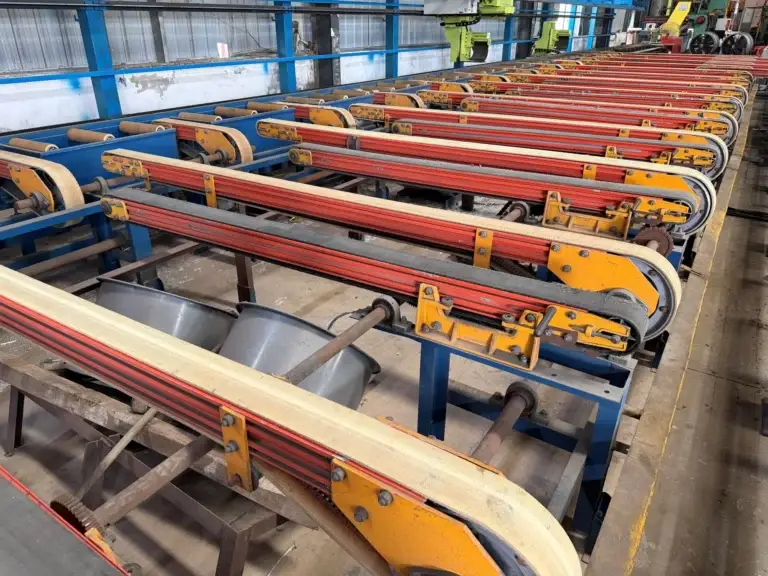
For example, felt used in an aluminum extrusion handling system must withstand the combination of heat, profile movement, contact pressure, and potential surface abrasion. A material with adequate thermal performance may still be unsuitable if it wears too quickly or marks the finished profiles.
For moving equipment, consider operating speed and the frequency of contact. For static applications, sustained compression and dimensional stability may be more important.
Where the felt is exposed to oils, cleaning agents, chemicals, or moisture, check the compatibility of the complete material construction with those conditions.
3. Choose the Right Thickness, Density, and GSM
Material selection alone does not determine performance. The physical specifications of the felt also affect how it behaves during use.
Thickness
Thickness affects the contact layer’s dimensions, cushioning, compression allowance, and fit within the equipment.
Thicker felt may provide more cushioning or allow for greater compression, but it can also change clearances, contact pressure, and heat-transfer behavior. In precision applications, excessive thickness may cause inconsistent contact or interfere with equipment operation.
Choose a thickness based on the required function and available installation space rather than assuming that more material is always better.
Density
Density describes the mass of the felt per unit of volume. It influences the material’s compactness and can affect compression, firmness, permeability, and wear behavior.
A denser felt may provide greater support or dimensional stability in some applications, while a softer, more compressible felt may be preferable when conformity to an uneven surface is required.
The relationship between density and performance depends on the fiber type and manufacturing process. Density should therefore be evaluated alongside thickness and the required mechanical properties.
GSM
GSM means grams per square meter and describes the mass per unit area of a material. It is commonly used to specify nonwoven and felt materials.
GSM is not the same as density. Two felt products with the same GSM can have different thicknesses, and two products with the same thickness can have different densities and compression characteristics.
When ordering industrial felt, provide GSM if it is part of the product specification, but do not use it as a substitute for thickness, density, or functional testing.
4. Select the Appropriate Felt Product Structure
Industrial felt is available in several forms. The correct structure depends on how the material will be installed and used.
Felt Pads and Sheets
Felt pads and sheets are suitable for applications requiring flat contact surfaces, cushioning, protection, or custom-cut components. They can be produced in different dimensions and thicknesses according to the application.
When selecting pads, consider the contact area, load distribution, mounting method, and whether the felt will remain stationary or move against another surface.
Felt Belts
Industrial felt belts are used in conveying and other applications that require a continuous or looped felt surface. Depending on the application, the belt may need to withstand heat, tension, friction, and repeated bending.
Important specifications include belt width, length, thickness, joint construction, operating speed, and the conditions at the contact surface.
Felt Roller Sleeves and Roller Components
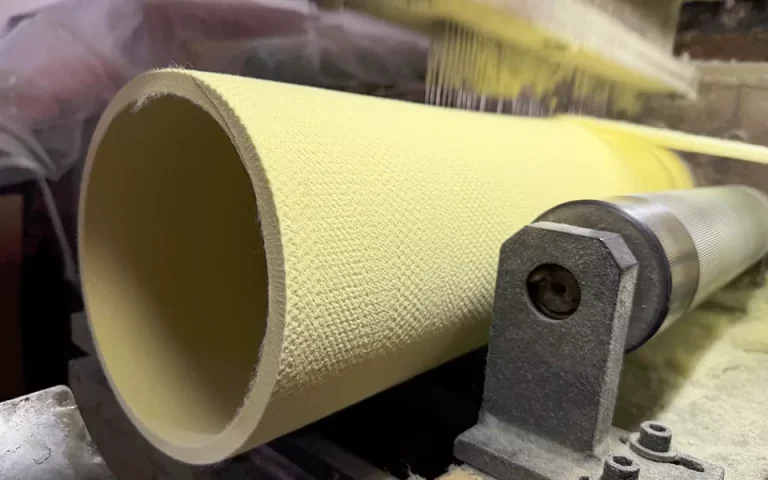
Felt rollers and roller sleeves provide a controlled contact surface for handling, conveying, finishing, or other industrial processes.
Selection depends on the roller dimensions, felt thickness, surface requirements, contact pressure, rotational speed, and temperature exposure. Uniformity and secure installation are important where the roller must maintain consistent contact during operation.
Felt Strips and Custom Components
Felt strips, rings, sleeves, and other converted components are useful when standard sheets or pads do not fit the equipment design.
For custom parts, provide a drawing or sample whenever possible. Specify the required dimensions, tolerances, cut shape, mounting features, and any critical contact surfaces.
The correct product structure can be just as important as the choice of fiber. A suitable material in the wrong form may not perform as intended.
5. Consider Dimensions, Tolerances, and Installation
Industrial felt must fit the equipment and maintain its function throughout operation. Dimensional requirements should therefore be established before production.
For custom felt components, confirm:
- Length, width, thickness, diameter, or other relevant dimensions.
- Required tolerances and acceptable dimensional variation.
- Cut shape, holes, slots, joints, or other processing features.
- Installation method and available space.
- Expected compression after installation.
- Whether the component must be replaceable or supplied in a continuous form.
Tolerances are especially important for precision assemblies, roller coverings, sealing components, and moving systems. A component that is too thick, too loose, or incorrectly shaped may cause uneven contact, installation problems, or premature wear.
If an existing component already performs well, supplying a physical sample can help establish its dimensions and construction. However, copying an existing part does not guarantee the same performance if the replacement material differs.
6. Test the Felt Under Actual Operating Conditions
Specifications help narrow the options, but testing is often necessary to confirm whether a selected felt is suitable for the application.
Where practical, test a sample under conditions that represent the intended process.
Check Functional Performance
Assess whether the felt performs its primary function. For surface protection, inspect the processed material for scratches, marks, or contamination. For sealing, evaluate leakage under the required pressure conditions. For filtration, verify the relevant particle-retention and flow requirements.
The test criteria should reflect the actual purpose of the component.
Evaluate Wear and Dimensional Stability
Observe changes in thickness, compression, surface condition, and shape after repeated use. In moving systems, check for excessive abrasion, fiber shedding, slippage, or uneven wear.
For high-temperature applications, inspect the felt for hardening, degradation, or loss of functional performance after representative thermal cycles.
Confirm Compatibility With the Equipment
A felt component may perform well in isolation but behave differently when installed. Confirm that it fits correctly, maintains the required contact pressure, and does not interfere with the equipment’s operation.
For critical applications, define measurable acceptance criteria before testing. This makes it easier to compare candidate materials and determine whether further adjustments are needed.
Testing under actual operating conditions is particularly valuable when replacing an existing material, changing production speed, increasing temperature, or adapting a standard felt product for a new application.
7. What Information Should You Provide to an Industrial Felt Supplier?
Clear technical information helps a supplier recommend a suitable material and reduces unnecessary trial and error.
Before requesting a quotation or custom solution, prepare the following details:
| Information | What to provide |
|---|---|
| Application | Equipment type and the function the felt must perform |
| Operating conditions | Contact temperature, exposure duration, pressure, speed, friction, and environmental conditions |
| Material requirements | Preferred fiber, required thermal properties, chemical compatibility, or other critical characteristics |
| Product dimensions | Length, width, thickness, diameter, or a technical drawing |
| Physical specifications | Density, GSM, hardness, compression behavior, or other required parameters |
| Performance requirements | Surface finish, sealing, filtration, wear resistance, or service-life expectations |
| Reference information | Existing part, sample, photographs, drawings, or equipment specifications |
You do not need to know every specification before contacting a supplier. If the material or density is uncertain, describe the application and operating conditions first. A technically capable supplier can help identify the parameters that require confirmation.
For custom industrial felt, it is also useful to clarify the required tolerances, order quantity, replacement frequency, and any product-specific testing or documentation requirements.
FAQs
How do I know which industrial felt material I need?
Start with the application’s main function and operating conditions. Identify the required temperature performance, mechanical load, wear resistance, surface requirements, and environmental exposure. Then compare suitable materials and verify the finished product’s specifications.
Is thicker industrial felt always better?
No. Thickness affects cushioning, compression, fit, and contact behavior, but a thicker product may create excessive pressure or interfere with equipment clearances. Select the thickness according to the required function and installation conditions.
What is the difference between felt density and GSM?
Density is mass per unit of volume, while GSM is mass per unit of area. Both describe different aspects of a felt product and should not be used interchangeably. Thickness and manufacturing structure also influence how the material performs.
Can industrial felt be customized for specific applications?
Yes. Depending on the material and manufacturing process, industrial felt can be supplied in different thicknesses, dimensions, densities, shapes, and product structures. Customization may include cutting pads, producing strips, manufacturing belts, or making roller components to specified dimensions.
How can I estimate the service life of industrial felt?
Service life depends on temperature, contact pressure, friction, operating speed, compression, environmental exposure, and the required performance standard. Manufacturer guidance and representative testing can provide an initial estimate, but actual service life should be confirmed through application-specific use.
Conclusion
Choosing the right industrial felt starts with understanding the application’s function and operating conditions. Match the material and product structure to the required performance, specify the physical dimensions carefully, and validate the choice under representative working conditions.
For demanding or non-standard applications, providing clear technical requirements and testing a suitable sample can help establish a more reliable solution.
Looking for the right industrial felt for your application? Contact CALM at [email protected] to discuss your operating conditions, material selection, and custom specifications.