A heat resistant conveyor belt is designed to transport hot materials or operate in high-temperature environments without suffering premature damage. It uses heat-resistant materials and construction to reduce problems such as hardening, cracking, loss of strength, and cover deterioration.
These belts are commonly used in cement plants, steel mills, foundries, power stations, and other industries that handle hot bulk materials. However, not all heat resistant conveyor belts are made in the same way. Their materials, temperature ratings, and structures must match the actual operating conditions.
What Is a Heat Resistant Conveyor Belt?
A heat resistant conveyor belt is an industrial belt engineered to withstand thermal exposure during material handling. Unlike conventional conveyor belts, which may deteriorate quickly under elevated temperatures, heat resistant belts use specially formulated cover materials and suitable reinforcement structures to maintain their performance.
In many heavy-duty applications, the belt consists of a heat-resistant rubber cover and a reinforced carcass. The cover is the outer layer that comes into direct contact with the conveyed material, while the carcass provides tensile strength and supports the load.
Heat resistance is not determined by the temperature of the surrounding environment alone. The temperature of the material, the belt surface temperature, contact duration, material size, and loading conditions all influence how much heat the belt actually experiences.
For example, hot bulk materials may cool as they travel along a conveyor. Their temperature when they first contact the belt may therefore differ from the temperature experienced by the belt throughout the conveying process.
Why Are Heat Resistant Conveyor Belts Needed?
High temperatures can gradually change the physical and mechanical properties of conventional conveyor belt materials. These changes may reduce belt performance and lead to premature failure.
Prevent Heat-Related Material Degradation
Prolonged exposure to heat can accelerate rubber aging. Depending on the compound and operating conditions, the belt cover may harden, lose elasticity, develop surface cracks, or deteriorate.
In severe cases, heat can also weaken the bond between the cover and the carcass. This may cause blistering, separation, or other forms of structural damage.
Heat resistant conveyor belts use specially formulated compounds to slow these changes and maintain their properties under elevated temperatures.
Maintain Conveyor Belt Performance
A conveyor belt must remain flexible and strong enough to run around pulleys, support the conveyed load, and withstand repeated mechanical stress.
When heat changes the properties of the cover or damages the internal structure, the belt may become more vulnerable to abrasion, cracking, and premature wear. Selecting an appropriate heat resistant belt helps maintain stable operation under demanding thermal conditions.
Reduce Maintenance and Production Downtime
Premature belt deterioration can lead to frequent inspections, repairs, and replacements. Unexpected belt failure may also interrupt material handling and affect downstream production.
A properly selected heat resistant conveyor belt can reduce heat-related maintenance problems and help extend service life. However, its actual lifespan also depends on abrasion, impact, loading, alignment, tension, and maintenance practices.
What Are the Main Types of Heat Resistant Conveyor Belts?
Heat resistant conveyor belts are not a single product category with one universal construction. Different applications require different belt materials and structures.
Heat Resistant Rubber Conveyor Belts
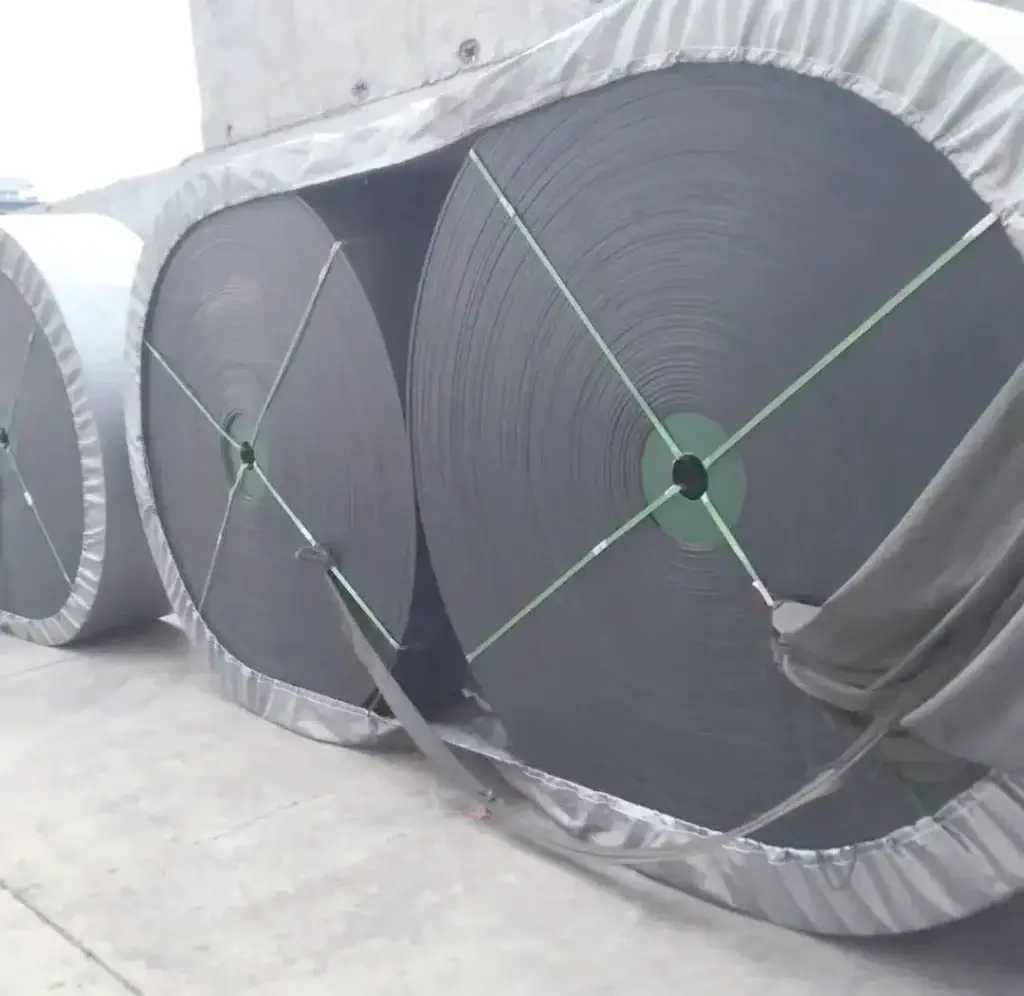
Heat resistant rubber conveyor belts are widely used in heavy-duty bulk material handling. They typically feature specially formulated rubber covers designed to resist thermal aging and protect the internal carcass.
The carcass may use textile reinforcement or steel cords, depending on the belt’s tensile strength requirements, conveyor length, and operating conditions.
These belts are commonly used to transport hot clinker, coke, sintered ore, foundry sand, and other industrial materials. Their cover compounds and construction must be selected according to the material temperature, contact duration, abrasion level, and impact conditions.
Heat Resistant Felt Conveyor Belts
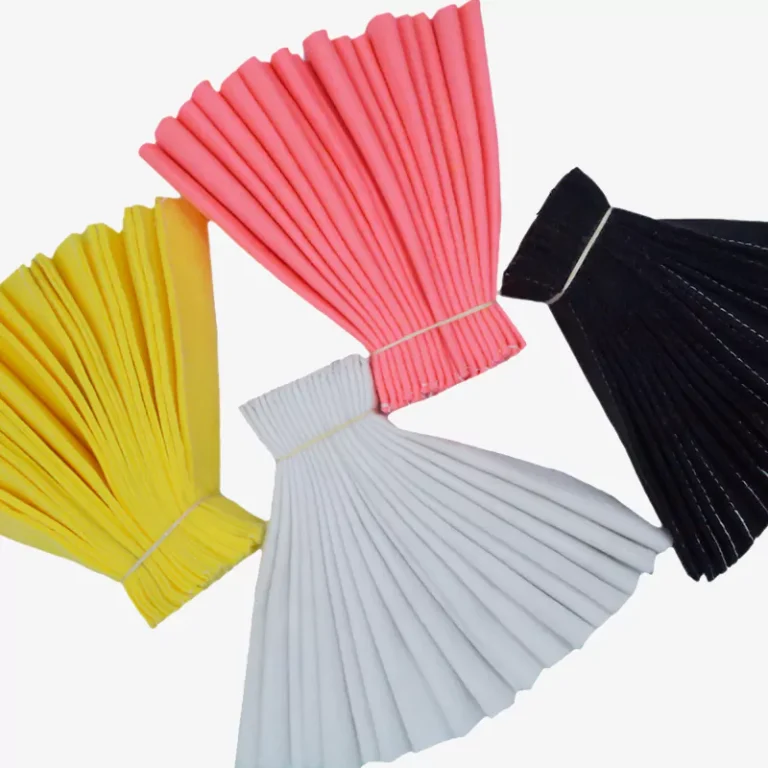
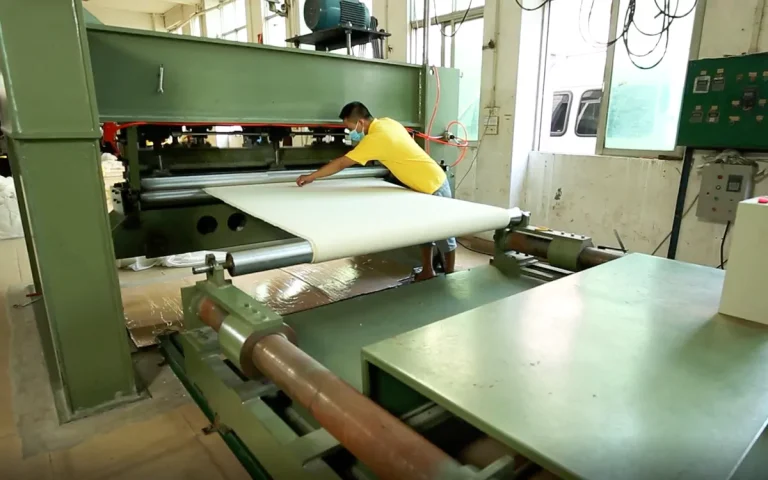
Heat resistant felt conveyor belts use high-temperature-resistant fiber structures rather than conventional rubber covers. Their surface is generally softer and more suitable for applications where the conveyed product must be protected from scratches, dents, or other contact damage.
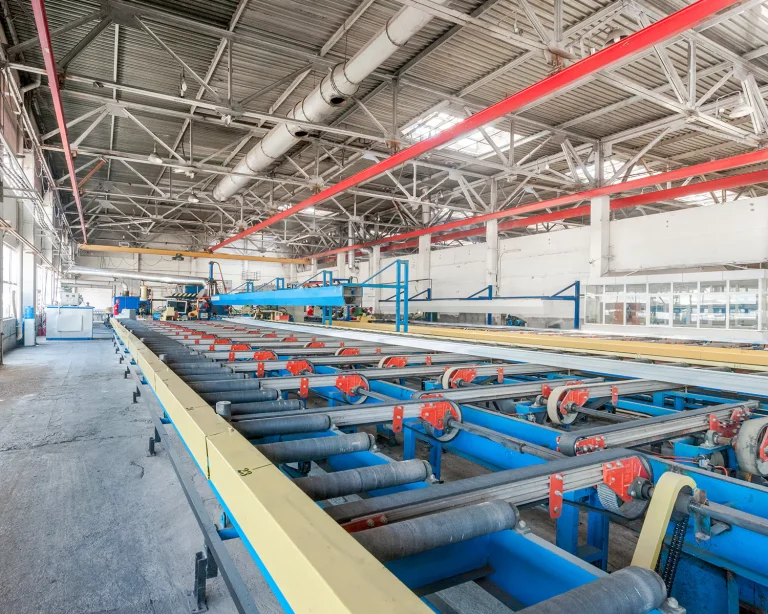
They are used in certain specialized manufacturing processes, including aluminum extrusion and other applications involving hot workpieces.
Unlike heavy-duty rubber belts designed for bulk material handling, felt conveyor belts are often selected for their combination of thermal resistance and surface protection. Their suitable temperature range and service life depend on the fiber composition, belt construction, thickness, and operating conditions.
Other Specialized High-Temperature Conveyor Belts
Some high-temperature processes require belt constructions beyond conventional rubber or felt. Metal conveyor belts, for example, may be used in applications involving direct heat exposure, elevated process temperatures, or heated products moving through industrial ovens and thermal processing equipment.
The choice depends on the process itself. Material temperature, load, product dimensions, belt flexibility, heat transfer, and the surrounding environment all influence which construction is suitable.
What Materials Are Used in Heat Resistant Conveyor Belts?
Material selection is one of the most important factors affecting a conveyor belt’s ability to withstand heat. In conventional heavy-duty heat resistant rubber belts, the cover compound is particularly important because it directly contacts the conveyed material.
EPDM Rubber
Ethylene propylene diene monomer (EPDM) is commonly used in heat resistant rubber conveyor belt covers. It offers good resistance to heat, ozone, weathering, and aging, making it suitable for many industrial environments.
EPDM compounds are often selected for applications involving hot materials such as cement clinker and sintered products. Their performance depends on the formulation, vulcanization process, and other ingredients used in the compound.
EPDM is not automatically suitable for every hot-material application. The required operating temperature, exposure duration, abrasion resistance, and compatibility with the conveyed material must still be considered.
SBR Rubber
Styrene-butadiene rubber (SBR) is another material used in conveyor belt compounds. It offers good abrasion resistance and mechanical properties, which are useful in industrial material handling.
In heat resistant conveyor belts, SBR may be used in blends or specially formulated compounds. Its thermal performance depends on the formulation rather than the base polymer alone.
Compared with EPDM, conventional SBR generally has lower resistance to prolonged heat and ozone exposure. However, its abrasion properties and compatibility with other rubber materials can make it useful in certain belt constructions.
Other Rubber Compounds and Reinforcement Materials
Heat resistant conveyor belts are engineered systems rather than simple layers of rubber. Their overall performance depends on both the cover compound and the reinforcement structure.
Other rubber materials or polymer blends may be incorporated into cover formulations to balance heat resistance, abrasion resistance, flexibility, and adhesion.
The carcass is equally important. Common reinforcement options include:
- Polyester and nylon fabrics: Textile reinforcement provides tensile strength and flexibility. The fabric construction and adhesion system must be suitable for the belt’s thermal conditions.
- Steel cords: Used in certain heavy-duty and long-distance conveyor systems where high tensile strength is required.
- Heat-resistant bonding systems: The bonding between the cover and carcass must withstand thermal exposure to prevent premature separation.
The most suitable construction depends on the conveyor design, load requirements, and expected temperature exposure.
What Are the Heat Resistance Grades of Conveyor Belts?
Heat resistant conveyor belts are often classified according to their ability to withstand thermal exposure. These classifications help users compare products, but the grade names and temperature limits should always be checked against the applicable standard and manufacturer’s technical specifications.
Understanding Heat Resistance Classifications
Some manufacturers and industry specifications use classifications such as T1, T2, T3, and T4 to distinguish different levels of heat resistance.
These grades are associated with defined test conditions and performance requirements. However, temperature limits and grade designations are not necessarily interchangeable across every manufacturer or standard.
For this reason, buyers should not select a belt based on a grade name alone. They should confirm the corresponding test standard, cover compound, permitted performance changes after heat exposure, and recommended operating conditions.
Continuous Operating Temperature vs. Peak Temperature
Two temperature values are particularly important when selecting a heat resistant conveyor belt:
Continuous operating temperature refers to the thermal conditions the belt experiences during normal, sustained operation.
Peak temperature refers to a higher temperature that the belt may encounter for a limited period. Short-term exposure does not necessarily mean the belt can operate continuously at that temperature.
A belt may tolerate occasional temperature peaks that would cause damage under continuous exposure. The duration and frequency of these peaks therefore matter.
The temperature of the conveyed material should also be distinguished from the actual belt surface temperature. Large pieces of hot material may transfer heat differently from fine particles or powders. Belt speed, loading depth, contact area, and cooling conditions all affect heat transfer.
How Heat Resistance Is Tested
Heat resistance testing evaluates how well a belt’s materials retain their properties after exposure to elevated temperatures.
For rubber-covered conveyor belts, relevant properties include:
- Hardness: Measures changes in the cover’s resistance to indentation after heat exposure.
- Tensile strength: Indicates whether the rubber retains its ability to withstand pulling forces.
- Elongation at break: Shows how much the material can stretch before breaking and whether it has become excessively brittle or less flexible.
ISO 4195 specifies requirements and test methods for evaluating the relative heat resistance of rubber conveyor belt covers. The 2026 edition applies to belts with a carrying-side cover thickness of at least 4 mm and assesses permissible changes in hardness, tensile strength, and elongation after heat exposure.
It is important to note that this standard addresses rubber covers. It should not be treated as a universal test standard for every type of high-temperature conveyor belt.
What Industries Use Heat Resistant Conveyor Belts?
Heat resistant conveyor belts are used in industries where hot materials must be moved between production stages, processing equipment, storage areas, or cooling systems.
Cement and Building Materials
Cement manufacturing involves several stages that handle materials exposed to high temperatures. Clinker discharged from a kiln and cooler system is a common example.
Heat resistant rubber conveyor belts can transport clinker and other hot materials while reducing the risk of thermal damage to the belt cover. The required belt specification depends on the material temperature at the loading point, particle size, conveying rate, and cooling conditions.
Steel and Metallurgical Processing
Steel production and metallurgical processes generate hot materials such as coke, sintered ore, and other processed mineral products.
These materials may be abrasive, heavy, or irregular in shape. Conveyor belts used in these environments must therefore withstand not only heat but also impact and mechanical wear.
The cover compound and carcass construction should be selected according to the material being handled and the conveyor’s operating conditions.
Foundries and Metal Casting
Foundries handle materials such as hot sand, castings, and metal-processing residues. Depending on the process, these materials may expose conveyor systems to elevated temperatures, abrasion, and impact.
Heat resistant belts are used in suitable material-handling stages where their temperature and mechanical performance meet the process requirements. Applications involving direct contact with extremely hot metal may require specialized metal conveying systems instead.
Power Generation and Waste Incineration
Power plants and waste incineration facilities may need to transport hot ash, combustion residues, and other by-products.
These materials can create demanding operating conditions due to heat, dust, abrasion, and variations in material size. Conveyor belt selection should account for both the thermal exposure and the physical characteristics of the material.
Aluminum Extrusion and Other Specialized Processing
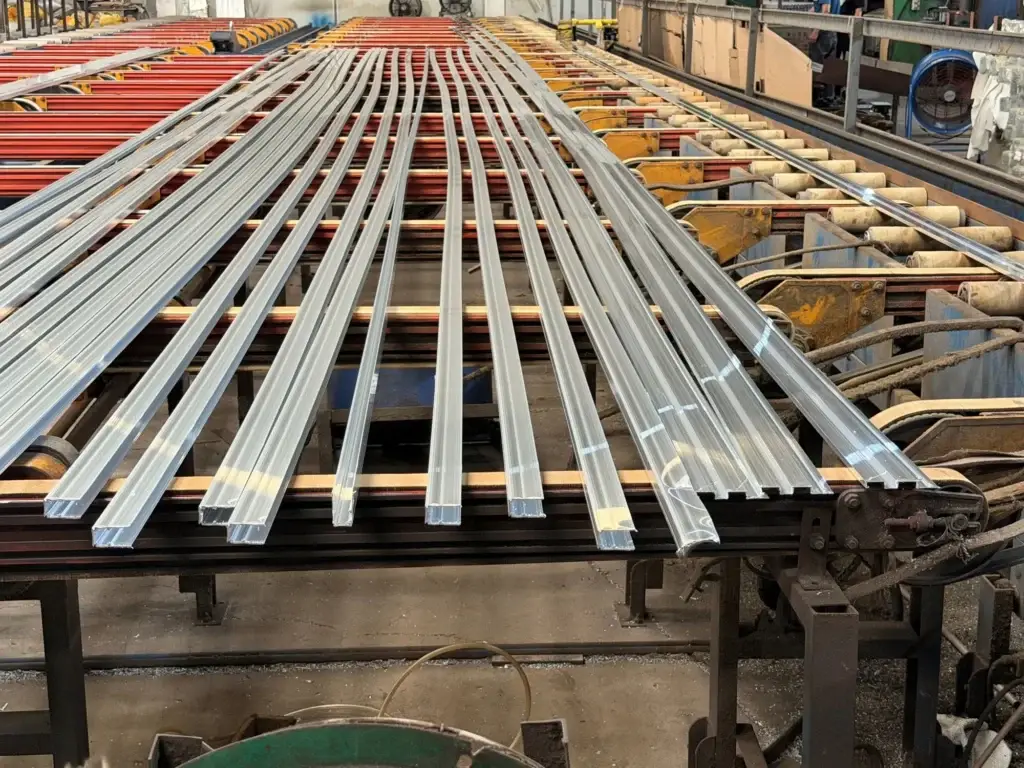
Aluminum extrusion involves moving hot profiles through downstream handling and cooling stages. In these applications, the conveyor surface must withstand the temperature of the profiles while minimizing damage to their finished surfaces.
Some production lines use specialized felt conveyor belts to provide a softer contact surface than conventional metal conveying components. This is a different application from transporting heavy hot bulk materials with rubber conveyor belts.
The appropriate belt depends on the profile temperature, production speed, contact conditions, and the requirements of each handling stage.
How to Choose the Right Heat Resistant Conveyor Belt
Selecting a heat resistant conveyor belt requires more than matching a product’s advertised temperature rating to the temperature of the conveyed material. The entire operating environment must be considered.
Identify the Actual Material Temperature
Start by measuring the temperature of the material where it is loaded onto the conveyor. The temperature at an upstream furnace or processing unit may be significantly different from the temperature at the conveyor loading point.
Where temperatures fluctuate, record both normal operating conditions and the highest credible temperatures.
It is also useful to understand the belt’s actual surface temperature during operation. This helps determine the thermal exposure experienced by the cover.
Consider Contact Time and Cooling Conditions
The amount of heat transferred to a conveyor belt depends partly on how long the material remains in contact with its surface.
A short exposure to a high-temperature material may create a different thermal load from continuous contact with a slightly cooler material.
Consider the following factors:
- Conveyor speed and material residence time.
- Frequency and duration of temperature peaks.
- Material bed depth and loading rate.
- Particle size and contact area.
- Cooling conditions during transportation.
These details help determine the appropriate heat resistance level.
Evaluate Material Properties
Temperature is only one part of the selection process. The physical properties of the conveyed material also affect belt performance.
Consider whether the material is abrasive, sharp, heavy, powdery, or prone to impact during loading. Chemical exposure, moisture, and dust may also influence the choice of cover compound and belt construction.
For example, a belt transporting hot, sharp-edged minerals may need a different combination of heat and abrasion resistance from one handling fine, hot powder.
Select the Appropriate Belt Structure and Material
Choose the belt type according to the application rather than assuming that one material is suitable for every high-temperature process.
For heavy-duty bulk handling, a heat resistant rubber conveyor belt may be appropriate. For applications requiring a softer contact surface, a specialized felt belt may be more suitable. Processes involving direct exposure to extreme heat may require a metal belt or another specialized construction.
The cover material, carcass reinforcement, belt thickness, and bonding system should all be compatible with the expected operating conditions.
Check Operating and Installation Requirements
The conveyor system itself can affect belt performance and service life. Before selecting a belt, check:
- Belt width, length, and thickness.
- Required tensile strength and working tension.
- Pulley diameter and conveyor configuration.
- Loading and discharge conditions.
- Joint or splice requirements.
- Alignment, tracking, and maintenance conditions.
A belt with suitable heat resistance may still fail prematurely if it is incorrectly installed, overloaded, or operated with poor alignment.
Heat Resistant vs. Fire Resistant Conveyor Belts: What Is the Difference?
Heat resistance and fire resistance are two different performance characteristics. A conveyor belt designed to withstand high temperatures is not automatically fire resistant.
Heat resistance refers to a material’s ability to retain its properties when exposed to elevated temperatures. It helps prevent thermal aging, hardening, cracking, and other forms of heat-related deterioration.
Fire resistance or flame retardancy relates to how a material behaves when exposed to fire or a flame. Depending on the applicable requirements, this may involve limiting flame propagation, reducing burning behavior, or meeting specific fire-test criteria.
The two properties address different risks. A conveyor belt may need to withstand hot materials while also meeting fire-safety requirements, particularly in enclosed industrial facilities, underground installations, or environments where combustible materials are present.
When both properties are required, check the relevant test standards and product certifications separately. Do not assume that a heat resistance rating demonstrates compliance with a fire-resistance requirement.
FAQs
What temperature can a heat resistant conveyor belt withstand?
There is no single temperature limit for all heat resistant conveyor belts. The allowable temperature depends on the cover material, belt construction, test standard, and operating conditions. Always distinguish between continuous operating temperature and short-term peak temperature.
What is the difference between heat resistant and high-temperature conveyor belts?
The terms are often used interchangeably in industrial product descriptions. However, the actual performance of a belt depends on its material composition, construction, and specified temperature range rather than the product name alone.
Which rubber is best for heat resistant conveyor belts?
EPDM is commonly used in heat resistant rubber belt covers because of its resistance to heat and aging. SBR may also be used in specially formulated compounds or blends. The best choice depends on the required temperature resistance, abrasion performance, and overall operating conditions.
Can a heat resistant conveyor belt handle continuous high temperatures?
Yes, provided the belt is specifically designed and rated for the required continuous operating conditions. A belt’s short-term peak temperature rating should not be treated as its continuous working temperature.
How long does a heat resistant conveyor belt last?
Service life varies according to temperature exposure, material abrasiveness, loading impact, operating speed, belt tension, alignment, and maintenance. Even a correctly specified heat resistant belt can wear out prematurely under severe mechanical conditions.
Are all heat resistant conveyor belts suitable for hot materials?
No. Different belt types are designed for different applications. A heavy-duty rubber belt for hot bulk materials, a felt belt for handling hot finished products, and a metal belt for direct high-temperature processing have different constructions and performance requirements. The belt must be matched to the actual process.
Conclusion
A heat resistant conveyor belt must be selected according to the temperature, contact duration, material characteristics, and operating conditions of the conveyor system. Understanding the differences between belt types, cover materials, and heat resistance classifications helps prevent premature damage and supports reliable material handling.
Need help selecting the right industrial felt belt for your application? Contact CALM at [email protected] to discuss your operating conditions and material requirements.