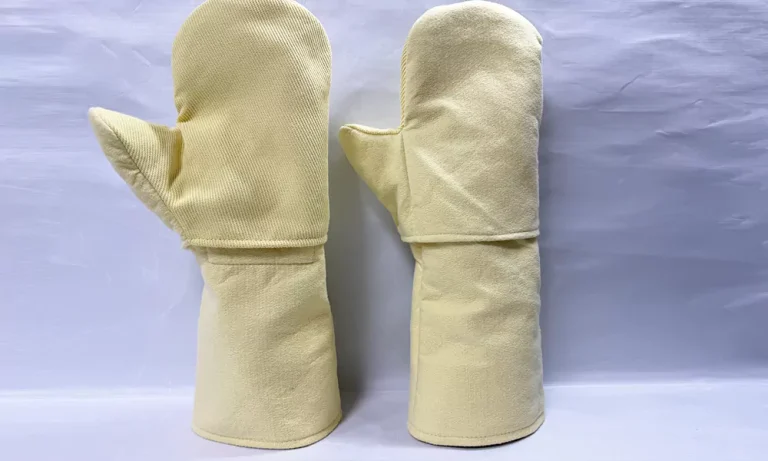
The best gloves for extreme heat depend on the type of heat exposure, working temperature, and application requirements. High-performance materials such as PBO, Kevlar, Nomex, aluminized fabrics, and leather are designed for different levels of thermal protection, mechanical stress, and working environments.
Choosing the right extreme heat gloves is not simply about finding the highest temperature rating. The most suitable glove must balance heat resistance, flame protection, durability, dexterity, and the specific conditions of the job.
What Makes Gloves Suitable for Extreme Heat?
Extreme heat environments create different challenges depending on how heat is transferred. A glove designed for handling hot metal may not provide the same protection near an open flame or furnace.
A high-quality extreme heat glove usually requires several key properties.
1. Heat Resistance
Heat resistance is the primary requirement for extreme heat gloves.
However, the actual protection level depends on more than the temperature of the heat source. Important factors include:
- Contact temperature
- Exposure duration
- Heat transfer method
- Glove thickness
- Material structure
For example, a glove may withstand brief contact with an extremely hot surface but may not provide the same protection during continuous exposure.
2. Flame Resistance
In environments involving open flames, sparks, or molten materials, flame resistance is essential.
Materials such as Nomex and PBO provide inherent flame-resistant properties because their protective performance comes from the fiber structure itself rather than surface coatings.
This helps maintain protection even after repeated exposure.
3. Thermal Insulation
Heat-resistant gloves need to slow down heat transfer from the external environment to the hands.
The insulation performance depends on:
- Fiber type
- Fabric layers
- Glove thickness
- Internal lining materials
A thicker glove may provide better insulation, but excessive thickness can reduce flexibility and handling ability.
4. Mechanical Protection
Extreme heat is often combined with other hazards, such as:
- Sharp edges
- Abrasion
- Heavy materials
- Repeated handling
For industrial users, the best heat-resistant gloves must provide both thermal protection and mechanical durability.
5. Dexterity and Comfort
Maximum protection is not always the best solution.
A glove that is too thick or rigid may reduce:
- Grip control
- Hand movement
- Working efficiency
Professional heat-resistant gloves are designed to balance protection with usability.
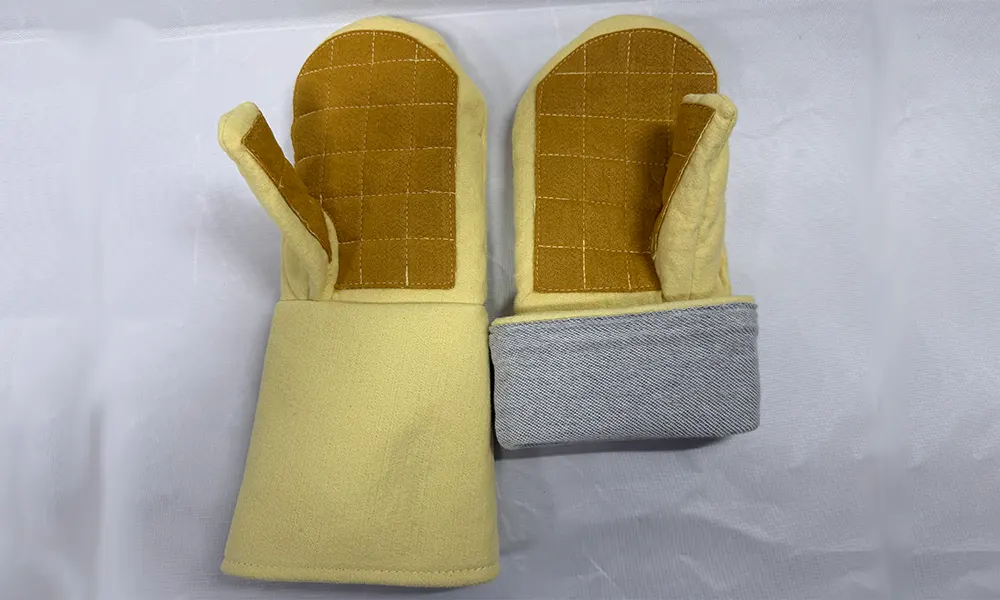
Types of Extreme Heat Resistant Gloves
Different applications require different glove materials. There is no single “best” heat-resistant glove for every situation.
1. PBO Heat Resistant Gloves
PBO (Polybenzobisoxazole) is one of the highest-performance heat-resistant fibers currently available for industrial protection applications.
PBO fibers are known for:
- Extremely high temperature resistance
- Excellent thermal stability
- High strength-to-weight ratio
- Good dimensional stability
PBO heat-resistant gloves are commonly used in environments where workers need protection from extreme heat exposure, including:
- Aluminium processing
- High-temperature manufacturing
- Metal handling
- Industrial thermal applications
The advantage of PBO gloves is their ability to maintain protective performance under severe thermal conditions while remaining relatively lightweight compared with some traditional protective materials.
2. Kevlar Heat Resistant Gloves
Kevlar® is a para-aramid fiber widely recognized for its high strength and abrasion resistance.
Kevlar gloves provide:
- Excellent cut resistance
- Good mechanical strength
- Good heat resistance
- Long service life under friction
They are often selected for applications where heat exposure is combined with mechanical stress.
Common applications include:
- Welding
- Metal fabrication
- Glass handling
- Industrial manufacturing
Kevlar is especially valuable when workers need protection from both heat and physical wear.
3. Nomex Heat Resistant Gloves
Nomex® is a meta-aramid fiber known for its excellent flame resistance and thermal stability.
Nomex gloves are widely used where protection against flames and heat exposure is required.
Key advantages include:
- Inherent flame resistance
- Thermal protection
- Good durability
- Lightweight performance
Typical applications include:
- Fire protection
- Industrial thermal environments
- Aerospace applications
- High-temperature workplaces
Nomex is often selected when flame protection is a higher priority than extreme mechanical strength.
4. Aluminized Heat Resistant Gloves
Aluminized gloves use reflective materials designed to reduce radiant heat exposure.
Unlike fiber-based gloves that mainly provide insulation, aluminized materials work by reflecting a portion of thermal radiation away from the wearer.
They are commonly used in:
- Foundries
- Furnace operations
- Molten metal handling
These gloves are particularly effective in environments with intense radiant heat.
5. Leather Heat Resistant Gloves
Leather gloves remain a common choice for general hot work applications.
Advantages include:
- Good abrasion resistance
- Comfortable handling
- Cost effectiveness
- Durability
They are commonly used for:
- Welding
- Construction
- General industrial work
However, compared with advanced aramid materials, leather generally has more limited performance in extreme temperature environments.
Which Material Is Best for Extreme Heat Gloves?
The answer depends on the working environment.
A material that performs well in one application may not be the best choice for another.
| Material | Main Advantage | Suitable Applications |
|---|---|---|
| PBO | Extreme temperature resistance and thermal performance | Extreme industrial heat environments |
| Kevlar | Strength and abrasion resistance | High-temperature work with mechanical stress |
| Nomex | Flame resistance and thermal stability | Fire and heat protection applications |
| Aluminized fabric | Reflects radiant heat | Furnace and molten metal environments |
| Leather | Durability and flexibility | General hot work applications |
For example:
- A worker handling extremely hot aluminium components may require PBO-based protection.
- A welder exposed to sparks and abrasion may benefit from Kevlar or leather gloves.
- A firefighter may prioritize Nomex flame-resistant protection.
The correct choice depends on the complete working environment rather than temperature alone.
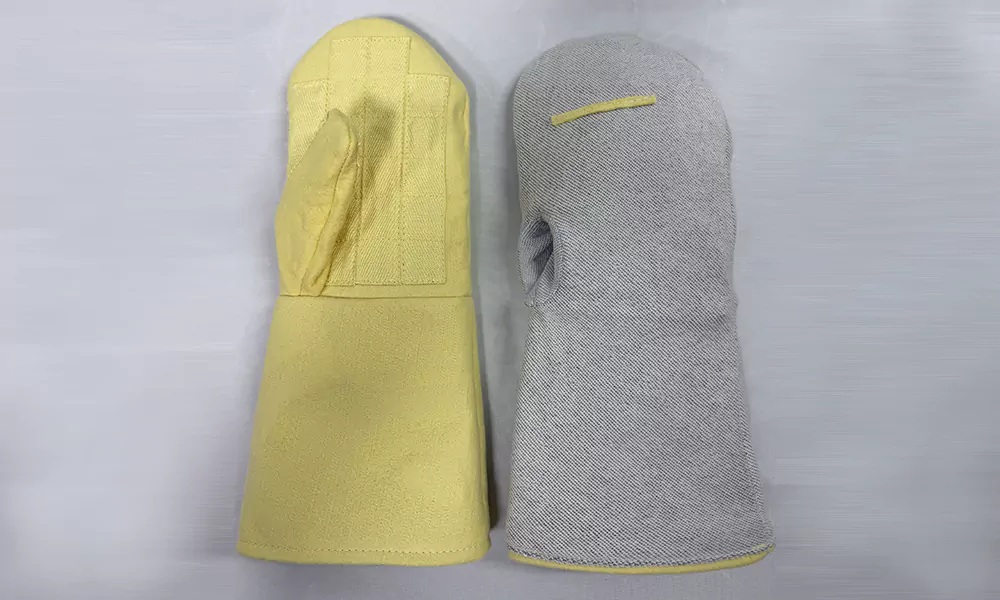
Best Extreme Heat Gloves for Different Applications
The best extreme heat gloves vary depending on the industry and the type of heat exposure involved. Understanding the working environment is the first step toward selecting suitable hand protection.
1. Aluminium Processing and Extrusion
Aluminium processing involves contact with hot metal profiles, heated equipment, and high-temperature production environments.
Workers may face challenges including:
- High surface temperatures
- Continuous heat exposure
- Risk of burns during material handling
- Need to protect product surfaces from scratches
For these applications, gloves made from high-performance aramid fibers such as PBO, Kevlar, and Nomex are commonly considered.
PBO gloves are often selected for extreme temperature environments because of their superior thermal performance, while Kevlar and Nomex can provide additional benefits depending on the required balance between heat resistance, abrasion resistance, and flame protection.
2. Welding Applications
Welding involves multiple hazards, including:
- Sparks
- Molten metal droplets
- Radiant heat
- Sharp metal edges
Welding gloves typically require a combination of:
- Heat resistance
- Flame resistance
- Abrasion resistance
- Mechanical protection
Kevlar and leather are commonly used in welding gloves because they provide good durability and protection against mechanical hazards. Nomex materials may also be used where flame resistance is a priority.
3. Foundry and Molten Metal Handling
Foundry environments are among the most demanding applications for heat-resistant gloves.
Workers may be exposed to:
- Extremely high temperatures
- Molten metal splash
- Radiant heat
- Long working periods near heat sources
Protection in these environments often requires a combination of:
- Heat-resistant fibers
- Reflective outer layers
- Multi-layer insulation structures
Aluminized gloves are often used for intense radiant heat, while advanced aramid materials can provide additional thermal protection and durability.
4. Glass Manufacturing
Glass production involves continuous exposure to hot materials and high-temperature equipment.
Heat-resistant gloves used in glass manufacturing need to provide:
- Thermal insulation
- Good grip
- Resistance to repeated heat cycles
- Protection from hot surfaces
Depending on the process, Kevlar, Nomex, and other high-performance fibers may be selected to improve durability and worker protection.
5. BBQ and Household High-Temperature Applications
For cooking, grilling, and household heat protection, requirements are generally different from industrial applications.
Users usually prioritize:
- Comfort
- Flexibility
- Easy handling
- Short-term heat protection
Silicone-coated gloves, leather gloves, and general heat-resistant fabrics are commonly used for these applications.
Industrial-grade materials designed for extreme temperatures are usually unnecessary unless the user is working in professional or high-risk environments.
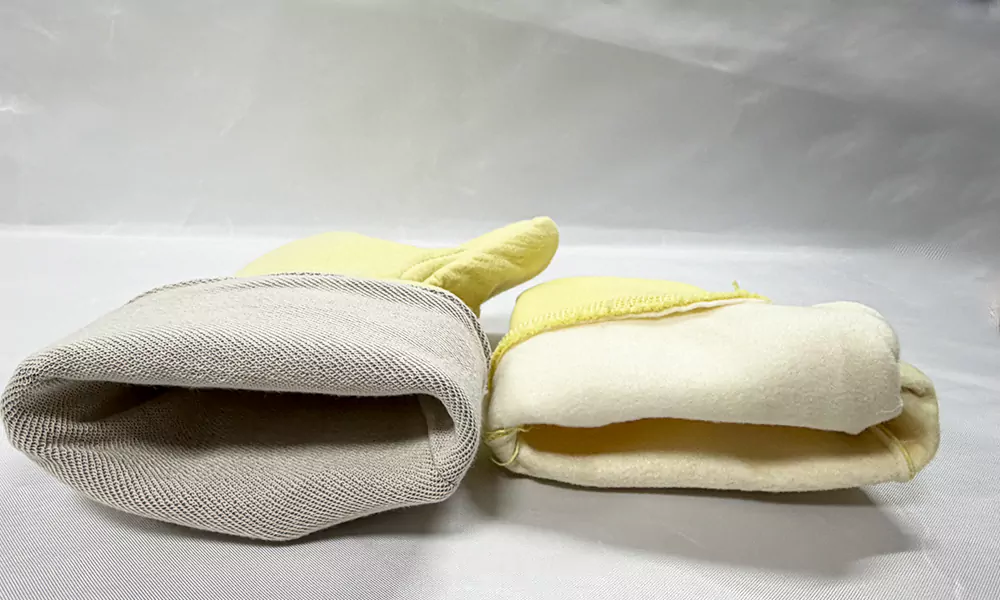
How to Choose the Right Extreme Heat Gloves?
Selecting the right heat-resistant gloves requires evaluating the actual working conditions rather than choosing based only on a temperature number.
1. Identify the Type of Heat Exposure
Heat can affect gloves in different ways.
Contact Heat
This occurs when gloves directly touch hot objects.
Examples:
- Hot metal parts
- Heated tools
- Industrial components
The glove needs strong insulation and sufficient thickness.
Radiant Heat
This occurs when workers are exposed to heat energy from nearby sources.
Examples:
- Furnaces
- Kilns
- Molten metal
Reflective materials such as aluminized fabrics may be more effective in these environments.
Flame Exposure
When open flames or sparks are involved, flame-resistant materials are essential.
Materials such as Nomex and PBO provide inherent flame-resistant properties.
2. Consider Working Temperature and Exposure Time
A common misunderstanding is that heat-resistant gloves should be selected only according to the highest possible temperature.
In reality, protection depends on:
- How hot the material is
- How long the contact lasts
- Whether heat is continuous or occasional
- Whether the glove is exposed to direct contact or surrounding heat
A glove designed for short-term contact may not be suitable for continuous high-temperature operation.
3. Balance Protection and Dexterity
Higher protection often requires thicker or multi-layer glove structures.
However, excessive thickness can affect:
- Grip strength
- Precision handling
- Operator comfort
For industrial users, the ideal glove provides enough protection without unnecessarily reducing productivity.
4. Evaluate Durability Requirements
Different applications create different types of wear.
Consider:
- Frequency of use
- Friction level
- Contact with sharp materials
- Required service life
For example, Kevlar may be preferred where abrasion resistance is important, while PBO may be selected where extreme heat exposure is the main challenge.
What Temperature Can Extreme Heat Gloves Handle?
There is no single temperature rating that defines all extreme heat gloves.
The actual performance depends on:
- Fiber material
- Glove construction
- Thickness
- Heat exposure method
- Testing standards
For example:
- PBO fibers are known for extremely high thermal performance.
- Kevlar fibers provide strong heat resistance combined with mechanical strength.
- Nomex fibers provide excellent flame resistance and thermal stability.
However, a glove’s maximum temperature capability does not mean it can safely protect hands indefinitely at that temperature.
Proper selection requires considering both temperature and exposure time.
Why Material Selection Matters More Than Temperature Ratings
When choosing extreme heat gloves, focusing only on the highest temperature number can lead to incorrect decisions.
A professional selection process considers the complete application:
| Working Condition | Important Performance Factors |
|---|---|
| Handling hot metal | Thermal protection + durability |
| Welding | Heat resistance + abrasion resistance |
| Furnace operation | Radiant heat protection |
| Fire exposure | Flame resistance |
| Precision industrial work | Protection + flexibility |
The best glove is the one that matches the actual working conditions.
FAQs
The best gloves for extreme heat depend on the application. PBO gloves are often selected for extreme industrial temperatures, Kevlar gloves provide excellent strength and abrasion resistance, and Nomex gloves are widely used where flame resistance is required. The right choice depends on temperature, exposure time, and workplace conditions.
Yes. Kevlar gloves provide good heat resistance along with excellent mechanical strength and abrasion resistance. They are commonly used in applications where workers face both high temperatures and physical wear.
Yes. Nomex gloves are heat resistant and provide inherent flame protection. They are commonly used in environments where resistance to heat and flame exposure is required.
PBO and Kevlar serve different purposes. PBO generally provides higher thermal performance for extreme heat applications, while Kevlar offers excellent strength and abrasion resistance. The better option depends on whether temperature exposure or mechanical stress is the main challenge.
Not necessarily. Thicker gloves may provide more insulation, but they can reduce flexibility and hand movement. The best glove design balances protection, comfort, and the requirements of the specific application.
The service life depends on factors such as operating temperature, frequency of use, mechanical stress, and maintenance conditions. Proper material selection and correct usage can significantly extend glove life.
Conclusion
The best gloves for extreme heat are not defined by a single material or temperature rating. Effective protection requires choosing the right combination of heat resistance, flame protection, durability, and flexibility based on the working environment.
Materials such as PBO, Kevlar, Nomex, aluminized fabrics, and leather each provide unique advantages for different applications. Understanding these differences helps industries select safer and more reliable hand protection solutions.
CALM specializes in high-performance heat-resistant gloves and industrial felt solutions, providing customized protection products made from advanced materials for demanding industrial environments. For application-specific requirements, contact our team to discuss the most suitable solution.
Need help choosing the right heat-resistant gloves for your application? Contact our team at [email protected] for expert advice and customized solutions.