A timing belt is a toothed belt that transfers motion between pulleys while maintaining precise synchronization. Unlike friction-driven belts, it uses teeth that engage with matching pulley grooves to reduce slippage and maintain a predictable relationship between the driving and driven components. Timing belts are widely used in automotive engines, industrial machinery, automation systems, conveying equipment, and precision linear-motion applications.
What Is a Timing Belt?
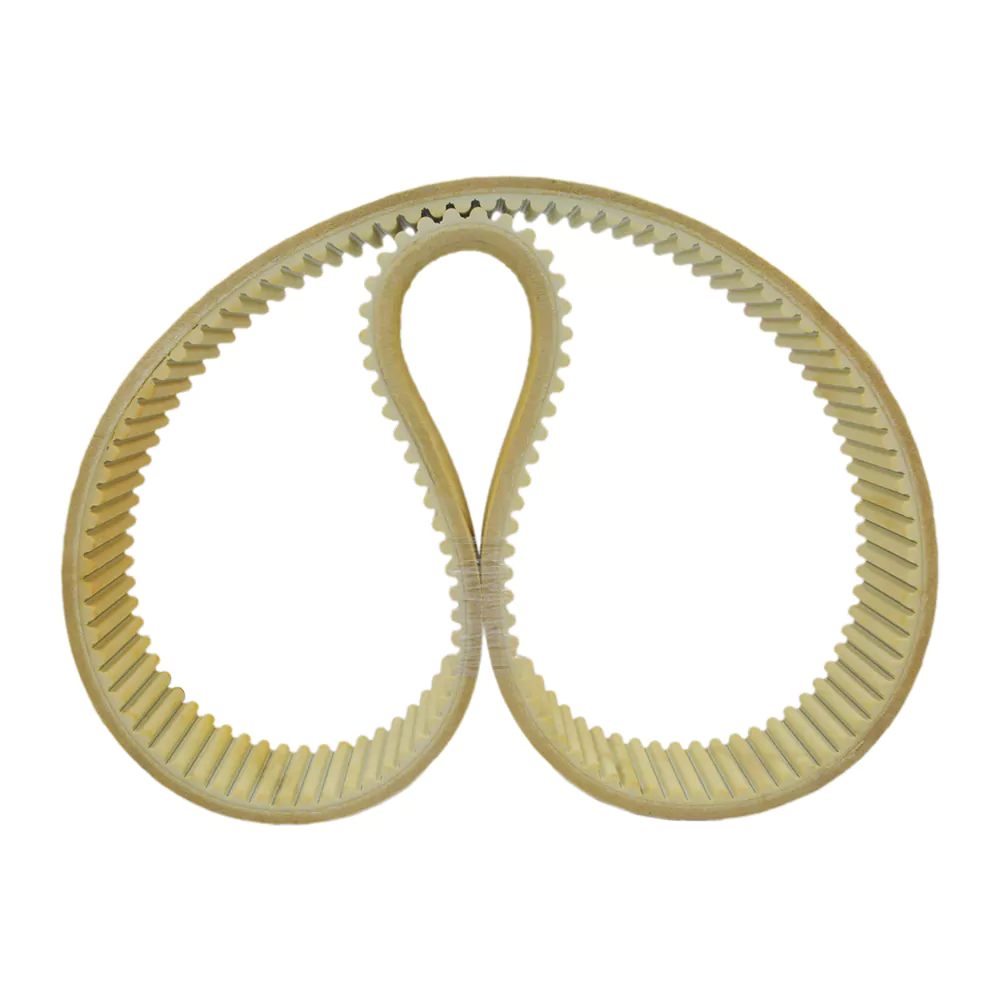
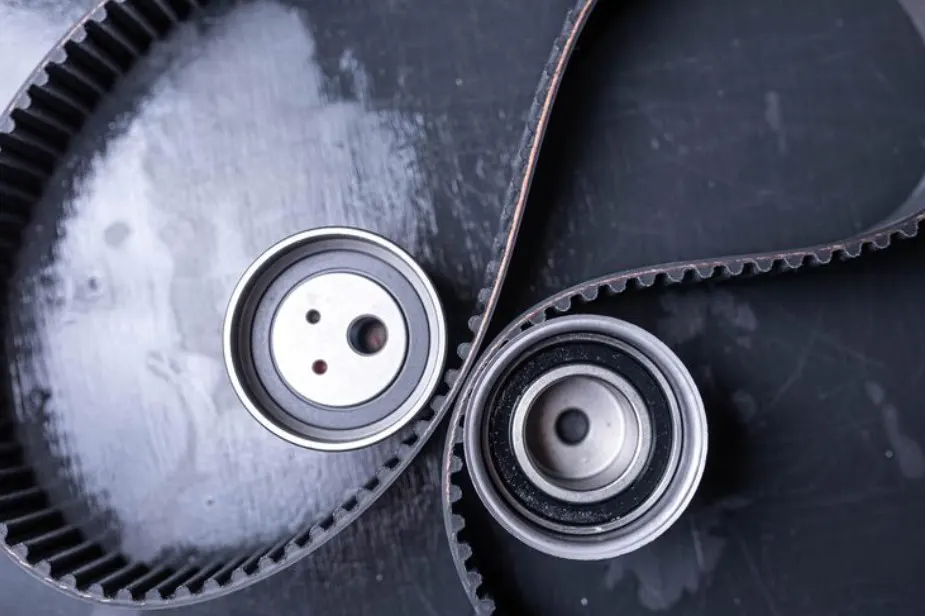
A timing belt is a flexible mechanical transmission component with molded or machined teeth along its inner surface. These teeth engage with the corresponding teeth or grooves on a timing pulley, allowing the belt to transmit rotational or linear motion with controlled synchronization.
The term timing belt can refer to two major application categories:
- Automotive timing belts, which synchronize the crankshaft and camshaft in certain internal-combustion engines.
- Industrial timing belts, which transmit power or controlled motion between shafts, pulleys, and moving components.
Although both use toothed belt technology, their designs, materials, dimensions, and performance requirements can differ substantially.
The main advantage of a timing belt is its positive engagement with the pulley. Because the teeth physically engage rather than relying primarily on friction, a properly selected timing belt can maintain synchronization with much less slip than a conventional flat or V-belt drive.
How Does a Timing Belt Work?
A timing belt transfers motion through the interaction between its teeth and a matching timing pulley.
In a typical system:
- A motor or other power source rotates the driving pulley.
- The pulley teeth engage with the timing belt teeth.
- The belt moves at a controlled speed around the drive system.
- The belt teeth engage with the driven pulley.
- The driven pulley rotates or moves in a synchronized relationship with the driving component.
This mechanism allows timing belts to perform both rotary power transmission and linear motion.
For example, an industrial positioning system may use a motor to rotate a pulley while a timing belt moves a carriage along a defined path. Because the belt teeth remain engaged with the pulley, the system can provide repeatable movement without relying solely on friction.
Timing Belt vs. Friction-Driven Belt
A conventional friction-driven belt transfers force primarily through contact between the belt surface and pulley. A timing belt instead uses tooth engagement.
This difference gives timing belts several useful characteristics:
- Reduced slippage
- Precise synchronization
- Repeatable motion
- Controlled positioning
- Reliable transmission at varying speeds
However, timing belts still require correct tension, alignment, pulley selection, and operating conditions. Tooth engagement alone cannot compensate for an incorrectly designed drive system.
Timing Belt Construction
A timing belt contains several functional elements. The exact construction varies according to the belt material, tooth profile, application, and required performance.
Belt Body
The belt body forms the main flexible structure of the belt and contains the teeth. Common belt-body materials include rubber and polyurethane, with the choice depending on requirements such as flexibility, wear resistance, temperature resistance, chemical exposure, and operating speed.
The belt body must maintain its geometry under repeated loading because changes in tooth shape or belt dimensions can affect engagement with the pulley.
Timing Belt Teeth
The teeth provide the positive engagement that distinguishes a timing belt from many conventional belt types.
The tooth geometry must match the corresponding pulley. Important parameters include:
- Tooth profile
- Tooth pitch
- Tooth height
- Tooth spacing
- Tooth shear strength
An incorrect tooth profile or pitch can cause poor engagement, accelerated wear, noise, or tooth failure.
Tension Members
Tension members run longitudinally through the belt and carry much of the tensile load.
Common reinforcement materials include:
- Steel
- Stainless steel
- Fiberglass
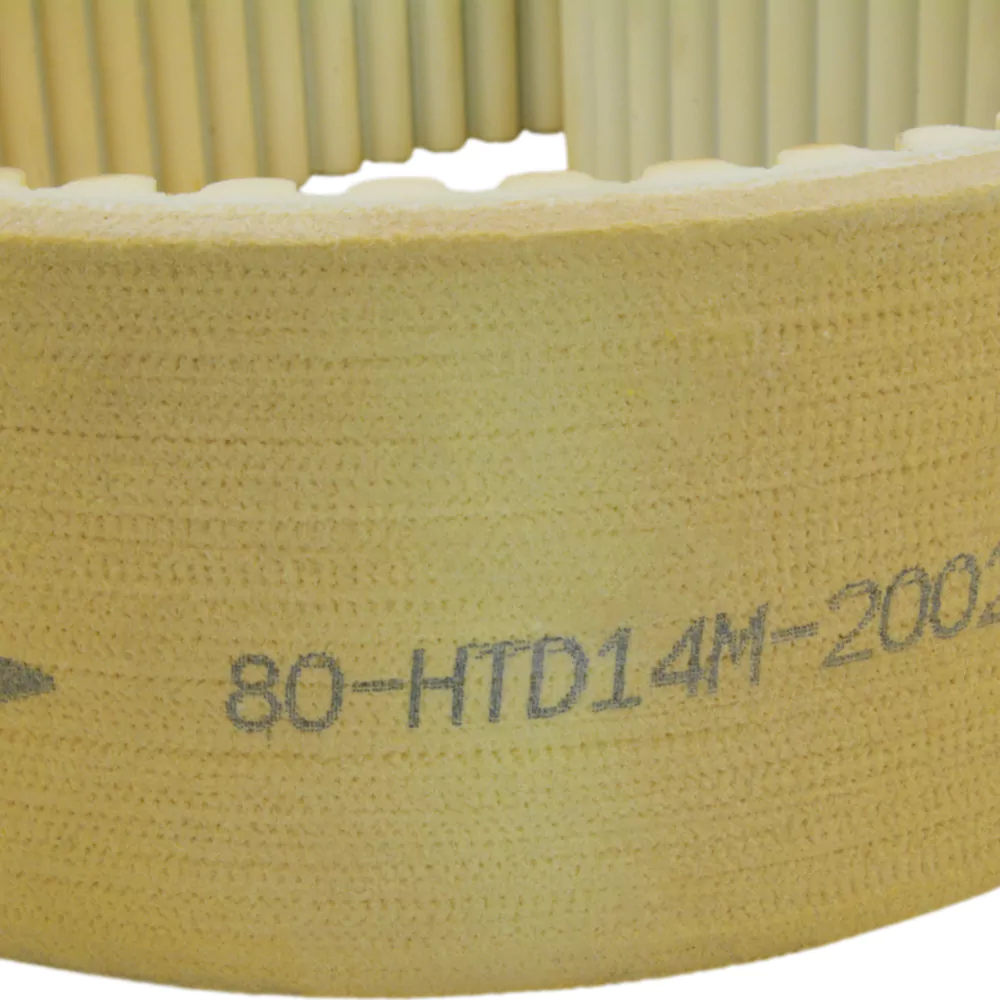
- Aramid fibers such as Kevlar®
The tension member affects properties such as tensile strength, elongation, dimensional stability, flexibility, and positioning accuracy.
For applications requiring low elongation and high strength with relatively low weight, aramid reinforcement can provide useful performance characteristics. However, the appropriate reinforcement depends on the complete operating conditions rather than tensile strength alone.
Belt Backing
Some industrial timing belts use a backing or additional surface layer to modify the belt’s interaction with the surrounding equipment or transported products.
Depending on the application, a backing can improve:
- Abrasion resistance
- Grip
- Surface protection
- Friction characteristics
- Product handling
- Environmental resistance
The backing material should be selected according to the temperature, contact pressure, surface condition, and type of material being handled.
Timing Belt Materials
Timing belts do not consist of a single universal material. Manufacturers combine different materials to achieve the required balance of strength, flexibility, wear resistance, temperature performance, and dimensional stability.
| Material | Typical Function or Advantage |
|---|---|
| Rubber | Flexible belt construction and general transmission |
| Polyurethane | Wear resistance, dimensional stability, and clean operation |
| Steel | High tensile strength and low elongation |
| Stainless steel | Tensile reinforcement with improved corrosion resistance |
| Fiberglass | Strength combined with flexibility |
| Aramid/Kevlar | High tensile strength and low weight |
| Fabric | Surface protection, friction control, or tooth covering |
No single material is automatically best for every timing belt.
The appropriate construction depends on factors such as load, speed, pulley diameter, temperature, chemical exposure, required accuracy, flexibility, and expected service life.
Types of Timing Belts
Timing belts can be classified according to their construction and application.
Open-Ended Timing Belts
Open-ended timing belts are supplied as continuous lengths rather than closed loops. They are commonly used for:
- Linear motion
- Positioning systems
- Automated machinery
- Gantry systems
- Material handling
The belt can be cut to the required length and installed in systems designed for linear movement.
Endless Timing Belts
Endless timing belts form a continuous loop without a joint.
They are commonly used for:
- Rotary power transmission
- Continuous conveying
- Automated machinery
- Synchronized drives
Because there is no splice, endless belts can provide consistent performance in applications where belt continuity is important.
Spliced and Welded Timing Belts
Some industrial timing belts can be joined to create a continuous loop. Depending on the belt construction, manufacturers may use mechanical splicing, welding, or other joining methods.
These configurations can be useful when equipment requires a specific belt length that is difficult to install as a pre-manufactured endless belt.
Single-Sided and Double-Sided Timing Belts
A conventional timing belt has teeth on one side. A double-sided timing belt has teeth on both sides, allowing it to engage with pulleys or other components from both surfaces.
Double-sided belts can support more complex transmission arrangements where several components need to be driven by a single belt.
Timing Belt Tooth Profiles and Pitch
Tooth pitch is one of the most important dimensions when selecting a timing belt.
Pitch describes the distance between corresponding points on adjacent teeth. The belt pitch must match the pitch of the corresponding timing pulley.
Timing belts also use different tooth profiles. Common designs include trapezoidal and curvilinear profiles, with each geometry providing different characteristics for load distribution, engagement, noise, and transmission performance.
When selecting a belt, engineers should consider the complete belt-and-pulley system rather than choosing the belt independently.
Important parameters include:
- Tooth profile
- Pitch
- Number of teeth
- Pulley diameter
- Belt width
- Belt length
- Required transmission load
A mismatch between the belt and pulley can lead to premature wear or tooth failure even when the belt itself has adequate tensile strength.
Automotive Timing Belts vs. Industrial Timing Belts
The term timing belt has a particularly strong association with automotive engines, but industrial timing belts serve a much broader range of functions.
| Feature | Automotive Timing Belt | Industrial Timing Belt |
|---|---|---|
| Main purpose | Engine synchronization | Power transmission or controlled motion |
| Typical components | Crankshaft and camshaft | Motors, pulleys, drives, and moving components |
| Primary requirement | Accurate valve timing | Synchronization, load capacity, and positioning |
| Typical environment | Engine compartment | Industrial machinery |
| Common applications | Internal-combustion engines | Automation, conveying, robotics, machining, and machinery |
In an automotive engine, the timing belt synchronizes the movement of the crankshaft and camshaft so that the valves open and close at the appropriate time.
In industrial equipment, timing belts can transfer power, move components, position products, or synchronize multiple machine elements.
This distinction matters when researching or selecting a timing belt because the performance requirements of an engine timing system can differ considerably from those of an industrial drive.
What Are Timing Belts Used For?
Timing belts support a wide range of mechanical applications.
Automotive Applications
In vehicles equipped with timing belts, the belt synchronizes the crankshaft and camshaft. This synchronization controls the relationship between piston movement and valve operation.
Automotive timing belts are highly application-specific and must meet the manufacturer’s dimensional and performance requirements.
Industrial Power Transmission
Industrial timing belts can transmit rotational power between motors, shafts, and driven components.
Applications include:
- Machine tools
- Manufacturing equipment
- Automated machinery
- Servo-driven systems
- Rotary equipment
Their ability to maintain synchronization makes them useful where conventional friction belts may not provide sufficient positional control.
Linear Motion
Timing belts can convert rotary motion from a motor into controlled linear movement.
Common applications include:
- CNC equipment
- 3D printers
- Pick-and-place systems
- Gantry systems
- Automated positioning equipment
In these applications, belt pitch, tension, stiffness, pulley size, and tooth engagement can all influence positioning accuracy.
Conveying and Material Handling
Industrial timing belts can also transport or index products through production lines.
Typical applications include:
- Packaging equipment
- Sorting systems
- Assembly lines
- Product positioning
- Material handling
Depending on the system, the belt may use a specialized surface or backing to provide the required contact characteristics.
Robotics and Automation
Robotic and automated equipment often requires repeatable and synchronized movement.
Timing belts can be used in:
- Robotic positioning systems
- Automated handling
- Servo-driven axes
- Linear actuators
- Pick-and-place equipment
Low elongation and accurate tooth engagement can be particularly important when the belt contributes directly to positioning accuracy.
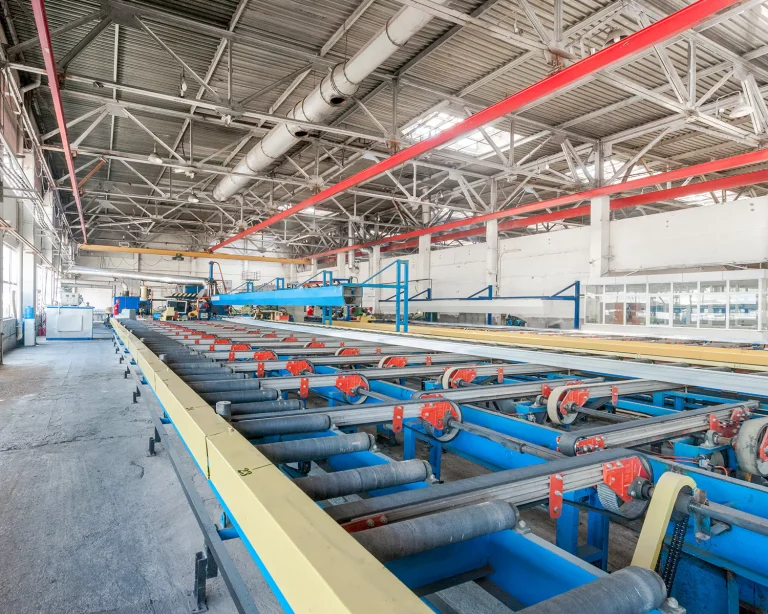
Machining and Extrusion Equipment
Timing belts also appear in machinery used for machining, fabrication, and extrusion-related processes.
Examples include:
- Automated transfer systems
- Sawing equipment
- Run-out tables
- Material handling systems
- Conveyor systems
- Automated production lines
In these applications, engineers must consider not only belt transmission requirements but also the surrounding environment, including temperature, abrasion, dust, contact surfaces, and continuous operating cycles.
What Factors Should You Consider When Choosing a Timing Belt?
Choosing a timing belt requires more than matching its length to the equipment. The belt must suit the mechanical and environmental conditions of the entire drive system.
Load and Torque
Determine the amount of force or torque that the belt must transmit.
A belt that operates beyond its rated capacity may experience:
- Excessive elongation
- Tooth wear
- Tooth shear
- Premature failure
Speed
Operating speed affects belt selection, pulley size, heat generation, and dynamic behavior.
High-speed applications may require a belt construction specifically designed for continuous operation at elevated speeds.
Belt Width
Wider belts generally provide greater load-carrying capability, but width must be compatible with the pulley and available installation space.
Pitch and Tooth Profile
The belt must match the pulley in both pitch and tooth geometry.
This is a fundamental requirement for proper tooth engagement.
Accuracy and Repeatability
For positioning applications, consider:
- Belt elongation
- Backlash
- Tooth engagement
- Tension
- Pulley runout
- System rigidity
These factors can affect repeatability and positioning accuracy.
Temperature
Temperature can significantly affect belt materials and reinforcement.
For high-temperature machinery, engineers should consider not only ambient temperature but also:
- Direct heat exposure
- Continuous exposure time
- Heat cycles
- Friction-generated heat
- Nearby hot surfaces
Chemical Exposure
Oil, grease, water, solvents, cleaning agents, and other chemicals can affect certain belt materials.
Material compatibility should therefore be evaluated according to the actual operating environment.
Abrasion and Flexibility
Repeated bending, contact, or friction can accelerate wear.
Applications involving small pulleys, frequent direction changes, or continuous product contact may require a belt construction with appropriate flexibility and surface durability.
Timing Belt vs. Other Belts
Timing Belt vs. V-Belt
A V-belt transfers power primarily through friction between the belt and pulley.
A timing belt uses positive tooth engagement.
| Timing Belt | V-Belt |
|---|---|
| Toothed engagement | Friction-based transmission |
| Precise synchronization | Some slip can occur |
| Suitable for positioning | Primarily power transmission |
| Requires matching tooth profile and pitch | Uses pulley groove geometry |
Neither design is universally better. The correct choice depends on whether synchronization or conventional power transmission is the primary requirement.
Timing Belt vs. Flat Belt
Flat belts generally rely on friction and belt tension to transmit power. Timing belts use teeth to maintain synchronization.
Flat belts can be advantageous for certain high-speed or long-distance transmission systems, while timing belts are more suitable when controlled synchronization is important.
Timing Belt vs. Serpentine Belt
A serpentine belt is a ribbed friction belt commonly used to drive accessories in automotive engines.
A timing belt performs a different function. In engines that use one, it synchronizes the crankshaft and camshaft.
Although both are flexible belts used in vehicles, they should not be treated as interchangeable components.
Timing Belt vs. Timing Chain
Both timing belts and timing chains can synchronize engine components, but they use different construction principles.
A timing belt is made from reinforced polymeric or elastomeric materials, while a timing chain consists of interconnected metal links.
Timing belts generally operate more quietly and do not require the same type of lubrication as timing chains. Timing chains can offer different durability characteristics but add weight and operate in a lubricated environment.
The appropriate system depends on the engine design and manufacturer’s requirements.
Common Timing Belt Problems
Timing belt failures do not always result from normal material wear. Installation, alignment, tension, pulley condition, and operating environment can all influence service life.
Tooth Wear
Repeated engagement with the pulley can gradually wear the tooth surfaces, particularly when alignment or tension is incorrect.
Tooth Shear
Excessive load or inadequate tooth engagement can cause teeth to deform or shear away from the belt.
Belt Elongation
Excessive tensile loading can cause the belt to elongate. Even small dimensional changes can affect positioning accuracy in precision applications.
Misalignment
Misaligned pulleys can cause uneven wear, edge damage, and unstable belt tracking.
Incorrect Tension
Too little tension can allow tooth jumping or poor engagement, while excessive tension can increase bearing loads and accelerate belt wear.
Pulley Wear
A damaged or incorrectly matched pulley can cause premature belt failure even when the belt itself is suitable for the application.
Excessive Temperature
Operating beyond the material’s recommended temperature range can accelerate aging and reduce mechanical performance.
Contamination
Oil, chemicals, dust, or other contaminants can affect the belt depending on its material and construction.
How to Extend Timing Belt Service Life
A timing belt can generally achieve more reliable service when the entire drive system is correctly designed and maintained.
Key practices include:
- Use a belt and pulley combination designed for the application.
- Maintain the manufacturer’s recommended tension.
- Check pulley alignment regularly.
- Avoid loads above the belt’s rated capacity.
- Inspect teeth and belt edges for abnormal wear.
- Keep the drive system free from incompatible contaminants.
- Control operating temperature where possible.
- Replace damaged or excessively worn pulleys.
- Follow the belt manufacturer’s installation and maintenance specifications.
For industrial equipment, routine inspection is particularly important because belt degradation can affect both transmission performance and the accuracy of the wider machine.
Timing Belts in High-Temperature Industrial Environments
High-temperature environments introduce additional challenges for timing belt systems. Heat can affect the belt body, reinforcement, backing, pulley components, and surrounding materials.
The actual thermal conditions can also be more complex than the nominal ambient temperature. Engineers may need to consider:
- Surface temperature
- Direct radiant heat
- Contact temperature
- Exposure duration
- Temperature cycling
- Mechanical load
- Friction
For example, equipment operating near hot metal, heated tooling, or high-temperature processing zones may expose adjacent components to temperatures substantially different from the general room environment.
In these systems, engineers should evaluate the complete material combination rather than looking only at the timing belt.
Heat-resistant felt components may also serve supporting functions in high-temperature industrial equipment, including thermal protection, spacing, cushioning, and controlled contact around hot processes.
FAQs
A timing belt is a toothed belt that transfers motion between matching pulleys while maintaining synchronization.
A timing belt transfers rotational or linear motion while maintaining a controlled relationship between the driving and driven components.
Its teeth engage with matching pulley grooves to transfer motion through positive mechanical engagement rather than relying primarily on friction.
Timing belts typically combine rubber or polyurethane with reinforcement materials such as steel, fiberglass, or aramid fibers. Some designs also use specialized fabric or backing materials.
Timing belts are used in automotive engines, industrial power transmission, linear positioning, conveying, robotics, automation, machining, and other synchronized motion systems.
Timing belt pitch is the distance between corresponding points on adjacent teeth. The belt pitch must match the pulley pitch for proper engagement.
Yes. Industrial timing belts are widely used for power transmission, linear motion, conveying, positioning, robotics, and automated machinery.
Consider the required load, torque, speed, belt width, pitch, tooth profile, pulley diameter, accuracy, temperature, chemical exposure, flexibility, and expected service life.
Some timing belt constructions are designed for elevated-temperature environments, but the suitable temperature range depends on the belt’s specific materials and construction. The complete operating environment should be evaluated before selection.
Conclusion
A timing belt is a precision mechanical component that combines toothed engagement, flexible construction, and reinforced tensile strength to transfer synchronized motion. While automotive engines remain an important application, industrial timing belts also support power transmission, automation, conveying, robotics, machining, and linear positioning.
For industrial systems, belt construction, material selection, tooth geometry, operating conditions, and pulley design must work together to achieve reliable performance and service life.
Looking for heat-resistant timing felt belts for industrial equipment? Contact us at [email protected] to discuss your application and material requirements.