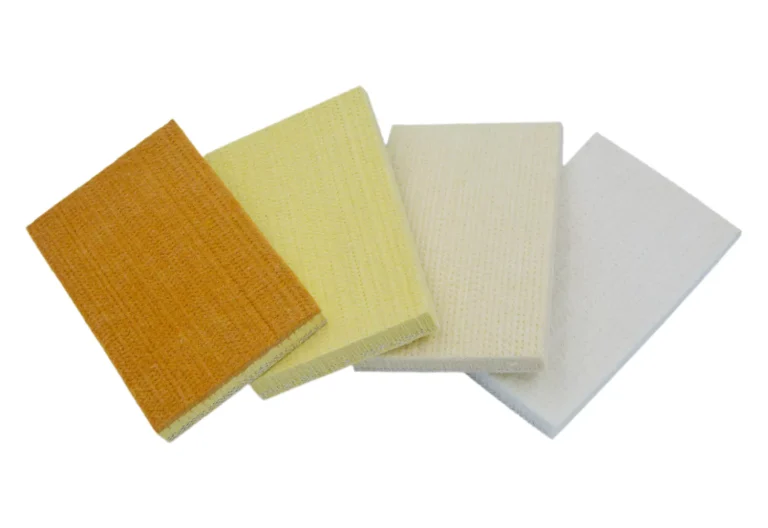
PBO fiber (Poly-p-phenylene benzobisoxazole fiber) is a high-performance synthetic fiber known for its exceptional strength, high modulus, flame resistance, and outstanding thermal stability. Originally developed for extreme-performance applications, PBO fiber can maintain its mechanical properties under temperatures far beyond the capabilities of many conventional fibers.
Because of its unique combination of strength and heat resistance, PBO fiber is used in advanced applications such as aerospace composites, protective equipment, reinforcement materials, and high-temperature industrial components.
In industries where materials must withstand extreme heat while maintaining structural integrity, PBO fiber provides a reliable solution that goes beyond traditional aramid fibers such as Kevlar and Nomex.
What Is PBO Fiber?
PBO fiber is a type of high-performance aromatic heterocyclic polymer fiber developed for applications requiring exceptional mechanical and thermal performance.
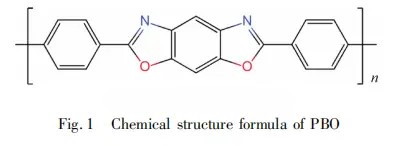
The full chemical name of PBO is Poly-p-phenylene benzobisoxazole. It belongs to the family of rigid-rod polymer fibers, which are characterized by highly oriented molecular structures.
Unlike conventional synthetic fibers, PBO fiber has a highly ordered molecular chain structure. This structure allows the fiber to achieve:
- Extremely high tensile strength
- Very high modulus
- Excellent thermal stability
- Outstanding flame resistance
These characteristics make PBO one of the most advanced organic fibers currently available for demanding industrial environments.
How Is PBO Fiber Different From Conventional Fibers?
The performance difference between PBO fiber and standard synthetic fibers comes from its molecular structure.
Most conventional fibers rely on flexible polymer chains. While they can provide good strength and durability, their performance decreases when exposed to extreme temperatures.
PBO fiber uses a rigid molecular structure that provides:
- Better resistance to thermal degradation
- Higher mechanical strength retention
- Improved dimensional stability under heat
This makes PBO particularly suitable for applications where both high temperature and mechanical stress exist simultaneously.
Key Properties of PBO Fiber
1. Exceptional Heat Resistance
One of the most important characteristics of PBO fiber is its ability to withstand extreme temperatures.
PBO fiber can maintain stable performance at temperatures significantly higher than many common industrial fibers.
This property makes it suitable for applications involving:
- Direct heat exposure
- High-temperature processing
- Thermal protection systems
- Industrial conveying environments
In aluminium extrusion applications, PBO-based materials are often used in areas where freshly extruded profiles leave the die at extremely high temperatures.
2. Extremely High Tensile Strength
PBO fiber has one of the highest tensile strengths among organic fibers.
Its high strength allows it to withstand:
- Continuous mechanical stress
- Repeated loading
- High-speed operation
- Heavy-duty industrial environments
This is especially important in applications where fiber failure could result in equipment downtime or product damage.
3. High Modulus and Dimensional Stability
In addition to strength, PBO fiber provides excellent stiffness.
A high modulus means the material can resist deformation when exposed to external forces.
This helps PBO products maintain:
- Shape stability
- Structural consistency
- Reliable performance during continuous operation
For industrial applications, this reduces the risk of stretching, shrinking, or dimensional changes caused by heat and mechanical stress.
4. Flame Resistance
PBO fiber naturally provides excellent flame resistance.
It does not easily ignite and maintains protective performance in high-temperature environments.
This makes it valuable for:
- Protective equipment
- Fire-resistant materials
- Heat shielding applications
5. Excellent Wear Resistance
High-temperature environments often involve friction and mechanical contact.
PBO fiber provides good abrasion resistance, helping products maintain performance during repeated operation.
This advantage is particularly important for industrial felt products such as:
- PBO felt belts
- PBO rollers
- Heat-resistant pads
PBO Fiber vs Kevlar Fiber
PBO and Kevlar are both high-performance fibers, but they are designed for different performance requirements.
| Property | PBO Fiber | Kevlar Fiber |
|---|---|---|
| Heat Resistance | Up to approximately 600°C* | Up to approximately 480°C* |
| Tensile Strength | Extremely high | Very high |
| Modulus | Higher | High |
| Flame Resistance | Excellent | Excellent |
| Abrasion Resistance | Excellent | Excellent |
| Cost | Higher | More economical |
*Actual performance depends on product structure, application conditions, exposure time, and manufacturing process.
When Should You Choose PBO Instead of Kevlar?
PBO is usually selected when:
- Operating temperatures are extremely high
- Maximum thermal stability is required
- Material failure would cause significant production losses
Kevlar is often selected when:
- High heat resistance is required
- Strong mechanical performance is needed
- Cost efficiency is also an important factor
For many industrial applications, the choice is not simply about which material is stronger, but which material best matches the working environment.
Applications of PBO Fiber
Due to its unique performance characteristics, PBO fiber is used in several advanced industries.
1. Aluminium Extrusion Applications
Aluminium extrusion is one of the most demanding industrial applications for PBO fiber.
During extrusion, aluminum profiles leave the die at extremely high temperatures. At this stage, the profiles are still vulnerable to:
- Surface scratches
- Pressure marks
- Deformation
- Material contamination
Traditional materials may lose strength or degrade quickly under these conditions.
PBO fiber is used to manufacture heat-resistant industrial felt products, including:
- PBO felt belts
- PBO felt rollers
- PBO felt pads
- PBO spacer sleeves
These products provide a protective contact surface while maintaining performance under extreme temperatures.
The advantages include:
- Protecting aluminum profile surfaces
- Reducing production defects
- Improving conveying stability
- Extending replacement cycles
For extrusion manufacturers producing architectural profiles, automotive components, heat sinks, or precision aluminum products, PBO-based solutions can significantly improve production reliability.
2. Protective Equipment
Because of its excellent heat resistance and flame performance, PBO fiber is used in advanced protective equipment.
Applications include:
- Heat-resistant gloves
- Protective clothing
- Thermal barriers
- Fire-resistant components
Compared with conventional materials, PBO provides enhanced protection in environments involving extreme heat exposure.
3. Aerospace and Composite Materials
The aerospace industry requires materials that combine:
- Lightweight construction
- High strength
- Thermal stability
PBO fiber can be incorporated into composite materials to improve mechanical performance while reducing weight.
Potential applications include:
- Structural reinforcement
- High-performance composites
- Specialized aerospace components
4. Industrial Heat-Resistant Components
Many industrial processes involve continuous exposure to heat, friction, and mechanical stress.
PBO fiber can be processed into components designed for:
- High-temperature transportation
- Thermal protection
- Industrial insulation
- Specialized machinery applications
Its combination of heat resistance and strength makes it suitable for environments where conventional materials cannot provide sufficient service life.
How Is PBO Fiber Manufactured?
The production of PBO fiber requires advanced polymer processing technology because its performance depends heavily on achieving a highly oriented molecular structure.
Although the exact manufacturing methods vary by producer, the general process involves several key stages:
1. Polymer Preparation
The process begins with the synthesis of PBO polymer.
The polymer structure is carefully controlled to create the rigid molecular chains responsible for the fiber’s exceptional strength and thermal stability.
This stage directly influences:
- Molecular orientation
- Fiber strength
- Thermal performance
2. Spinning Process
The prepared polymer is processed into fibers through a specialized spinning process.
During spinning, the molecular chains become highly aligned, creating the unique structure that gives PBO fiber its outstanding mechanical properties.
Proper molecular alignment contributes to:
- High tensile strength
- High modulus
- Dimensional stability
3. Fiber Treatment and Finishing
After spinning, the fiber undergoes additional treatment processes to improve handling performance and application suitability.
The final fiber characteristics are optimized according to specific requirements, such as:
- Composite reinforcement
- Protective applications
- Industrial felt production
From PBO Fiber to Industrial Felt Solutions
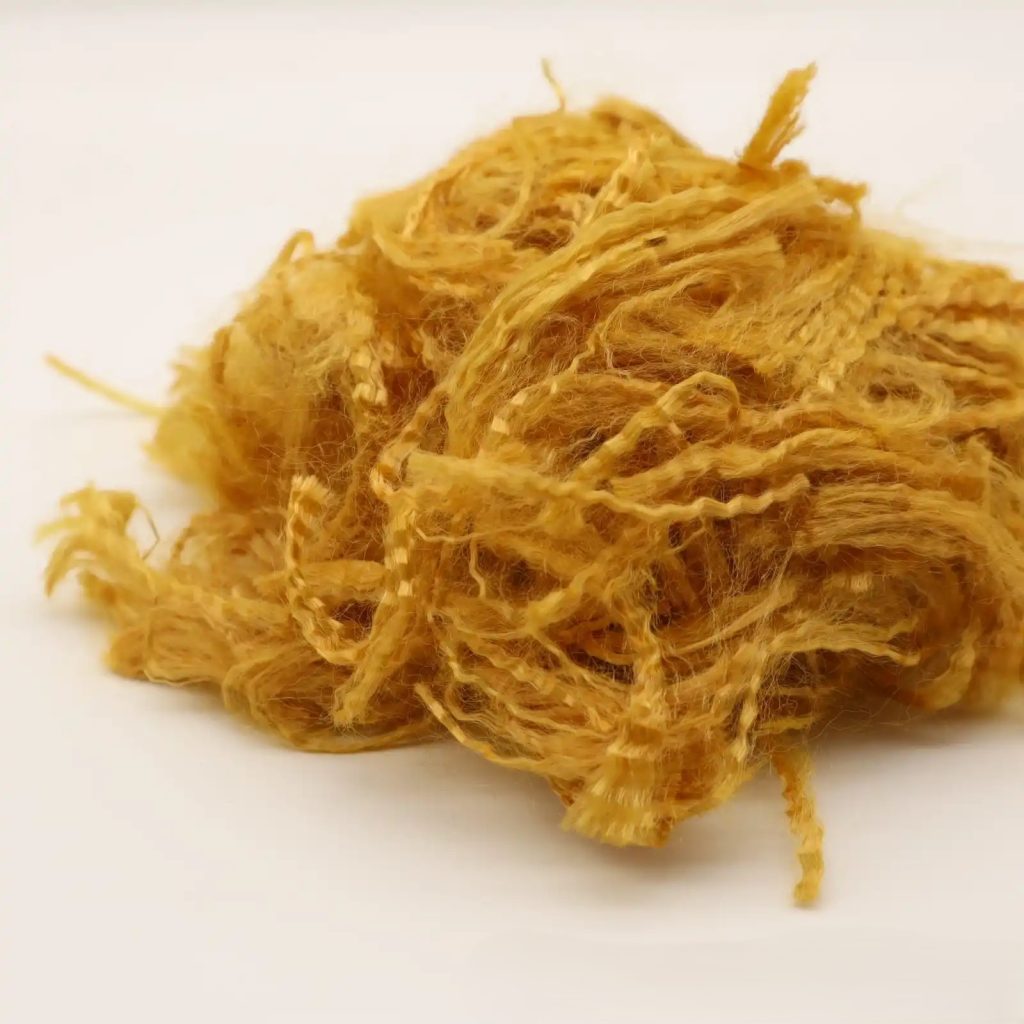
While PBO fiber itself is a high-performance raw material, its real industrial value comes from how it is processed into functional products.
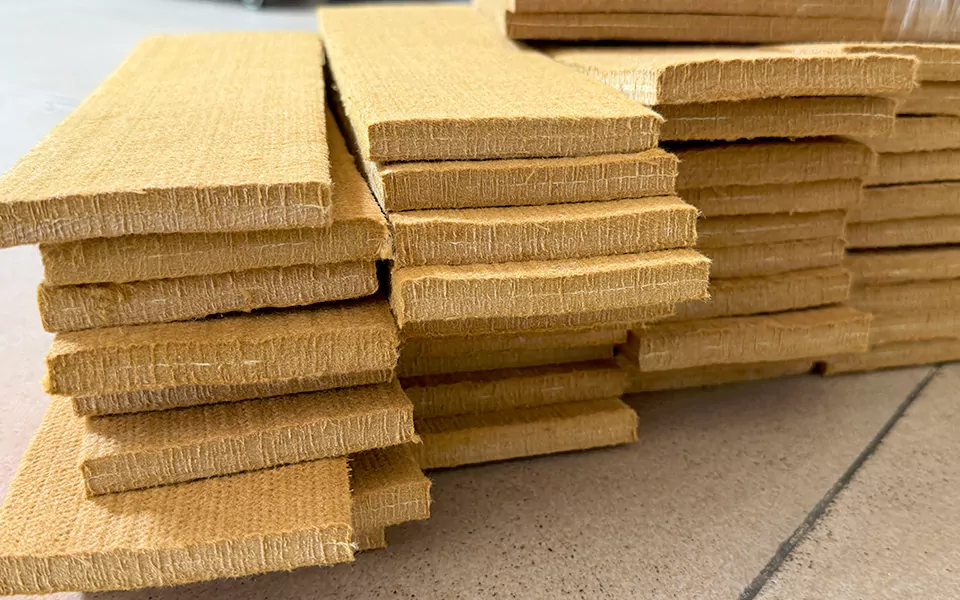
One important application is PBO felt, which combines the extreme heat resistance of PBO fiber with the flexibility and surface protection characteristics of felt structures.
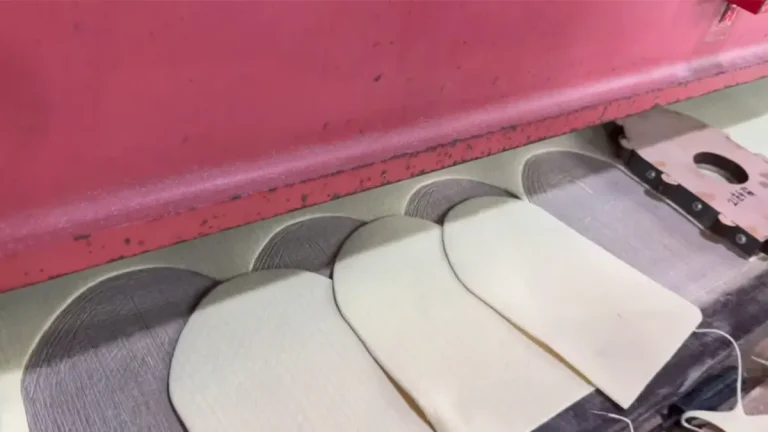
During manufacturing, PBO fibers are processed through techniques such as:
- Fiber preparation
- Carding
- Needle punching
- Heat setting
- Precision cutting
- Assembly
These processes transform individual fibers into durable industrial felt products.
PBO Felt Applications in High-Temperature Manufacturing
PBO Felt Belts
PBO felt belts are widely used in aluminium extrusion production lines, especially near the die exit area.
Their main functions include:
- Supporting newly extruded profiles
- Reducing surface damage
- Withstanding extreme temperatures
- Maintaining stable conveying performance
Compared with conventional conveyor materials, PBO felt belts provide better resistance against thermal degradation.
PBO Felt Rollers
PBO felt rollers provide soft contact and heat resistance for aluminum profile handling.
They help:
- Reduce scratches
- Improve profile transportation
- Maintain product surface quality
They are especially useful for manufacturers producing high-quality aluminum profiles where appearance requirements are critical.
PBO Felt Pads
PBO felt pads are commonly used where localized heat protection and cushioning are required.
Typical functions include:
- Protecting contact surfaces
- Reducing pressure marks
- Providing thermal insulation
Why Is PBO Fiber Important for Aluminium Extrusion?
Aluminium extrusion is a continuous process where production efficiency depends heavily on stable material handling.
Immediately after extrusion, aluminum profiles may still have very high temperatures. At this stage, conveyor components must handle three major challenges:
1. Extreme Heat Exposure
Materials that cannot tolerate high temperatures may:
- Harden
- Shrink
- Lose strength
- Break prematurely
PBO fiber provides the thermal stability required for these conditions.
2. Surface Protection
Aluminum profiles often require excellent surface quality, especially for:
- Architectural applications
- Window and door systems
- Curtain walls
- Decorative profiles
A suitable felt material helps prevent:
- Scratches
- Marks
- Surface contamination
3. Continuous Production Requirements
Industrial extrusion lines often operate continuously.
A high-performance felt solution must provide:
- Stable dimensions
- Long service life
- Consistent performance
PBO fiber helps manufacturers reduce unexpected replacement and maintenance.
PBO Fiber vs Other Heat-Resistant Fibers
Different industrial applications require different materials. Selecting the correct fiber depends on temperature, mechanical stress, and operating conditions.
| Material | Temperature Capability | Main Advantages | Typical Uses |
|---|---|---|---|
| PBO Fiber | Up to approximately 600°C | Extreme heat resistance, high strength | Die exit protection, extreme-temperature applications |
| Kevlar Fiber | Up to approximately 480°C | Strength, abrasion resistance | High-temperature belts and industrial protection |
| Nomex Fiber | Up to approximately 280°C | Heat resistance, stability, cost balance | Medium-temperature applications |
| Polyester Fiber | Up to approximately 180°C | Cost efficiency, versatility | Lower-temperature industrial handling |
The highest temperature rating does not always mean the best choice. The correct material should match the actual working conditions.
How to Choose the Right PBO Fiber Product?
Choosing a PBO-based solution requires evaluating several factors.
1. Operating Temperature
The first consideration is the actual temperature exposure.
Important factors include:
- Contact temperature
- Exposure duration
- Heating cycles
- Temperature fluctuations
A short-term high-temperature exposure may require a different solution from continuous extreme-temperature operation.
2. Application Environment
Consider the working environment:
- Is there continuous friction?
- Is the material under tension?
- Is surface protection required?
- Is the product exposed to chemicals or contamination?
Different applications may require different PBO product structures.
3. Product Design Requirements
Industrial felt products can often be customized according to:
- Thickness
- Width
- Length
- Density
- Belt structure
- Roller dimensions
Proper customization ensures better compatibility with existing equipment.
Why Choose Calm for PBO Felt Solutions?
With more than 20 years of experience in industrial felt manufacturing, Calm specializes in providing high-temperature felt solutions for aluminium extrusion and other demanding manufacturing applications.
Rather than only supplying raw materials, Calm focuses on transforming advanced fibers into practical industrial solutions.
Our PBO-related products include:
- PBO felt belts
- PBO felt rollers
- PBO felt pads
- Customized PBO felt components
By combining high-performance materials with professional manufacturing processes, Calm helps customers solve challenges related to:
- Extreme temperatures
- Surface protection
- Continuous production
- Equipment efficiency
Advanced Manufacturing for Reliable PBO Felt Products
High-performance fibers require precise manufacturing processes to achieve stable results.
At Calm, our production capabilities include:
Carding
Ensures uniform fiber distribution and consistent material structure.
Needle Punching
Creates a dense felt structure by mechanically interlocking fibers.
This improves:
- Strength
- Durability
- Wear resistance
Heat Setting
Improves dimensional stability and helps the felt maintain consistent performance during operation.
Precision Cutting and Assembly
Customized production allows PBO felt products to match different equipment requirements.
Customization options include:
- Belt size
- Roller dimensions
- Felt thickness
- Product shape
FAQs
PBO fiber stands for Poly-p-phenylene benzobisoxazole fiber. It is a high-performance synthetic fiber known for exceptional strength, high modulus, and extreme heat resistance.
PBO fiber is commonly recognized for its ability to maintain performance at temperatures up to approximately 600°C, depending on the application conditions and product structure.
PBO fiber generally provides higher tensile strength and modulus compared with Kevlar. However, Kevlar remains widely used because it offers excellent performance with better cost efficiency in many applications.
PBO fiber requires advanced polymer technology and specialized manufacturing processes. Its high production complexity contributes to its higher cost compared with conventional synthetic fibers.
PBO fiber is the raw high-performance material, while PBO felt is an engineered product made by processing PBO fibers into a felt structure for specific applications such as heat-resistant belts and rollers.
Conclusion
PBO fiber is one of the most advanced high-performance fibers available for applications requiring extreme heat resistance, strength, and dimensional stability.
From aerospace composites to aluminium extrusion production, PBO fiber provides reliable performance where conventional materials cannot meet demanding operating conditions.
For industrial manufacturers, the key is not simply choosing the strongest material, but selecting the right solution based on temperature, mechanical requirements, and application environment.
Through advanced PBO felt products and customized industrial solutions, Calm helps aluminium extrusion manufacturers improve surface protection, production stability, and long-term equipment performance.
Looking for a high-temperature PBO felt solution for your aluminium extrusion line? Contact Calm at [email protected] for professional material recommendations and customized solutions.