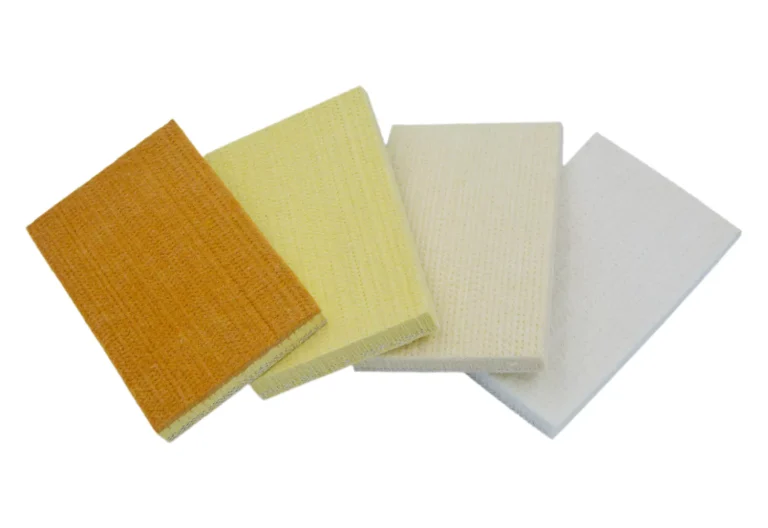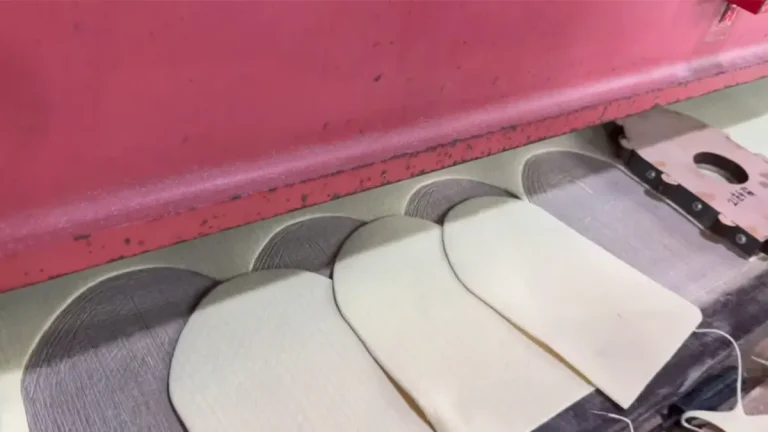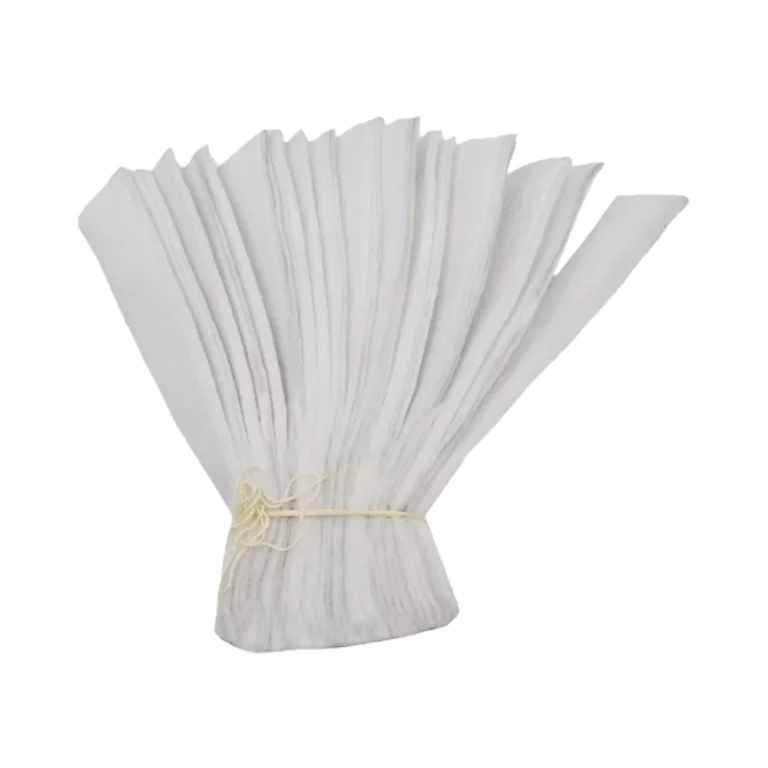
Industrial felt materials are engineered textile materials designed for applications requiring cushioning, insulation, filtration, sealing, polishing, heat resistance, and surface protection. Unlike decorative felt products, industrial felts are manufactured with specific fiber types, densities, and structures to meet demanding mechanical and thermal requirements.
Depending on the application, industrial felt can be made from natural fibers such as wool or synthetic fibers such as polyester, Nomex, Kevlar, and PBO. Each material provides different performance characteristics, making proper material selection essential for achieving reliable results in industrial environments.
This guide explains the different types of industrial felt materials, their properties, manufacturing process, applications, and how to choose the right felt solution for your needs.
What Are Industrial Felt Materials?
Industrial felt materials are nonwoven materials created by compressing and interlocking fibers through mechanical, thermal, or chemical processes.
Unlike woven fabrics, felt does not rely on traditional yarn structures. Instead, individual fibers are bonded together to form a dense and flexible material with unique performance characteristics.
The structure of industrial felt provides several important advantages:
- Excellent cushioning capability
- Good vibration absorption
- High surface protection performance
- Adjustable density and thickness
- Flexible customization options
Because of these properties, industrial felt is widely used in manufacturing, automotive, aerospace, metal processing, aluminum extrusion, sealing systems, and other industrial applications.
How Are Industrial Felt Materials Made?
The manufacturing process directly affects the performance, durability, and application suitability of industrial felt.
Although production methods vary depending on the fiber type and final application, most industrial felt follows several key stages.
1. Fiber Preparation
The process begins with selecting suitable raw fibers.
Different applications require different fiber characteristics:
- Wool for natural elasticity and compression resistance
- Polyester for cost efficiency and chemical resistance
- Nomex for heat-resistant applications
- Kevlar for high strength and abrasion resistance
- PBO for extreme-temperature environments
The selected fibers are cleaned and prepared before forming the felt structure.
2. Carding
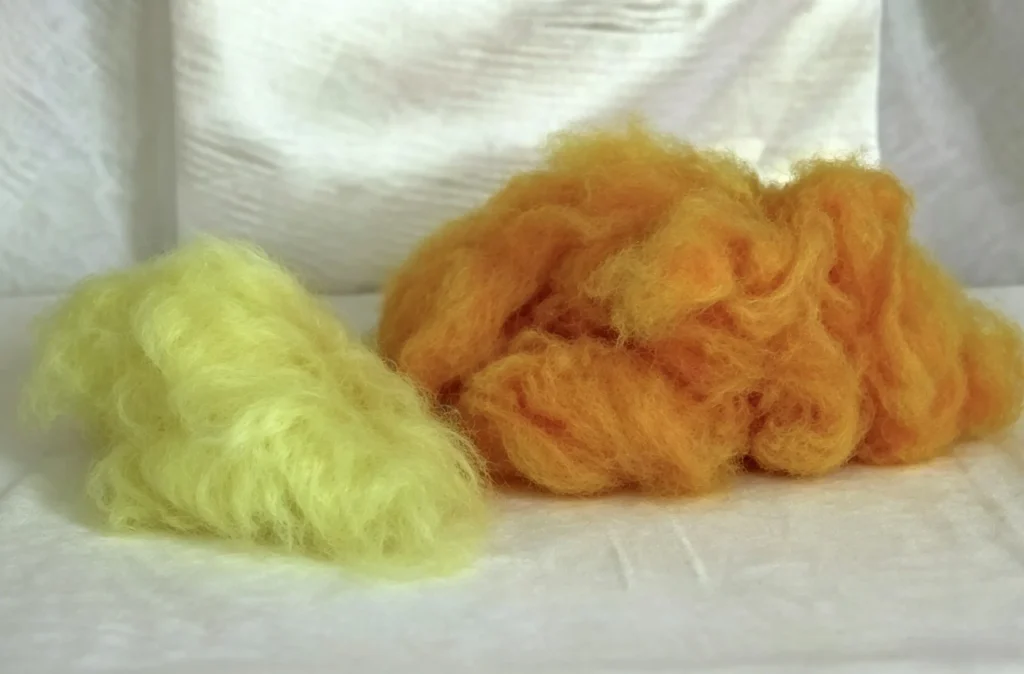
During carding, fibers are opened, separated, and aligned into a uniform web.
This stage influences:
- Fiber distribution
- Felt thickness consistency
- Material density
- Final mechanical properties
A well-prepared fiber web helps ensure stable performance during later production stages.
3. Needle Punching
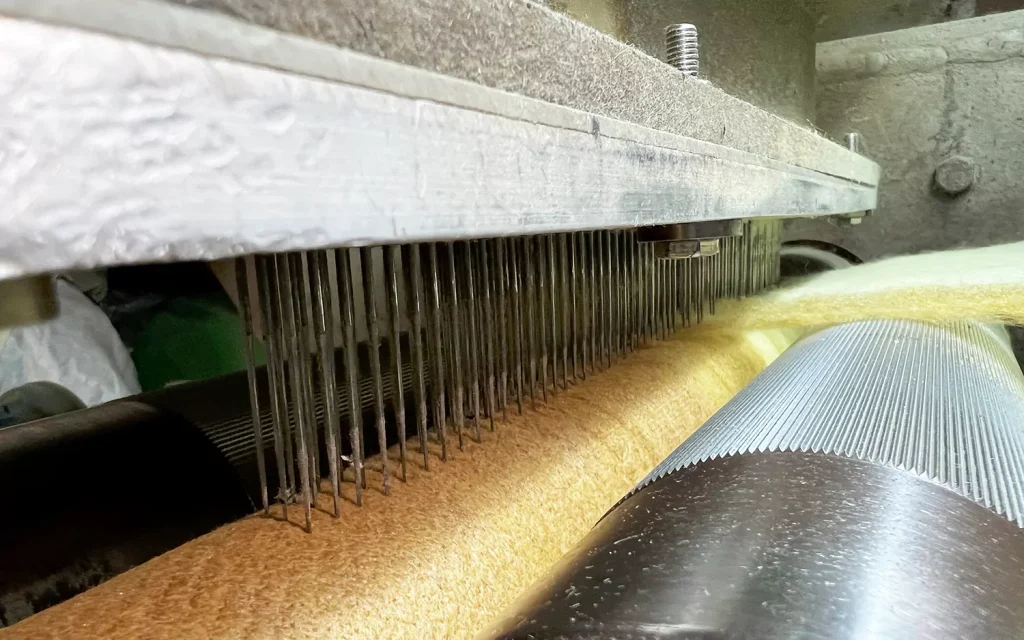
Needle punching is one of the most common manufacturing methods for industrial felt.
During this process, thousands of barbed needles repeatedly penetrate the fiber web, mechanically entangling the fibers into a strong felt structure.
Needle punching improves:
- Tensile strength
- Wear resistance
- Structural stability
- Dimensional consistency
This process is commonly used for industrial felt belts, rollers, pads, and strips.
4. Heat Setting and Finishing
After needle punching, the felt may undergo heat treatment or finishing processes to improve its performance.
These processes help control:
- Thickness
- Density
- Surface smoothness
- Thermal stability
For high-temperature applications, proper finishing is especially important to ensure long-term performance.
Types of Industrial Felt Materials
Industrial felt is available in many material types. The best choice depends on operating temperature, mechanical stress, chemical exposure, and application requirements.
1. Wool Felt
Wool felt is one of the oldest industrial felt materials and remains widely used because of its natural fiber characteristics.
Key Properties
- Excellent elasticity
- Good compression recovery
- Natural lubrication ability
- Good vibration absorption
- Soft surface contact
Common Applications
Wool felt is commonly used for:
- Sealing components
- Polishing applications
- Lubrication pads
- Vibration dampening
- Surface protection
However, wool felt has limited temperature resistance compared with advanced synthetic fibers, making it unsuitable for extreme heat applications.
2. Polyester Felt
Polyester felt is a popular synthetic industrial felt material because it provides a good balance between performance and cost.
Key Properties
- Good abrasion resistance
- Stable dimensional performance
- Moisture resistance
- Cost-effective
- Smooth surface characteristics
Common Applications
Polyester felt is often used for:
- Conveyor components
- Filtration systems
- Protective pads
- Packaging applications
- Lower-temperature industrial handling
In aluminium extrusion production, polyester felt is typically used in lower-temperature areas where extreme heat resistance is not required.
3. Nomex Felt
Nomex felt is manufactured from aramid fibers and is designed for applications requiring improved heat resistance.
Key Properties
- Good thermal stability
- Flame resistance
- Low shrinkage
- Good dimensional stability
Common Applications
Nomex felt is commonly used in:
- Heat protection systems
- Industrial insulation
- Aluminium extrusion conveying systems
- High-temperature protective components
Nomex is often selected for medium-temperature sections where standard synthetic felt materials are insufficient.
4. Kevlar Felt
Kevlar felt is made from para-aramid fibers and is known for its exceptional strength and abrasion resistance.
Key Properties
- High tensile strength
- Excellent wear resistance
- Good heat resistance
- Strong dimensional stability
Common Applications
Kevlar felt is widely used in:
- Aluminium extrusion conveyor belts
- High-temperature transport systems
- Industrial protection materials
- Heavy-duty manufacturing environments
Compared with Nomex, Kevlar generally provides higher mechanical strength and better abrasion resistance, making it suitable for applications involving continuous friction and mechanical stress.
5. PBO Felt
PBO felt is one of the most advanced heat-resistant industrial felt materials available.
It is designed for extreme-temperature environments where conventional synthetic fibers cannot maintain performance.
Key Properties
- Extremely high heat resistance
- Excellent thermal stability
- Superior performance at extreme temperatures
Common Applications
PBO felt is mainly used in:
- Aluminium extrusion die exit areas
- High-temperature conveying systems
- Extreme thermal protection applications
Because of its premium performance, PBO felt is usually applied only where its temperature capability is necessary.
Industrial Felt Materials Comparison
| Material | Heat Resistance | Main Advantages | Typical Applications |
|---|---|---|---|
| Wool Felt | Low to Medium | Elasticity, cushioning, surface protection | Sealing, polishing, vibration control |
| Polyester Felt | Up to approximately 180°C | Cost-effective, stable, versatile | General industrial applications |
| Nomex Felt | Up to approximately 280°C | Heat resistance, flame resistance | Medium-temperature environments |
| Kevlar Felt | Up to approximately 480°C | Strength, abrasion resistance | High-temperature conveying |
| PBO Felt | Up to approximately 600°C | Extreme heat resistance | Die exit and extreme-temperature applications |
Actual performance depends on product structure, thickness, density, operating conditions, and exposure time.
Applications of Industrial Felt Materials
Industrial felt materials are used across many industries because they can be customized for different mechanical and thermal requirements.
Aluminium Extrusion
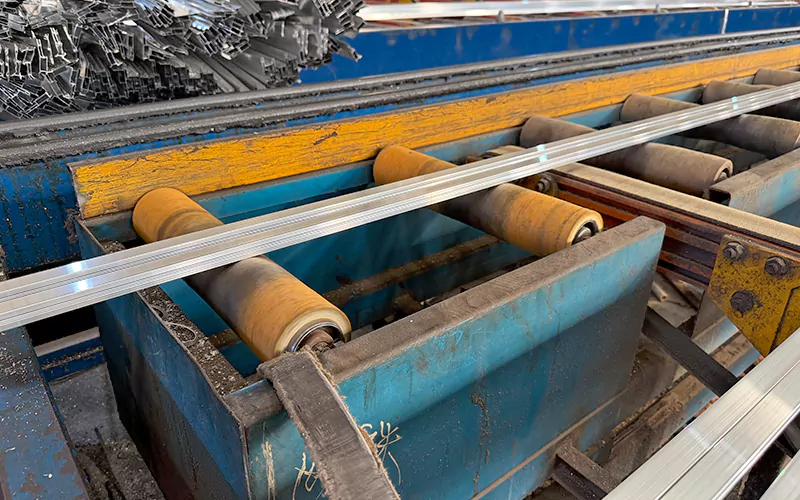
Aluminium extrusion is one of the most demanding applications for industrial felt.
Freshly extruded aluminum profiles leave the die at high temperatures and require careful handling to prevent scratches and deformation.
Heat-resistant felt products such as:
- PBO felt belts
- Kevlar felt belts
- Nomex felt rollers
- Felt pads
- Spacer sleeves
are used to provide soft contact surfaces while maintaining performance under high temperatures.
The correct felt material helps:
- Protect aluminum profile surfaces
- Reduce production defects
- Improve conveying stability
- Extend equipment service life
Automotive Manufacturing
Industrial felt is used in automotive applications for:
- Noise reduction
- Vibration control
- Insulation components
- Protective layers
Its flexibility and damping properties make it suitable for various interior and mechanical applications.
Sealing and Gasket Applications
Felt materials are also used as sealing components because they can:
- Absorb lubricants
- Reduce friction
- Provide cushioning
- Prevent contamination
Filtration Systems
Certain industrial felts are designed for filtration applications due to their controlled fiber structure.
They can help capture:
- Dust particles
- Industrial contaminants
- Airborne materials
How to Choose the Right Industrial Felt Material?
Selecting the correct industrial felt requires evaluating several factors rather than choosing based only on material price.
1. Operating Temperature
Temperature is usually the first consideration.
For example:
- Extreme heat zones may require PBO felt
- High-temperature conveying may require Kevlar
- Medium-temperature areas may use Nomex
- Lower-temperature applications may use Polyester
Choosing an unsuitable material may result in premature wear or performance failure.
2. Mechanical Stress
Consider:
- Load pressure
- Friction level
- Conveyor speed
- Frequency of operation
Applications involving continuous movement and abrasion usually require stronger materials such as Kevlar.
3. Surface Protection Requirements
If the material being handled has a sensitive surface finish, the felt must provide:
- Low friction
- Smooth contact
- Stable surface performance
This is especially important for decorative aluminum profiles and precision components.
4. Service Life and Cost
The cheapest material is not always the most economical choice.
A higher-performance felt material may reduce:
- Replacement frequency
- Production downtime
- Maintenance costs
- Product defects
The best solution considers total operating cost rather than initial purchase price alone.
Why Material Selection Matters for Industrial Felt Performance
Industrial felt is not a universal material where one type fits every application.
Different production environments require different combinations of:
- Heat resistance
- Strength
- Wear resistance
- Flexibility
- Surface protection
For example, in aluminium extrusion, using polyester felt in an extreme-temperature die exit area may lead to rapid degradation, while using premium PBO felt in a low-temperature area may increase unnecessary costs.
The most effective approach is selecting the right material for each working condition.
Industrial Felt Solutions for Aluminium Extrusion
Among all industrial applications, aluminium extrusion places some of the highest demands on felt materials. During extrusion, aluminum profiles leave the die at extremely high temperatures and must be transported, cooled, stretched, and processed without damaging their surfaces.
At this stage, conventional conveyor materials may not withstand the heat or provide sufficient surface protection. This is why specialized heat-resistant industrial felt materials are widely used throughout aluminium extrusion production lines.
Different sections of the extrusion line require different felt solutions:
| Extrusion Stage | Recommended Felt Material | Main Function |
|---|---|---|
| Die Exit Area | PBO Felt | Handles extreme temperatures immediately after extrusion |
| High-Temperature Conveying Area | Kevlar Felt | Provides heat resistance and abrasion protection |
| Medium-Temperature Cooling Area | Nomex Felt | Maintains stable performance during cooling |
| Final Handling Area | Polyester Felt | Provides cost-effective surface protection |
PBO Felt for Die Exit Protection
The die exit is one of the most challenging areas in aluminium extrusion.
When aluminum profiles first leave the extrusion die, they are still extremely hot and relatively soft. Direct contact with hard surfaces can create:
- Surface scratches
- Pressure marks
- Profile deformation
- Cosmetic defects
PBO felt is designed for this extreme environment because of its exceptional thermal stability.
Common PBO felt products include:
- PBO felt belts
- PBO felt rollers
- PBO felt pads
These products provide a protective layer between hot aluminum profiles and conveying equipment, helping maintain surface quality during the most critical stage of production.
Kevlar Felt for High-Temperature Conveying
After the initial die exit stage, aluminum profiles gradually cool but may still remain at temperatures requiring advanced heat-resistant materials.
Kevlar felt is often selected for these sections because it combines:
- High temperature resistance
- Excellent tensile strength
- Strong abrasion resistance
- Long service life
Kevlar conveyor belts are especially suitable for extrusion lines where continuous movement and mechanical stress are significant concerns.
Nomex Felt for Medium-Temperature Sections
As aluminum profiles continue cooling, the temperature requirements become lower.
Nomex felt provides a practical solution for these areas by offering:
- Good heat resistance
- Stable dimensions
- Reliable continuous operation
It is commonly used in:
- Felt rollers
- Spacer sleeves
- Conveyor components
Nomex provides a balance between performance and cost, making it suitable for many medium-temperature extrusion applications.
Polyester Felt for Lower-Temperature Handling
Toward the end of the extrusion line, aluminum profiles have cooled significantly.
At this stage, polyester felt can provide effective surface protection while offering advantages such as:
- Smooth contact surface
- Good wear resistance
- Cost efficiency
Using different felt materials throughout the production line allows manufacturers to optimize performance without unnecessary material costs.
Why Choose Calm for Industrial Felt Materials?
With more than two decades of experience in industrial felt manufacturing, Calm specializes in providing high-performance felt solutions for aluminium extrusion and other demanding industrial applications.
Unlike general felt suppliers, Calm focuses on developing materials specifically designed for high-temperature manufacturing environments.
Our product range includes:
- Heat-resistant felt belts
- Felt rollers
- Felt pads
- Spacer felt sleeves
- Felt strips
- Timing belts
- Heat-resistant gloves
By combining advanced materials with professional manufacturing processes, Calm helps customers improve production reliability, protect product surfaces, and reduce unnecessary downtime.
FAQs
Industrial felt materials are used for applications requiring heat resistance, cushioning, insulation, sealing, filtration, vibration control, and surface protection. Common industries include aluminium extrusion, automotive manufacturing, metal processing, and industrial equipment.
Industrial felt is specifically engineered for performance requirements such as temperature resistance, abrasion resistance, density control, and mechanical durability. Regular felt is generally designed for decorative or non-industrial uses.
Industrial felt can be manufactured from various fibers, including wool, polyester, Nomex, Kevlar, and PBO. Each fiber provides different characteristics for different applications.
Aluminium extrusion lines commonly use heat-resistant felt materials including PBO, Kevlar, Nomex, and Polyester. The selection depends on the temperature and location within the production line.
Conclusion
Industrial felt materials are not simply general-purpose fabrics. They are engineered solutions designed to meet specific industrial challenges, from high-temperature conveying and surface protection to sealing and vibration control.
Choosing the right felt material requires a clear understanding of the working environment, including temperature, mechanical stress, and application requirements.
For aluminium extrusion and other high-temperature manufacturing processes, selecting the appropriate combination of PBO, Kevlar, Nomex, and Polyester felt solutions can help improve product quality, reduce defects, and increase production efficiency.
With extensive experience in heat-resistant felt manufacturing, Calm provides customized industrial felt solutions designed to meet the demanding requirements of modern industrial production.
Need help selecting the right industrial felt material for your application? Contact Calm at [email protected] for professional recommendations and customized solutions.